Sunday raises $165 million at a $1.15 billion valuation to move its glove-trained Memo robot from demos into homes
Sunday, the Silicon Valley developer of the Memo household robot, said on 12 March 2026 that it had raised an oversubscribed $165 million Series B at a $1.15 billion valuation, led by Coatue, with Coatue's Thomas Laffont joining the board. The company trains Memo on data from people wearing its Skill Capture Glove instead of teleoperating robots, plans an invite-only home beta from the autumn and expects to ship at scale in 2027-2028.
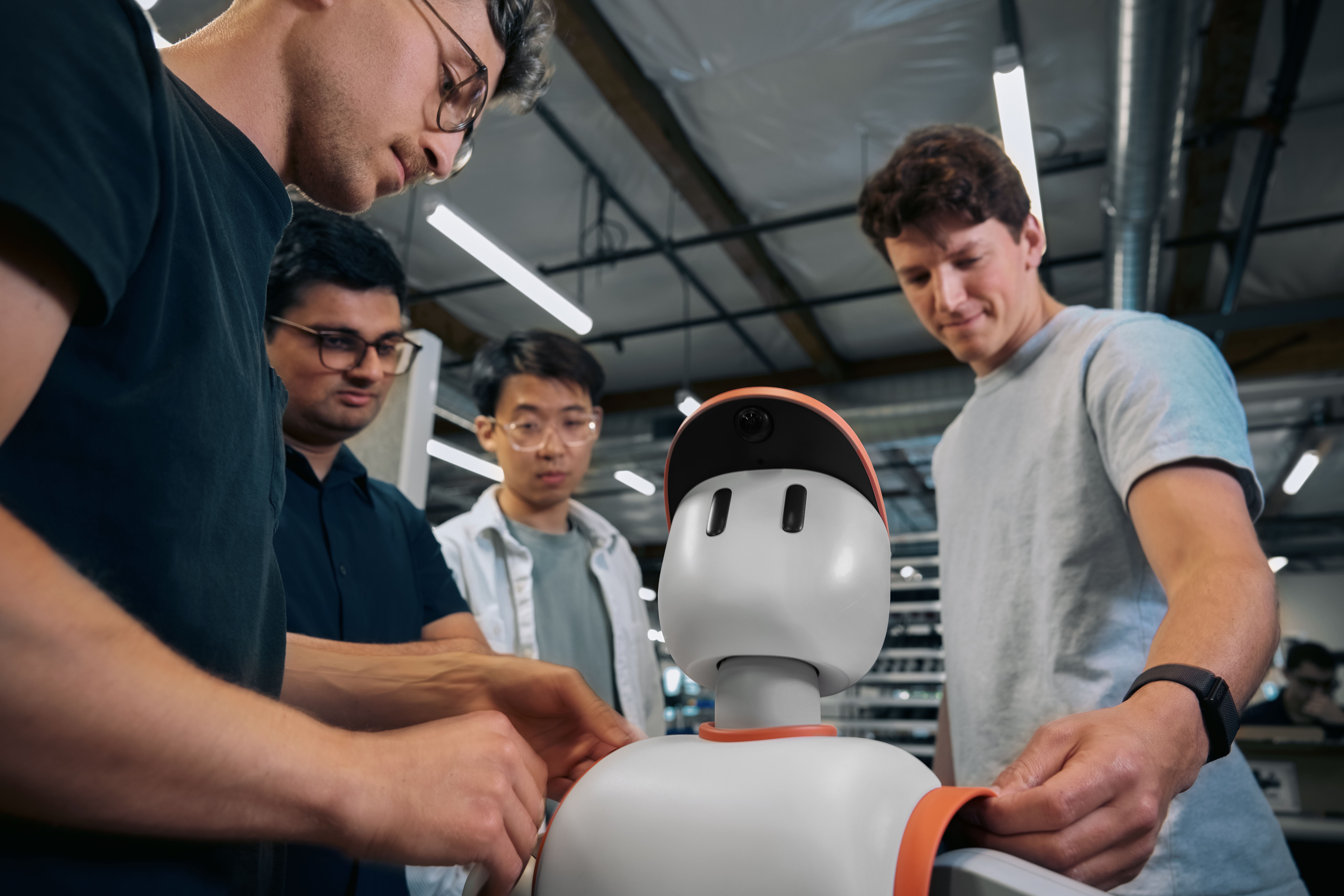
Sunday has trained its household robot without a single trajectory of teleoperation data, and investors have now put a price of $1.15 billion on that approach. The Silicon Valley company said on 12 March 2026 that it had raised an oversubscribed $165 million Series B to take Memo, a two-armed robot that clears dining tables and loads dishwashers, out of staged demonstrations and into ordinary homes, starting with a beta programme this autumn.
The round makes Sunday one of a handful of robotics companies valued above $1 billion on a product that has not yet shipped. What the investors are paying for is a method of collecting training data as much as a machine. The questions that matter are how that method works, what the price implies when set against rivals that raised money in the same quarter, and which numbers will show by 2027 whether the approach holds up outside a lab.
Coatue led a round sized for deployment, not research
Coatue led the round and its partner Thomas Laffont joins Sunday's board, the company said in a post titled "No More Demos". Bain Capital Ventures, Fidelity Management & Research Company, Tiger Global, Benchmark, Conviction and Xtal Ventures also took part, alongside unnamed others. Sunday did not say whether $1.15 billion is a pre-money or post-money figure, and it gave no breakdown of how the money will be spent. It did say it had already grown its engineering team threefold, research fourfold and data operations fivefold to prepare for deployment. On the stated figures, the new money equals 14.3% of the valuation.
The product commitments are specific. Sunday said public deployment begins with a beta rolling out to users in the autumn and described Memo as the first autonomous home robot it intends to put in households this year. Its beta page sets the terms. Participation is free and invite-only, the first households receive a numbered limited-edition Memo with delivery and set-up by Sunday staff, and the first 50 members get a 3D-printed miniature. Owners will schedule tasks by voice or through a Sunday app, and the company said the beta will mix supervised, collaborative and fully hands-off operation. General availability depends on the beta; Sunday said it expects to ship Memo at scale in 2027-2028. It also disclosed a number most rivals keep private. Building one Memo by hand today costs about $20,000, and Sunday expects volume manufacturing to cut that by at least 50%, which implies a build cost of $10,000 or less. Retail pricing will come closer to launch.
Those terms describe a company that has yet to prove its robot can work unsupervised in a stranger's kitchen. The more consequential question is how it intends to teach the robot to do so.
The glove, not the robot, is the core asset
Sunday's method rests on the Skill Capture Glove, a wearable it says is a one-to-one copy of Memo's hand in geometry and sensor layout. The glove records motion through force sensors, cameras and joint potentiometers. Sunday recruits contributors it calls Memory Developers, who wear the gloves while doing chores in their own homes, and its website says the company has shipped thousands of gloves across the United States. A software layer the company calls Skill Transform then strips human-specific details from the recordings, aligning both the movement data and the camera images so that they look as if Memo had produced them. Sunday said in November 2025 that this conversion succeeds 90% of the time.
The economics explain the appeal. Teleoperation, the standard way to collect robot training data, needs one robot and one trained operator for every stream of demonstrations, usually in a lab. A glove costs far less than a robot and can be worn in thousands of real homes at once, so the data reflects cluttered counters, pets and odd floor plans rather than a test kitchen. Sunday says its cycle from capturing new data to a deployed capability takes less than a week.
The results Sunday published with its first model, ACT-1, on 19 November 2025 show what that data bought. In a task it calls Table-to-Dishwasher, the robot carried out 33 distinct and 68 total dexterous interactions with 21 objects, including wine glasses and ceramic plates, while travelling more than 130 feet. ACT-1 was also run in Airbnb rentals it had never seen, using a 3D map of each home to find the table and dishwasher, which Sunday described as the first single end-to-end model to combine long-horizon manipulation with map-conditioned navigation. The company also showed the robot pairing and balling socks and pulling an espresso shot. One disclosed figure tempers the demonstrations. Sunday says its contributors move at about half natural human speed and its models run at 60-80% of that pace, which by our arithmetic puts Memo at roughly 30-40% of the speed of a person doing the same chore.
Memo is designed to yield when people push it
According to Sunday's specifications, Memo stands 1.7 metres tall, weighs 170 pounds (about 77 kg), reaches 0.8 metres horizontally and 2.1 metres vertically, and has 27 degrees of freedom across two seven-joint arms, two four-joint hands, the torso and the lower body. It navigates at up to 1 metre per second and runs for four hours on a one-hour charge, with self-charging promised for the beta. Sunday contrasts Memo with humanoids that need power to stay balanced. It says Memo is passively stable, stays upright if power is cut in any pose and yields under compliant control when bumped. The company also says it does not need data from customers' homes to train the robot because its contributors supply it.
The founders' records explain why investors gave the method credit. Chief executive Tony Zhao, who left a Stanford PhD in 2024 after working under Sergey Levine and Chelsea Finn, led the ALOHA project and worked at Google DeepMind and Tesla Autopilot. Chief technology officer Cheng Chi, a Columbia PhD advised by Shuran Song, created Diffusion Policy. Sunday credits the two with ALOHA, Diffusion Policy and the UMI gripper, techniques that it says much of the field now builds on.
Bigger cheques went to rivals that disclosed less
Sunday raised less than the quarter's largest robot-AI rounds but disclosed more about its price. Skild AI raised $1.4 billion at a valuation above $14 billion on 14 January, Apptronik closed a $520 million extension on 11 February that took its Series A past $935 million, and Rivian spinout Mind Robotics raised $500 million on 11 March. Among home robots, 1X has priced its NEO humanoid at $20,000 for early access or $499 a month with priority deliveries in 2026, and Fauna Robotics launched its 107 cm Sprout developer humanoid on 27 January.
- Sunday
- US
- Series B
- 2026-03-12
- 165
- 1.15
- 14.3
- Skild AI
- US
- Series C
- 2026-01-14
- 1400
- 14
- 10
- Apptronik
- US
- Series A-X
- 2026-02-11
- 520
- No data
- No data
- Mind Robotics
- US
- Series A
- 2026-03-11
- 500
- No data
- No data
- Figure AI
- US
- Series C
- 2025-09-16
- 1000
- 39
- 2.6
- Dyna Robotics
- US
- Series A
- 2025-09-15
- 120
- No data
- No data
Company primary announcements as recorded in the ROBOTNESS database; none estimated. Amount as % of valuation = amount / disclosed valuation x 100. Sunday did not state whether its $1.15bn is pre- or post-money. Apptronik figure is the February 2026 extension only. Null = not disclosed.
As of Oct 1, 2026
Sunday's round equals 14.3% of its stated valuation, against 10.0% for Skild and 2.6% for Figure's September 2025 Series C. In other words, investors bought a larger share of an earlier-stage company. In the ROBOTNESS database, the four US robotics rounds recorded for January to March 2026 total $2.585 billion, of which Sunday's accounts for 6.4%.
- Height (cm)
- 170
- 107
- Weight (kg)
- 77.1
- 22.7
- Degrees of freedom
- 27
- 29
- Battery runtime (h)
- 4
- 3 to 3.5
- Main training data
- Skill Capture Glove demonstrations, no teleoperation
- Pre-trained policies plus whole-body teleoperation
- Hand-built unit cost (US$)
- 20,000
- No data
- Working pace vs a person (%)
- 30-40
- No data
Memo figures from Sunday's technology and beta pages (accessed 2026-10-01); Sprout figures from Fauna Robotics' launch release of 27 January 2026. Memo weight converted from 170 lb (x 0.4536). DOF total for Memo = 2x7 arms + 2x4 hands + 1 torso + 4 lower body. Working pace = demonstration speed (about 50% of natural human speed) x model speed (60-80% of data speed). Disclosed, not estimated; null = not disclosed.
As of Oct 1, 2026
ROBOTNESS analysis
Coatue and its co-investors have priced Sunday as a data company that happens to build a robot, and the autumn beta is the first public test of whether glove-collected human demonstrations can produce home autonomy faster than teleoperation fleets.
The evidence for that reading is in Sunday's own priorities. Of the three teams it expanded, data operations grew fastest, fivefold. The round arrived 113 days after the ACT-1 results, the company's first public proof that the glove data transfers, and the 90% conversion rate is the figure that turns thousands of shipped gloves into usable robot data. Hardware is treated as a cost line to be halved, not the differentiator.
The strongest counter-argument is that the glove captures hands and not failure. Home reliability depends on recovering from dropped plates and blocked doors, which is learned from the robot's own mistakes, and Sunday says the beta will still mix supervision with autonomy. A robot working at 30-40% of human pace with a $20,000 build cost also faces a consumer value test that 1X has already started with a public price.
Bull case. Beta households report that Memo finishes table and dishwasher routines unsupervised, the build cost falls toward $10,000 before 2027, and the glove network keeps expanding the skill list weekly. Sunday would then hold a data advantage that teleoperation-led rivals cannot buy quickly.
Bear case. Autonomy in unfamiliar homes proves patchy, the beta stays heavily supervised and scale shipments slip beyond 2028. The valuation would then rest on a data pipeline without a product, in a quarter when larger rivals raised several times more.
Three signals will confirm or break the thesis. First, the number of beta homes and the share of hands-off tasks Sunday reports once the programme starts in autumn 2026. Second, a named manufacturing partner or cost disclosure before the end of 2026 that shows the 50% reduction is on track. Third, a successor model to ACT-1 with published reliability figures, ideally success rates in unseen homes, during the first half of 2027.
The sharpest open question is speed. A robot that clears a table at a third of human pace may still be worth buying if it works while the family sleeps, and the beta will show whether households agree.
- ACT-1, unveiled 19 November 2025, trained on zero robot data
- Series B, US$165 million, oversubscribed
- Memo home robot; invite-only beta from autumn 2026, scale shipping expected 2027-2028
- Tony Zhao (CEO, ALOHA), Cheng Chi (CTO, Diffusion Policy)
- 12 March 2026, Sunday blog post "No More Demos"
- About US$20,000 to build by hand; at least 50% reduction targeted
- US$1.15 billion (basis not stated)
- Engineering 3x, research 4x, data operations 5x
- Coatue; Thomas Laffont joins the board
- Bain Capital Ventures, Fidelity Management & Research, Tiger Global, Benchmark, Conviction, Xtal Ventures
Why it matters
Sunday is the clearest test so far of a proposition that divides robot-learning companies, namely that human demonstrations captured with a purpose-built wearable can replace teleoperation as the main source of training data. Most of the money raised in the quarter went to companies that either collect data on their own robots, such as Figure and Apptronik, or build general models meant to run on many bodies, such as Skild AI. Sunday sits between the two, with its own robot but a data pipeline that does not need the robot to be present.
A $1.15 billion valuation on an unshipped product also resets expectations for the household segment, which until now has been dominated by 1X's public pricing for NEO. If Sunday's beta works, the household robot market will be contested on data volume and speed of iteration rather than on hardware specifications, and that would favour companies with large contributor networks over those with the best actuators.
Rival analysis
1X is the closest rival in the home. It sells NEO Early Access at $20,000 with priority delivery in 2026, or $499 a month, and in January 2026 said NEO was beginning to learn from video through a world model. 1X has a humanoid form and a published price; Sunday has a design it says stays upright without power, a published build cost and no price. The two will meet head on only once both deliver to paying homes.
Against model-first companies the comparison is about data. Skild AI raised $1.4 billion in January for a general model meant to run on many robot bodies. Sunday ties its model tightly to one hand design so that glove data transfers at 90%, which narrows its reach but deepens its data. Fauna's Sprout, launched in January as a 22.7 kg developer platform, addresses a different buyer, labs and studios, and relies on teleoperation for new skills.
Dyna Robotics, which raised a $120 million Series A in September 2025, is the nearest US peer by round size among model-led start-ups. In our judgement Sunday's choice of one repeatable chore, table clearing and dishwasher loading, as its signature task is a deliberate narrowing that lets the company measure reliability on a single routine before widening the skill list.
Valuation context
Sunday's $165 million equals 14.3% of its stated $1.15 billion valuation. For comparison, Skild AI's $1.4 billion equalled 10.0% of $14 billion and Figure's $1 billion Series C equalled 2.6% of $39 billion. Formula: round amount divided by disclosed valuation. The higher ratio is typical of an earlier-stage company and means existing holders gave up a larger slice for the money.
Because Sunday did not say whether the figure is pre- or post-money, ROBOTNESS does not compute a pre-money value or a step-up from earlier rounds, and the company has not disclosed earlier round sizes on its own pages. Within the ROBOTNESS database, Sunday's round is 6.4% of the $2.585 billion raised in the four US robotics rounds recorded for the first quarter of 2026, a share that reflects how concentrated the quarter was in a few very large cheques.
Supply-chain implications
Sunday says it owns the stack from the glove through hardware design and manufacturing, but it has not named contract manufacturers, actuator suppliers or compute vendors. Memo has 27 degrees of freedom, so each unit carries at least 27 joint drives, and the hands must match the glove's geometry and sensor layout exactly, which makes the hand the most bespoke subsystem and the hardest to second-source.
The disclosed build cost of about $20,000 per hand-built unit, with a target cut of at least 50%, is the key supply-chain number. Halving cost on a low-volume robot usually depends on moving actuators, castings and cladding to high-volume suppliers, many of which are in China, Japan and Taiwan. How Sunday balances cost against the US-built positioning that Fauna, for one, advertises for Sprout will shape both margin and tariff exposure.
Signals to watch
The beta start in autumn 2026 is the first hard data point. Watch the number of Founding Family homes, how many tasks run without supervision and whether self-charging ships as promised. Sunday has said general availability depends on the beta, so any delay would push the 2027-2028 scale-shipping window.
On cost, look for a named manufacturing partner or an updated unit-cost figure before the end of 2026. On models, a successor to ACT-1 with published success rates in unseen homes would be the strongest evidence that glove data scales. A US Form D filing would also show whether the Series B was fully closed at the stated amount.
Analyst view
Thesis: Sunday is a data company that builds its own robot, and its valuation is a wager that a glove network will out-collect teleoperation fleets. Confidence: medium. The method is credible given the founders' records and the ACT-1 results, and the disclosed cost and timeline are unusually concrete for the segment.
Confidence is not higher because the published evidence comes from staged tasks and short trials in rented homes, Memo works at roughly 30-40% of human pace, and the beta will mix supervision with autonomy. Our view would change upward if Sunday reports hands-off task completion across dozens of beta homes, and downward if the beta slips into 2027 or the build cost does not move.
Questions you should be asking
How many Memory Developers and gloves are active today, and how many hours of glove data does Sunday collect per week?
What share of beta tasks do you expect to run fully unsupervised in the first three months, and how will failures be handled in the home?
Which components drive the $20,000 build cost, which suppliers will deliver the 50% reduction, and where will volume assembly take place?
Is the $1.15 billion valuation pre-money or post-money, and how much has Sunday raised in total since founding?