D-Robotics raises US$400 million to sell its Sunrise chips as the compute layer for China's robot makers
D-Robotics, the robot-chip business Horizon Robotics stopped consolidating in March, said on 17 September 2026 it had closed a US$400 million Series C without naming a single investor or a valuation. The company says it has shipped more than 8 million Sunrise chips and that its newest S600 part won more than 20 robot customers within six months, including UBTECH, Fourier and Booster Robotics.
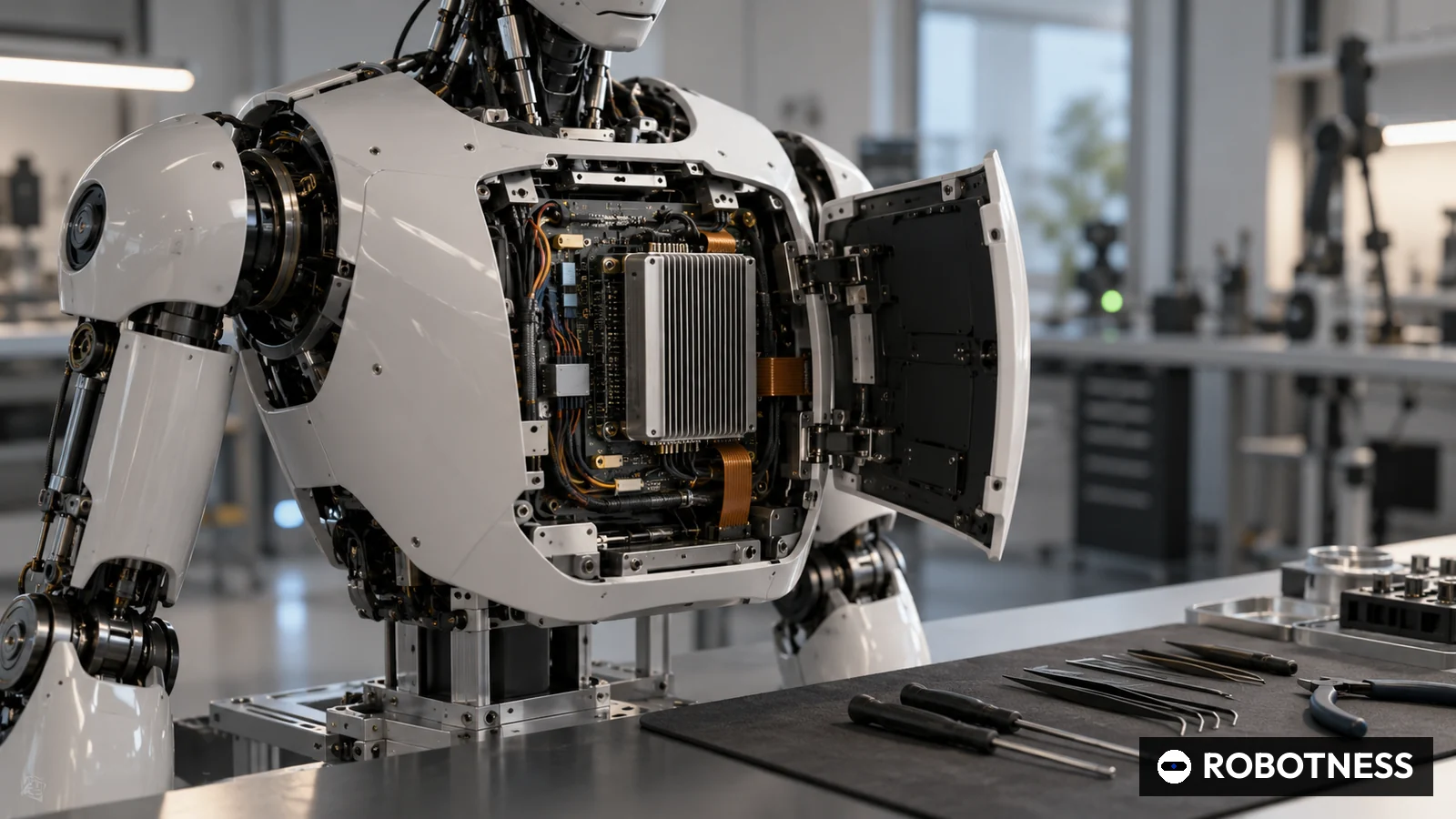
D-Robotics has shipped more than 8 million Sunrise chips, yet the company that just raised US$400 million for them would not say who wrote the cheques. In a release dated 17 September 2026 from Hong Kong, the robot compute supplier said it had closed a US$400 million Series C with strategic money from what it called a leading global internet company, alongside top-tier investment institutions and follow-on investment from existing shareholders. No investor name, valuation or revenue figure was disclosed.
The round is the largest robotics financing in the ROBOTNESS database for September 2026, ahead of General Intuition's US$220 million and SiMa.ai's US$150 million. What it buys is a bet that robot makers will rent their brains from a merchant chip supplier rather than build them. The numbers below show how far D-Robotics has got with that bet, and why its former parent no longer wants it on its books.
Eight million chips, twenty S600 customers and no named investor
D-Robotics said the money will widen its Sunrise chip range across compute tiers and build a software platform covering the whole robot development chain, so that it can sell hardware and software as one piece of infrastructure. Cumulative Sunrise shipments passed 8 million units by the first half of 2026, the company said, and revenue in that half grew several times year on year. It gave no absolute revenue number.
The newest part, the Sunrise S600, launched in November 2025 and was adopted by more than 20 customers within six months, according to the release. The customers it named are TARS, Spirit AI, X Square Robot, UBTECH, PaXini Tech, Astribot, Fourier and Booster Robotics, a list that covers much of China's humanoid field. The company also claims more than 500 universities and over 100,000 developers in more than 20 countries use its tools, and says its D-Robotics Gravity Program backs more than 500 robotics teams across 10 product categories.
A Horizon spin-out that Horizon no longer controls
The anonymity of the investors makes more sense against Horizon Robotics' own filing. In its 2025 annual results, published on HKEX on 19 March 2026, Horizon said D-Robotics had been registered as its subsidiary in September 2023 and that its holding had been passively diluted from nearly 70% at Horizon's listing to about 40%. D-Robotics' employee share platform, D-GUA Brother LP, intended to end its acting-in-concert agreement with Horizon and the founders planned to withdraw a board-appointment power of attorney, after which Horizon would treat D-Robotics as an associate while remaining its largest shareholder. Horizon gave two reasons that matter here: D-Robotics' gross margin was significantly lower than Horizon's main business, and D-Robotics needed continuous external financing for research and growth. Six months later that financing arrived.
The merchant brain competes with NVIDIA and with its own customers
The obvious rival is NVIDIA, whose Jetson Thor module sits inside the reference humanoid NVIDIA set with Unitree and Sharpa in June and runs its Cosmos 3 Edge world model, according to earlier ROBOTNESS reporting. In the US, SiMa.ai raised US$150 million at a US$1.45 billion valuation on 28 September to sell edge AI chips to humanoid, automotive and drone makers. D-Robotics competes on a different axis. It sells a ladder of development kits on its website, from the RDK X3 at 5 TOPS and the RDK X5 at 10 TOPS to the RDK S100 at more than 80 TOPS, so a robot startup can prototype on a cheap board and move up without changing software.
TOPS, trillions of operations per second, is the headline measure of how much neural-network arithmetic a chip can do. The S600 release footnotes its figure as effective TOPS with half sparsity, meaning the number assumes half the model's weights are zeros the chip can skip, and states a total processing performance below 4,800. Buyers should read the headline compute as a best case for pruned models.
For the global industry, the round gives China's humanoid makers a well-funded domestic supplier of the part that is hardest to replace. Several of the named customers, including UBTECH, Fourier and Booster Robotics, already appear in ROBOTNESS coverage as volume humanoid makers, and each S600 design win ties a robot generation to D-Robotics' software stack for years.
The open questions are large. The investors, valuation and revenue are all undisclosed. The 8 million figure is cumulative across every Sunrise generation, including parts sold before the S600, so it says little about humanoid demand. A supplier whose customers are also building their own chips can lose its biggest accounts the moment they succeed.
ROBOTNESS analysis
D-Robotics is raising to become China's merchant compute layer for robots, and its 20-customer S600 base matters more than its anonymous investors; the risk is that compute becomes something big robot makers design in-house.
The evidence is in the customer list and the money. One round of US$400 million equals 46% of all robotics financing in the ROBOTNESS database dated September 2026, as the table shows, and Horizon's filing tells us the business needed it. A chip supplier with more than 20 humanoid and robot customers on one new part has the scale to fund software that a single robot maker would not build.
- D-Robotics
- Robot compute chips and kits
- Series C
- 400
- 2026-09-17
- General Intuition
- Action models from gameplay
- Venture round
- 220
- 2026-09-29
- SiMa.ai
- Edge AI chips
- Series C
- 150
- 2026-09-28
- Persona AI
- Shipyard humanoids
- Form D, partial sale
- 65.4
- 2026-09-14
- Inbolt
- AI vision for industrial robots
- Unnamed
- 12.5
- 2026-09-30
- Destro AI
- Warehouse robot orchestration
- Seed
- 8
- 2026-09-29
- Feather Robotics
- Developer humanoid
- Launch round
- 7.6
- 2026-09-30
- Aleph Surgical
- Autonomous surgical robots
- Pre-seed
- 7.5
- 2026-09-30
- Tangent Robotics
- Tactile robot hands
- Pre-seed
- 4.5
- 2026-09-30
Rounds with a disclosed USD amount only (Qibitech's yen round excluded). Persona AI figure is the amount sold per its Form D, not a priced round. Total 875.5; D-Robotics share = 400 / 875.5 = 46%. Figures disclosed, not estimated.
As of Oct 1, 2026
The strongest counter-argument is margin. Horizon itself said D-Robotics earns a significantly lower gross margin than Horizon's main business, which suggests D-Robotics sells development boards and modules at thin prices to win designs. If that continues, US$400 million buys share rather than a durable business.
The bull case is that the S600 becomes the default board for Chinese humanoids the way Jetson modules became the default in Western labs, and that the software platform lets D-Robotics charge for tools as well as silicon. The bear case is that the largest customers move to their own chips or to NVIDIA once volumes justify it, leaving D-Robotics with the long tail of small makers and student kits.
- D-Robotics
- Series C
- 400
- No data
- 2026-09-17
- SiMa.ai
- Series C
- 150
- 1,450
- 2026-09-28
- Skild AI
- Series C
- 1400
- 14,000
- 2026-01-14
- Generalist AI
- Growth
- 400
- No data
- 2026-06-04
- General Intuition
- Venture round
- 220
- No data
- 2026-09-29
Latest round per company in the ROBOTNESS database. D-Robotics round size versus SiMa.ai = 400 / 150 = 2.7x. Valuations only where disclosed. Figures disclosed, not estimated.
As of Oct 1, 2026
Three signals would confirm or break the thesis. First, Horizon's interim and annual reports from early 2027, which will show the carrying value of its roughly 40% stake and any gain on dilution from the Series C. Second, whether D-Robotics names its strategic investor or files for a listing in 2027. Third, design wins for the S600 or a successor in humanoids that enter volume production in 2027, especially among the customers it named in September.
- Launched November 2025; more than 20 customers within six months
- Series C (closed)
- US$400 million
- 17 September 2026, Hong Kong
- Not named; a leading global internet company (strategic), top-tier institutions, existing shareholders
- Not disclosed
- TARS, Spirit AI, X Square Robot, UBTECH, PaXini Tech, Astribot, Fourier, Booster Robotics
- About 40%, accounted for as an associate (HKEX filing, 19 March 2026)
- More than 8 million cumulative by H1 2026
Why it matters
Robot makers face a build or buy decision on compute, and the outcome shapes margins across the industry. A humanoid maker that buys a merchant board and its software saves years of chip and driver work but hands a supplier control over the most expensive electronic part and the software interface its engineers learn. D-Robotics now has US$400 million to make the buy option cheaper and broader in China.
The round also settles a governance question. Horizon Robotics told investors in March that D-Robotics needed continuous external financing and that Horizon would stop consolidating it. A US$400 million Series C, with existing shareholders following on, shows that outside capital is willing to fund D-Robotics on its own, which lets Horizon keep a large minority stake without carrying the losses or the margin drag.
Rival analysis
NVIDIA is the reference supplier for Western robot labs, with Jetson Thor as the compute module in its reference humanoid and the target for its Cosmos 3 Edge world model, per earlier ROBOTNESS reporting. Its advantage is software maturity and model ecosystem; its weakness in China is availability and price. D-Robotics positions the S600 as the domestic alternative and backs it with a kit ladder from 5 TOPS to more than 80 TOPS.
SiMa.ai, which raised US$150 million at US$1.45 billion on 28 September, sells edge AI silicon to humanoid, automotive and drone makers mostly outside China. Its disclosed valuation gives one public marker for the category; D-Robotics raised 2.7 times as much but gave no valuation. The third class of rival is the customer itself: several large robot makers are investing in their own compute, and every one that succeeds removes a D-Robotics account.
Valuation context
No valuation was disclosed, so no step-up can be calculated. The only verified category marker in the ROBOTNESS database is SiMa.ai at US$1.45 billion post-money after a US$150 million Series C. We do not infer D-Robotics' valuation from that.
Horizon's filing gives a partial bound on ownership, not price: Horizon held about 40% before the Series C. Horizon's next periodic report should show the carrying amount of the associate and any deemed disposal gain from dilution, which would be the first primary-source hint at the price of the round.
Supply-chain implications
D-Robotics designs chips and boards; it does not disclose its foundry or packaging partners. The S600 footnote states a total processing performance below 4,800, a disclosure that we read as written with export classification in mind. Any tightening of chip export rules or of access to advanced foundry nodes would hit the S600 roadmap before it hit robot assembly.
On the demand side, the named customers are concentrated in Chinese humanoids and service robots. The company's other markets, robot vacuums and lawn mowers, are high-volume consumer categories where price matters more than compute headroom, which fits the thin-margin profile Horizon described.
Signals to watch
First, Horizon Robotics' 2026 interim and annual reports, the latter expected around March 2027, for the carrying value of its D-Robotics stake and any dilution gain. Second, disclosure of the strategic internet investor through a regulatory filing, an investor statement or a listing application in 2027. Third, S600 or successor design wins in humanoids that reach volume production in 2027, measured against the more than 20 customers claimed in September 2026.
A fourth, slower signal is software monetisation: if D-Robotics begins charging for its development platform rather than bundling it with boards, the margin story changes.
Analyst view
Thesis: D-Robotics is the best-funded attempt to become China's merchant compute layer for robots, and the S600 customer base gives it a credible start. Confidence: medium. The reasons for confidence are the size of the round, the breadth of named customers and the cumulative 8 million chip shipments. The reasons against are the undisclosed investors, valuation and revenue, and Horizon's own statement that margins are significantly lower than its core business.
We would raise confidence on audited revenue or a disclosed valuation, and lower it if two or more of the named customers announce in-house compute for their next robot generation.
Questions you should be asking
Who is the leading global internet company that invested, and does it plan to use the chips in its own robots or services? What share of the 8 million Sunrise chips shipped were S600 or other parts sold to robot makers rather than consumer devices? What was absolute revenue in the first half of 2026? Will D-Robotics charge separately for its software platform? Which foundry and process node does the S600 use, and what is the plan if export rules tighten?