Service robot sales jump 24% on logistics machines while humanoids sold about 7,000 units in 2025, IFR says
Shipments of professional service robots rose 24% to almost 250,000 units in 2025, led by 117,500 transport and logistics robots, the International Federation of Robotics said on 30 September 2026. The IFR counted about 7,000 full-size humanoids sold worldwide and 174 humanoid makers, more than half of them in China, and said most humanoid uses still rely on teleoperation.
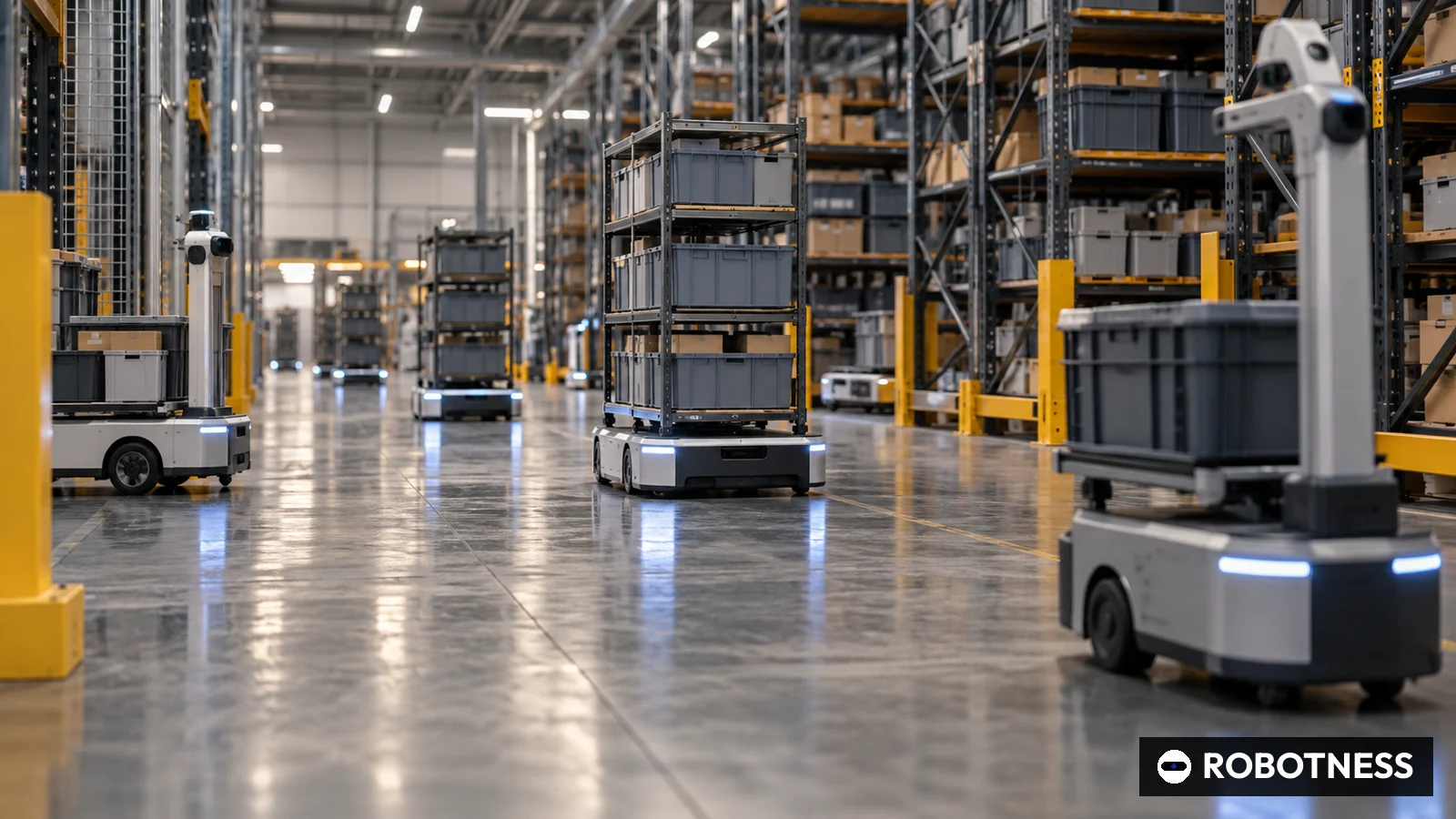
The world bought about 7,000 full-size humanoid robots last year and about 117,500 robots that move goods. That ratio, published in Frankfurt on 30 September 2026 in the International Federation of Robotics' World Robotics 2026 Service Robots report, is the clearest industry-wide measure yet of where service automation stands.
Shipments of professional service robots rose 24% to almost 250,000 units in 2025, the IFR said. Medical robots grew 19% and consumer service robots 37%. For investors who have put billions into humanoids this year, the numbers show how far sales trail attention, and how much the answer depends on who does the counting.
Logistics carries almost half the volume
Transport and logistics stayed the largest application, with 117,500 units sold in 2025, up 21% and equal to 47% of the professional market, according to the IFR. These robots move materials and make deliveries inside plants and warehouses. Outright sales remain the main way they are sold, but robots-as-a-service contracts kept gaining ground, and in the United States RaaS is now the dominant business model, the federation said.
Hospitality robots, mostly machines for guidance, information points and telepresence, ranked second, and professional cleaning robots, chiefly for floors, ranked third. The fastest growth among the five largest application groups came elsewhere. In its press-conference presentation the IFR put inspection and maintenance robots up 83% and professional cleaning up 40%, against 21% for logistics and 19% each for agriculture and hospitality.
Surgery drives medical robots, homes drive consumer volume
Medical robot sales rose 19% to 15,300 units. Surgical robots, at 8,400 units and up 57%, were the main source of that growth, which the IFR attributed to better clinical results and wider acceptance among clinicians. Consumer service robots, mostly domestic machines for the mass market, rose 37% to almost 34.2 million units, with household automation, built-in AI and smart-home links as the main trends.
Humanoids: about 7,000 units spread across 174 makers
The IFR counted about 7,000 full-size humanoids, defined as taller than 140 cm, sold worldwide in 2025 for commercial and professional uses beyond research and entertainment. Most applications remain specialised and often need a human teleoperator, it said, and it named safety standards, high training and maintenance costs and a weak business case, especially in industry, as the brakes on adoption. The federation has identified 174 humanoid manufacturers worldwide, more than half of them in China and many founded only in the past few years. Werner Kraus, who chairs the IFR service robot committee and heads automation and robotics at Fraunhofer IPA, said the 2026 report includes a dedicated chapter on humanoids.
The IFR's figures come with a warning. They are based on a sample of 238 producers out of 1,001 manufacturers, are not projected to the whole industry, and the federation strongly discourages comparing survey waves because the sample changes each year. Market researcher IDC, counting differently, reported nearly 25,000 humanoid shipments in the first half of 2026 alone, up 432.1%, with Chinese vendors taking more than 95% and research, education, demonstration and government buyers 69% of units.
ROBOTNESS analysis
The service robot market is being built on wheels rather than legs: logistics, cleaning and inspection machines carry the volume and the growth, while humanoids remain a pilot market whose size depends on the definition used.
The arithmetic is stark. Logistics robots alone outsold full-size humanoids about 16.8 to 1 in 2025, and the humanoid count equals 2.8% of the professional total. Spread across 174 makers, 7,000 units means an average of about 40 robots per company, too few for any supplier to learn from volume manufacturing. Inspection, at 83% growth, is where autonomy is earning money fastest, on robots built for one job.
- Professional service robots (incl. AMRs)
- 250,000
- 24
- of which transport and logistics
- 117,500
- 21
- Medical robots
- 15,300
- 19
- of which surgical robots
- 8,400
- 57
- Consumer service robots
- 34,200,000
- 37
- Full-size humanoids (above 140 cm)
- 7,000
- No data
IFR gives the professional total as almost 250,000, consumer as almost 34.2 million and humanoids as about 7,000. Sample of 238 of 1,001 manufacturers, not projected. Logistics share = 117,500 / 250,000 = 47%. Humanoids relative to professional total = 7,000 / 250,000 = 2.8%. Logistics to humanoids = 117,500 / 7,000 = 16.8. Units per humanoid maker = 7,000 / 174 = 40. Figures disclosed, not estimated.
As of Oct 1, 2026
The strongest counter-argument is timing. The IFR data describe 2025, and IDC's count for the first half of 2026 is more than three times the IFR's full-year humanoid figure, although the two use different definitions. A sample of 238 out of 1,001 manufacturers may also miss young humanoid makers, many of which only began shipping recently. If 2026 is the break year, the IFR's 2025 snapshot will look dated within months.
- Inspection and maintenance
- 83
- No data
- Professional cleaning
- 40
- 3
- Transport and logistics
- 21
- 1
- Agriculture
- 19
- No data
- Hospitality
- 19
- 2
Growth rates from the IFR World Robotics 2026 press-conference presentation; ranks 1 to 3 as stated in the IFR release, other ranks not disclosed. Figures disclosed, not estimated.
As of Oct 1, 2026
In the bull case, the 2026 data confirm that humanoids moved from demonstrations into paid work, RaaS lowers the entry price as it already has for logistics robots in the US, and the 174 makers consolidate into a few volume producers. In the bear case, most 2026 units again go to research, education and showrooms, as IDC's 69% share suggests, while capital keeps flowing to a category whose commercial sales are a rounding error next to logistics and cleaning.
- IFR
- 2025 full year
- Full-size humanoids above 140 cm sold for commercial and professional use
- 7,000
- No data
- IDC
- H1 2026
- Humanoid shipments, IDC definition
- 25,000
- 432.1
IFR: about 7,000. IDC: nearly 25,000, published 29 September 2026. Definitions and methods differ, so the rows are not directly comparable. Figures disclosed, not estimated.
As of Oct 1, 2026
Three dated signals will test the thesis.
- By 31 March 2027, the 2026 annual reports of listed humanoid makers such as UBTech and Unitree, the first audited full-year unit counts.
- Through 2027, whether RaaS contracts appear for humanoids at the scale they exist for US logistics robots.
- Around September 2027, the IFR's next service robot report, and whether full-size humanoid sales clear 25,000 units, which would equal a tenth of the 2025 professional total.
- 238 of 1,001 manufacturers, not projected
- 30 September 2026, Frankfurt
- 15,300 units, +19%
- 8,400 units, +57%
- almost 34.2 million units, +37%
- 117,500 units, +21%, 47% share
- about 7,000 (above 140 cm)
- 174, more than half in China
- Inspection and maintenance, +83%
- almost 250,000 units, +24%
Why it matters
The IFR is the only body that publishes a global, supplier-reported count of service robots, and its 2026 report is the first to put an official number on commercial humanoid sales. About 7,000 full-size units in 2025 is a useful anchor against which company claims and market forecasts can now be checked.
The report also shows where buyers are spending. Logistics, cleaning and inspection robots are growing at 21% to 83% on business models customers already understand, including RaaS. That is the revenue base on which most service robot companies will have to finance their next products, humanoids included.
Rival analysis
Logistics is where the established players sit. AutoStore and Symbotic in warehouse automation and Agility Robotics with Digit sell into the segment that accounts for 47% of professional units. In inspection, ANYbotics is among the companies exposed to the fastest-growing application at 83%.
In humanoids, the IFR's finding that more than half of 174 makers are in China matches IDC's finding that Chinese vendors shipped more than 95% of units in the first half of 2026. UBTech, which reported 921 full-size humanoids sold in the first half of 2026, and Unitree are the listed bellwethers. US makers such as Figure AI and Apptronik have raised far larger sums but disclose few unit numbers.
Valuation context
Private humanoid valuations in the ROBOTNESS database run from $1.35 billion for London's Humanoid to $39 billion for Figure AI. Set against about 7,000 full-size humanoids sold worldwide in 2025, those prices are bets on unit volumes one to two orders of magnitude higher within a few years.
We do not convert the IFR unit data into market value, because the federation does not publish service robot revenue in this release and any average price would be an estimate.
Supply-chain implications
Logistics and cleaning robots run on mature components such as wheel drives, lidar and depth cameras, and battery packs, which is one reason their prices allow RaaS models. Humanoids need many more actuators, reducers and hands per unit, which raises cost and links their scale-up to component makers, a large share of them in China.
The IFR's note that trade regimes and cybersecurity rules could favour locally made robots in the medium term, while lowering unit sales in the short term, points to a more regional supply chain for service robots.
Signals to watch
First, the 2026 annual reports of listed humanoid makers, due by the end of March 2027, which will show audited unit counts. Second, any humanoid RaaS contracts on the scale of US logistics fleets. Third, the IFR's next service robot report, expected around September 2027 on this year's timing, and whether full-size humanoid sales exceed 25,000 units.
Analyst view
Thesis: service robot growth is coming from single-purpose wheeled machines, and humanoids are still a pilot market. Confidence: medium. The IFR data are supplier-reported and consistent across segments, but they cover 2025 only and a sample of 238 producers, while IDC's first-half 2026 count suggests faster humanoid growth this year.
We would change our view if audited 2026 reports show full-size humanoid sales of tens of thousands of units with most going to commercial rather than research and demonstration buyers.
Questions you should be asking
How many of the 174 humanoid makers reported to the IFR survey? What share of the 7,000 full-size humanoids went to industrial customers? How does the IFR treat units leased under RaaS in its counts? Does the IFR expect to publish humanoid revenue or price data? How large is the gap between the IFR and IDC humanoid definitions in units?