Symbotic turns a profit as revenue rises 23% and systems in deployment jump to 70
Symbotic reported fiscal second-quarter 2026 revenue of $676.5 million, up 23%, and net income of $9.4 million against a loss a year earlier, in results filed with the SEC on May 6, 2026. Adjusted EBITDA more than doubled to $77.8 million, systems in deployment rose to 70 from 52 a quarter earlier, and the company guided third-quarter revenue to $700 million to $720 million.
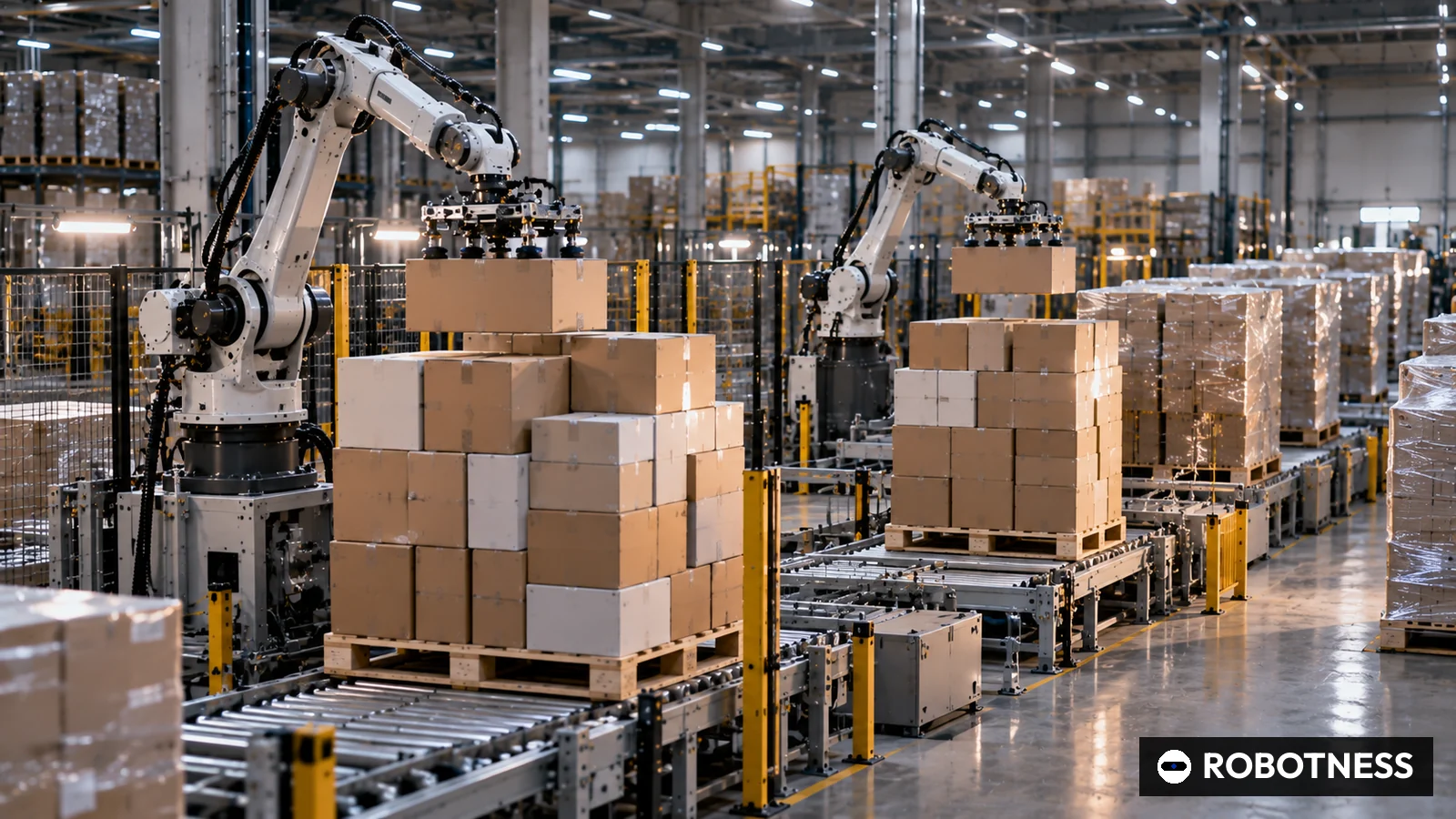
Symbotic, the Massachusetts warehouse automation company whose largest customer is Walmart, reported revenue of $676.48 million for its fiscal second quarter ended March 28, 2026, up 23% from $549.65 million a year earlier, according to results furnished to the U.S. Securities and Exchange Commission on May 6, 2026. The company swung to net income of $9.43 million from a net loss of $9.85 million.
Adjusted EBITDA rose to $77.75 million from $34.72 million, more than doubling, which puts the adjusted EBITDA margin at about 11.5% of revenue. Gross margin widened to 22.2% from 20.2%, and adjusted gross margin to 24.5% from 22.2%. Over the first six months of the fiscal year Symbotic booked $1,306.47 million in revenue against $1,036.34 million a year earlier, net income of $22.79 million against a loss of $26.71 million, and adjusted EBITDA of $144.66 million against $52.62 million.
The revenue mix shows how much of the business is still hardware delivery. Systems revenue was $634.50 million, about 93.8% of the total. Software maintenance and support brought in $12.92 million and operation services $29.06 million. Cash and cash equivalents stood at $2.01 billion on March 28, up from $1.24 billion on September 27, 2025.
The operating figure investors watched most closely was deployment. Symbotic's investor presentation, filed as an exhibit to the same 8-K, shows 70 systems in deployment at the end of the quarter, against 52 at the end of the first quarter, 50 at the end of fiscal 2025 and 46 a year earlier. The presentation puts total backlog at $22.7 billion and lists a six-year contract worth about $11 billion with GreenBox, the warehouse-as-a-service joint venture Symbotic formed with SoftBank and in which it holds 35%.
For the third quarter, which ends in late June, Symbotic guided revenue of $700 million to $720 million and adjusted EBITDA of $80 million to $85 million. Chief Executive Rick Cohen said customers across industries were getting tangible value from the systems, and Chief Financial Officer Izzy Martins pointed to growth, margin expansion and the rise in deployments as the basis for a solid growth path.
Symbotic's named customers include Walmart, C&S, Albertsons, Southern Glazer's, Medline and GreenBox. The presentation cites more than 650 issued patents, more than $1 billion in cumulative research and development spending and an annual R&D budget above $125 million.
The technology automates the case-handling end of a distribution center. Autonomous vehicles run at high speed through a dense multi-level storage structure, robotic arms build mixed pallets for each store, and software sequences the cases so that pallets arrive aisle-ready. This differs from goods-to-person systems such as AutoStore's cube, which fetch bins of individual items for picking, and from mobile robot fleets that work in existing aisles.
The comparison with listed peers is instructive. AutoStore reported first-quarter 2026 revenue of $165.8 million on April 23, up 92.9%, with an adjusted EBITDA margin of 44.0% because it sells hardware through integrators. Teradyne's robotics segment, home to Universal Robots and MiR, reported $91 million in first-quarter revenue on April 28. Symbotic is several times larger than either, but its margin reflects the cost of building and commissioning entire systems itself.
The risks are concentration and execution. Walmart and GreenBox account for most of the backlog, so a change in Walmart's capital plans would hit Symbotic directly. Moving from 52 to 70 systems in deployment in one quarter also raises the commissioning load, and in November 2024 Symbotic said its interim statements for the first three quarters of fiscal 2024 had to be restated after costs tied to project milestones were expensed too early.
The next checkpoints are the third-quarter report in early August, where investors will test the $700 million to $720 million guide, the pace at which systems move from deployment to completed, and any new customer outside the Walmart orbit.
- Symbotic
- FQ2 2026 (to Mar 28)
- 676.5
- USD
- 23.1
- 11.5
- AutoStore
- Q1 2026
- 165.8
- USD
- 92.9
- 44
- Teradyne Robotics
- Q1 2026
- 91
- USD
- No data
- No data
Revenue as reported. Symbotic growth = 676.48 / 549.65 minus 1; Symbotic adjusted EBITDA margin = 77.75 / 676.48. AutoStore figures as reported. Teradyne does not disclose robotics EBITDA; prior-year segment revenue not used. Figures disclosed, not estimated.
As of Oct 1, 2026
ROBOTNESS analysis
Symbotic has crossed into sustained profitability, and the jump to 70 systems in deployment turns its $22.7 billion backlog from a promise into a construction schedule.
The evidence is in three numbers. Adjusted EBITDA more than doubled while revenue grew 23%, so incremental revenue is arriving at a much higher margin. Net income was positive for both the quarter and the half. And the 18-system rise in deployments in a single quarter is the largest step in the series the company publishes.
The strongest counter-argument is concentration. Most of the backlog sits with Walmart and GreenBox, a joint venture in which Symbotic itself holds 35%, so the order book depends heavily on one retailer and on an affiliate.
Bull case. Deployments convert on schedule, adjusted EBITDA margin climbs toward the mid-teens as software and services grow, and Symbotic signs a large customer unrelated to Walmart. The $2.01 billion cash pile then funds expansion without dilution.
Bear case. Commissioning 70 systems strains engineering capacity, project costs overrun and margins stall near 11%. A pause in Walmart spending would expose how little of the backlog is diversified.
Signals to watch:
- Fiscal third-quarter results in early August 2026 against the $700 million to $720 million revenue guide
- The count of systems completed versus in deployment in the next investor presentation
- Any GreenBox site opening or new non-Walmart customer announced before fiscal year-end on September 26, 2026
- $2.01 billion
- $22.7 billion
- Fiscal Q2 2026, ended March 28, 2026
- $676.48 million, up 23%
- $9.43 million (prior year: loss of $9.85 million)
- Revenue $700 million to $720 million; adjusted EBITDA $80 million to $85 million
- 22.2% (prior year: 20.2%)
- May 6, 2026
- $77.75 million (prior year: $34.72 million)
- 70 (52 a quarter earlier)
Why it matters
Symbotic is the largest listed pure play in warehouse automation by revenue, and its results are the clearest public read on how fast big retailers are rebuilding distribution centers around robots. A profitable quarter with adjusted EBITDA more than doubling shows that the model can make money at scale, something investors doubted after earlier accounting restatements.
The deployment count matters more than the quarter's earnings. Revenue at Symbotic is recognized as systems are built, so 70 systems in deployment sets the revenue run rate for the next several quarters and explains why management guided higher for the third quarter.
Rival analysis
AutoStore competes for automation budgets with a lighter, partner-led model and much higher margins but far smaller revenue per site. Ocado sells grocery-specific grid systems, while Dematic, part of KION, and Swisslog, part of KUKA, deliver integrated warehouses that mix many technologies. Mobile robot fleets from Locus Robotics and Amazon's in-house designs attack the same labor problem in existing buildings.
Symbotic's advantage is end-to-end case handling at very high density for grocery and general merchandise distribution. Its disadvantage is that each system is a large capital project, so sales cycles are long and customer count is small.
Valuation context
On the disclosed figures, Symbotic's adjusted EBITDA margin was about 11.5% (77.75 / 676.48), against 44.0% at AutoStore in its first quarter. Systems revenue was about 93.8% of the total (634.50 / 676.48), so recurring software and services remain a small share.
The $22.7 billion backlog equals roughly 8.4 years of revenue at the second-quarter run rate (22.7 billion / (676.48 million x 4)). That cushions the story but also shows how long conversion will take.
Supply-chain implications
Each Symbotic system combines steel storage structure, autonomous vehicles with batteries and drive electronics, robotic palletizing arms and a software stack. Structure and vehicle production scale with deployments, so the jump to 70 active builds raises demand for fabricated steel and electronics.
The company noted in August 2025 a next-generation storage structure designed for faster assembly, which, if it works as intended, would lower installation labor per site, the main bottleneck in a deployment surge.
Signals to watch
The third-quarter report will show whether revenue lands in the $700 million to $720 million range and whether adjusted EBITDA reaches $80 million to $85 million. A miss after the deployment surge would point to commissioning strain.
Watch also for the ratio of completed to in-deployment systems, the first GreenBox sites, and any customer announcement outside Walmart and its affiliates.
Analyst view
Thesis: Symbotic has proved it can grow and earn money at the same time, and the deployment surge underwrites the next two quarters of revenue. Confidence: medium. The financials come from the SEC-filed release and presentation, but customer concentration and the company's past accounting problems leave execution risk that the numbers do not capture.
We would judge the stock on conversion of deployments and diversification of customers rather than on headline backlog.
Questions you should be asking
How many of the 70 systems in deployment belong to Walmart, GreenBox and other customers respectively?
When does Symbotic expect software and services to exceed 10% of revenue?
What share of the $22.7 billion backlog is expected to convert within the next 24 months?