Korea's AI robot alliance reaches 280 members in its first year, with shipyard and refinery humanoids aimed at 2027 and 2028
Korea's trade ministry said on May 29 that the AI robot division of its M.AX manufacturing alliance now has about 280 members and is running industrial humanoid pilots with HD Hyundai Heavy Industries, SK Energy and BGF. It also highlighted Korean robot foundation models, a 13 km/h humanoid lower body from KAIST and plans for a 500 billion won fund with a mandatory humanoid share.
South Korea's Ministry of Trade, Industry and Energy on May 29, 2026 published the first-year results of the AI robot division of its M.AX alliance, the public-private body it uses to push AI into manufacturing, at a conference held at the Seoul headquarters of the robot maker Robotis. M.AX stands for manufacturing AI transformation.
The division now has about 280 member organisations, including robot makers, AI companies, component suppliers and end users, the ministry said. It put government spending in 2026 at about 180 billion won for robot-related R&D and about 76 billion won for field demonstrations.
Industrial humanoids with named customers
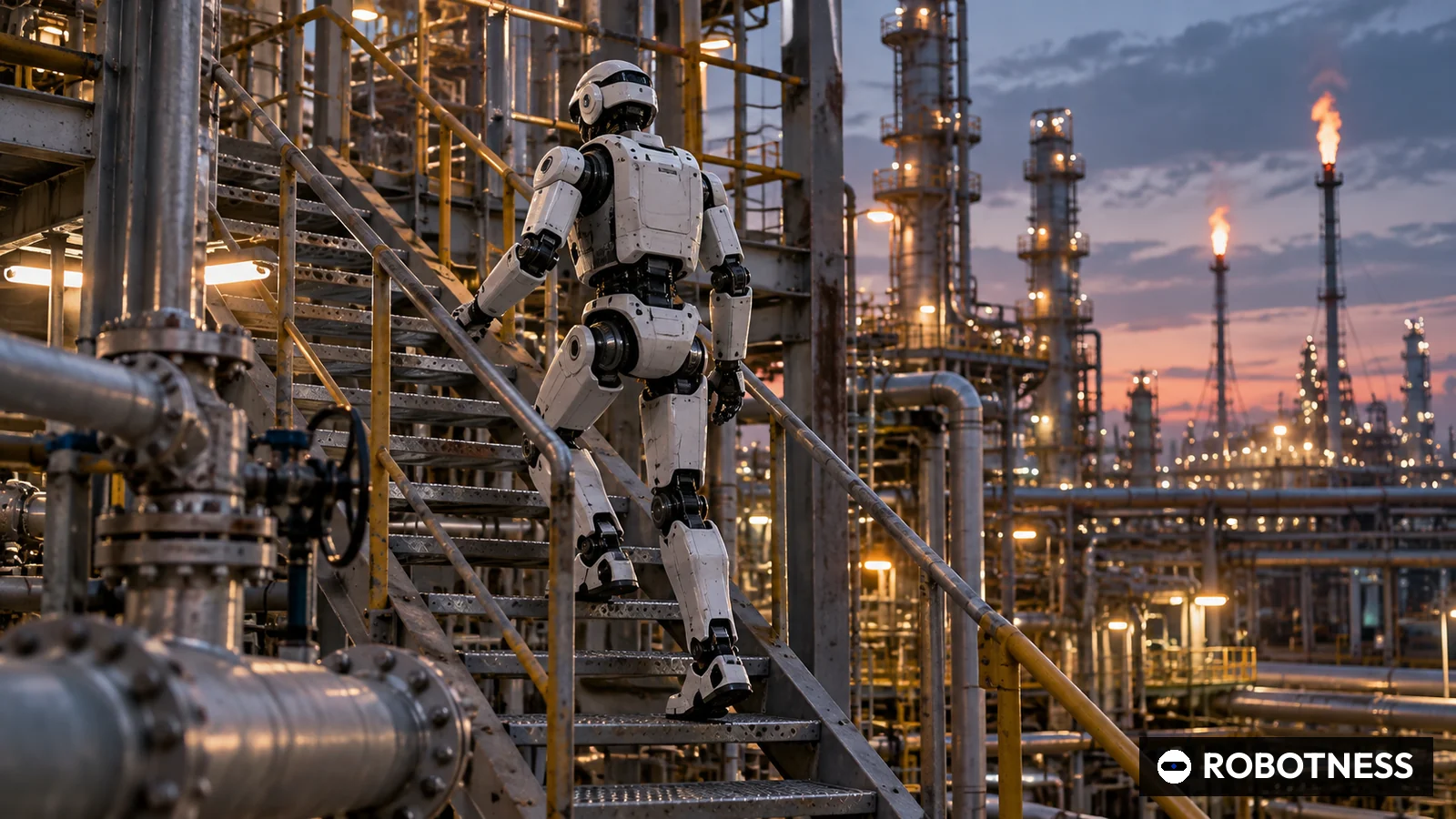
The most concrete results are in the industry-specific humanoid project that began in 2025 with six humanoid developments, according to the ministry. Holiday Robotics is building a humanoid with SK Energy that operates hydraulic valves in areas with toxic gas, and it ran field tests in November 2025 and February 2026 ahead of full deployment targeted for 2028. A-Robot is developing a humanoid with HD Hyundai Heavy Industries for fire watch in ship bulkhead sections, with tests since December 2025 and deployment targeted for 2027. Robotis has built a mock distribution centre with BGF's logistics arm and is training a humanoid to re-sort goods and pack mixed small orders, with 2028 as the target.
- A-Robot
- HD Hyundai Heavy Industries
- Fire watch in ship bulkheads
- Humanoid
- 2027
- Didden Robotics
- HD Hyundai Samho
- Welding in curved hull blocks
- Multi-legged robot
- 2027
- Holiday Robotics
- SK Energy
- Valve operation in toxic-gas areas
- Humanoid
- 2028
- Robotis
- BGF Logis
- Re-sorting and packing in distribution centres
- Humanoid
- 2028
Target years as disclosed by the Ministry of Trade, Industry and Energy on May 29, 2026; Didden's target is stated as within 2027. Not estimates.
As of Oct 1, 2026
Other alliance pilots involve non-humanoid machines. Didden Robotics and HD Hyundai Samho developed a multi-legged welding robot that uses fast-switching magnets to walk on vertical walls and ceilings inside curved hull blocks, testing since February 2026 with deployment planned within 2027. Robos installed a vision-AI carcass-cleaning system at a livestock market in Changnyeong that the ministry said cut washing water use by 40%, and Neubility patrol robots deployed with Seongnam City and the Bundang police coincided with a 17% fall in emergency calls in covered areas.
Korean robot models and components
The ministry singled out two domestic robot foundation models. Tomorrow Robotics released Habilis, a vision-language-action model for industrial tasks, in March 2026, developed with robot makers including Rainbow Robotics and Robotis and with users such as Amorepacific and CJ Logistics. In a box-moving logistics test it completed 124 tasks an hour, which the ministry described as comparable to NVIDIA and Physical Intelligence. RealWorld released RLDX-1 in May 2026, a model for five-fingered hands that learns from torque and touch as well as vision, and is collecting hotel workers' know-how with Lotte Hotels and Resorts. Holiday Robotics and Seoul National University also built a simulator, Holiday Sim, to be opened to alliance companies from July.
On components, a KAIST team led by Professor Park Hae-won built a humanoid lower body on in-house actuators that runs at 13 km/h and climbs steps of 30 cm or more. The ministry noted that actuators account for 50% to 70% of a humanoid's cost and compared the speed with Tesla's Optimus Gen 3 at 13 km/h and Unitree's H1 at 12 km/h. Aidin Robotics developed a robot hand that holds more than 20 kg with tactile sensing across the palm, to be used in a logistics humanoid with Rainbow Robotics and CJ Logistics.
Money and regulation
The ministry said it will build a dedicated M.AX fund with a target of 500 billion won that must invest a minimum share in humanoids, and that it created a 5 billion won humanoid-parts demonstration line through a supplementary budget within the 76.7 billion won intelligent robot dissemination programme. Earlier deregulation halved safety certification time for outdoor mobile robots from 60 to 30 days and cut review items from 16 to 8, and a regulatory sandbox now supports bipedal humanoid trials in factories.
Risks and open questions
The ministry did not disclose budgets per project, unit volumes for the humanoid pilots or performance data beyond the headline figures. Several deployment dates fall in 2027 and 2028, and the 500 billion won fund was still a target, not a closed fund, at the time of the release.
ROBOTNESS analysis
The alliance's real achievement is matching Korean humanoid startups with heavy-industry customers early, which gives them field data that most rivals outside China and the US lack.
The evidence is the customer list. HD Hyundai Heavy Industries, SK Energy and BGF are not technology partners but operators of the sites where the robots will work, and each pilot targets one narrow, hazardous or repetitive task.
The strongest counter-argument is scale. Pilots with one customer each do not create a market, and Chinese makers are already selling humanoids in volumes these projects will not reach before 2028.
Bull case. The 2027 and 2028 deployments succeed, the customers order fleets, and Korean firms such as Holiday Robotics, A-Robot and Robotis become specialist suppliers to shipbuilding, refining and retail logistics, backed by domestic models like Habilis and a humanoid-weighted fund.
Bear case. The pilots stay pilots, model performance claims do not hold up outside controlled tests, and the fund is slow to deploy. Customers then buy cheaper general-purpose humanoids from abroad once those mature.
Signals to watch.
- Opening of Holiday Sim to alliance companies, planned from July 2026.
- Closing and first investments of the 500 billion won M.AX fund and its humanoid quota.
- A-Robot and HD Hyundai Heavy Industries fire-watch humanoid entering service in 2027.
- May 29, 2026, at Robotis headquarters in Seoul
- 500 billion won M.AX fund target with humanoid quota
- About 280 organisations in the AI robot division
- Outdoor robot review cut from 60 to 30 days
- 124 tasks an hour in a box-moving test
- About 180 billion won
- SK Energy, HD Hyundai Heavy Industries, BGF
- 13 km/h, steps of 30 cm or more
- About 76 billion won
Why it matters
The release shows how Korea intends to build a humanoid industry without matching Chinese volumes: by pairing startups with large domestic operators in shipbuilding, refining and retail. Each pilot gives a developer a paying site, real data and a reference customer.
It also shows the state backing domestic robot software. Naming Habilis and RLDX-1 against NVIDIA and Physical Intelligence is a signal to Korean buyers that local models are policy-preferred.
Rival analysis
Hyundai Motor Group's Boston Dynamics and Samsung's Rainbow Robotics are the large Korean players. The alliance pilots are a channel for smaller firms like Holiday Robotics, A-Robot and Robotis to win industrial niches before those giants scale.
Globally, Tomorrow Robotics' claim of 124 tasks an hour in a box-moving test is a ministry-reported benchmark without published methodology, so comparison with NVIDIA and Physical Intelligence models should be treated as indicative.
Valuation context
Robotis is the listed beneficiary most directly tied to a humanoid pilot. The ministry did not disclose contract values, so the pilots are reputational and data assets rather than revenue for now.
The planned 500 billion won fund with a mandatory humanoid share would be a meaningful source of growth capital for unlisted Korean humanoid startups if it closes as described.
Supply-chain implications
Components remain the gap. The ministry's own note that actuators make up 50% to 70% of humanoid cost explains why KAIST's in-house actuator lower body and Aidin Robotics' tactile hand are featured.
The new 5 billion won humanoid-parts demonstration line, inside the 76.7 billion won dissemination programme, pairs component makers with robot makers so parts are validated in real robots, a prerequisite for domestic sourcing.
Signals to watch
Holiday Sim's opening to alliance members from July 2026 and uptake by robot makers. The closing of the M.AX fund and its first humanoid investments.
The 2027 deployments of the A-Robot fire-watch humanoid and the Didden welding robot, which will be the first test of whether alliance pilots turn into fleet orders.
Analyst view
Thesis: alliance pilots will produce a handful of specialist humanoid suppliers to Korean heavy industry by 2028, but not a mass-market champion. Confidence: medium. Reasons: named customers and dated targets exist, but volumes and budgets per project are undisclosed.
What would change the view: fleet orders from HD Hyundai Heavy Industries or SK Energy, or a third-party benchmark confirming Korean model performance.
Questions you should be asking
How many units will each humanoid pilot deploy, and who pays for them after the demonstration phase? Will Habilis and RLDX-1 be benchmarked on public datasets?
What minimum humanoid share will the M.AX fund impose, and who will manage it?