Figure's Helix 02 hands a humanoid's whole body to one neural network, deleting 109,504 lines of control code
Figure AI on Jan. 27, 2026 released Helix 02, a robot foundation model that runs a humanoid from camera pixels and fingertip touch down to joint commands at 1 kHz, replacing 109,504 lines of hand-written C++ with a 10-million-parameter learned controller. The company showed a Figure 03 unloading and reloading a dishwasher across a full kitchen in a four-minute, 61-action run it says had no resets and no teleoperation.
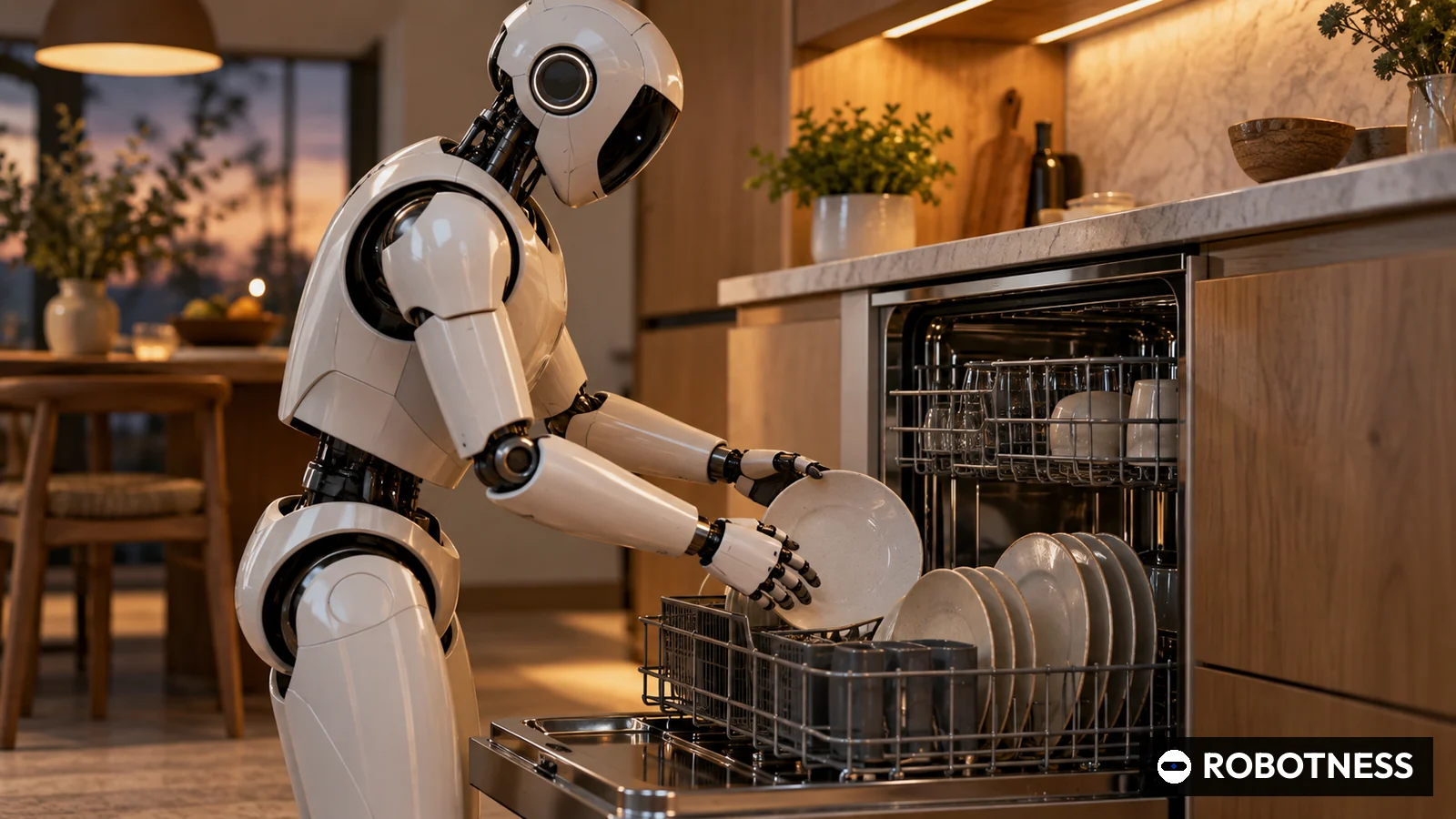
Figure AI said on Jan. 27, 2026 that it had removed 109,504 lines of hand-engineered C++ from its humanoid and replaced them with a neural network of 10 million parameters. The new learned controller, which the company calls System 0, sits at the bottom of Helix 02, the second generation of the robot foundation model Figure first showed in February 2025, and it now decides every joint command for the robot's legs, torso, arms and fingers a thousand times a second.
That deletion is the real news, more than the dishwasher video that came with it. Until now almost every humanoid that walks and manipulates, from research labs to factory pilots, has paired a learned "brain" for the hands with a classical, hand-tuned controller for balance and locomotion. Figure is betting that the seam between those two layers is what keeps humanoids from doing long, messy jobs in homes and plants, and that the seam can be closed with data rather than engineering. Whether a four-minute demonstration says anything about the reliability a paying customer needs is the open issue this article works through.
What Figure actually disclosed about the three layers
Figure described Helix 02 as three stacked systems. System 2 handles scene understanding and language and passes latent goals downward; Figure did not disclose its size or update rate. System 1 is a transformer running at 200 Hz that takes in the head cameras, new cameras in each palm, fingertip tactile sensors and full-body proprioception, and outputs joint-level targets for the whole robot down to individual fingers. System 0 runs at 1 kHz, reads joint state and base motion, and writes actuator commands. The company said System 0 was trained on more than 1,000 hours of human motion data retargeted to the robot's joints and in simulation across more than 200,000 parallel environments with heavy domain randomization.
The headline demonstration was a single autonomous run in which a Figure 03 walked through a full-sized kitchen, unloaded a dishwasher, put items away and reloaded it. Figure said the run lasted four minutes, chained 61 loco-manipulation actions, involved no resets or human intervention and was not teleoperated, and called it the longest-horizon, most complex task completed autonomously by a humanoid. It also showed four dexterity clips: unscrewing a bottle cap, picking a single pill from an organiser, dispensing exactly 5 ml from a syringe and picking metal parts from a cluttered bin at its BotQ factory. Figure gave no success rates and no count of failed attempts.
- System 2 parameters (billions)
- 7
- No data
- System 1 control rate (Hz)
- 200
- 200
- System 1 parameters (millions)
- 80
- No data
- Learned whole-body controller (System 0) parameters (millions)
- No data
- 10
- System 0 control rate (Hz)
- No data
- 1,000
- Disclosed training data (hours)
- 500
- 1,000
- Hand-written C++ lines replaced
- No data
- 109,504
- Longest disclosed autonomous task (minutes)
- No data
- 4
Helix data: about 500 hours of teleoperation for S1 and S2. Helix 02 data: more than 1,000 hours of retargeted human motion for System 0 only; S1 and S2 data not disclosed. Null = not disclosed. Figures disclosed by Figure AI, not estimated.
As of Oct 1, 2026
A year of Helix shows where the gains came from
The comparison with the first Helix is instructive. In February 2025 Figure said its System 2 was a 7-billion-parameter open-weight vision-language model running at 7 to 9 Hz, its System 1 an 80-million-parameter policy at 200 Hz, and that the pair was trained on about 500 hours of teleoperated data to drive 35 degrees of freedom in the upper body only. Helix 02 keeps the 200 Hz action layer but extends control to the legs and adds two senses the original lacked. Figure said these were the first policies it had shown that depend on palm cameras and touch, which arrived with the Figure 03 hardware launched on Oct. 9, 2025. Figure said each fingertip sensor on that robot registers forces as small as three grams.
On March 9, 2026 the company posted a living-room tidying demonstration that it said required no new algorithms and no special-case engineering, only new data added to the same model. The clip included spraying and wiping with a towel, throwing objects and in-hand reorientation. That claim, that new household skills are a data problem rather than a code problem, is the commercial thesis behind Helix 02, and it only pays off if Figure can afford the data and the robots to collect it.
Figure's money and factory make the model matter
Figure has the balance sheet to test that thesis at scale. It said in September 2025 that its Series C exceeded $1 billion at a $39 billion post-money valuation, against the $2.6 billion valuation it announced with its $675 million Series B in February 2024. Its BotQ plant was designed for up to 12,000 humanoids a year on the first line, with a goal of 100,000 robots over four years. The earlier Figure 02 spent 11 months at BMW's Spartanburg plant, where Figure said it logged more than 1,250 hours, loaded more than 90,000 parts and contributed to more than 30,000 X3 vehicles. By our arithmetic that is roughly 72 parts per robot-hour, the kind of narrow, repetitive work Helix 02 is meant to move beyond.
- Figure AI
- US
- Series C
- 1,000,000,000
- 39,000,000,000
- 2025-09-16
- 15
- Skild AI
- US
- Series C
- 1,400,000,000
- 14,000,000,000
- 2026-01-14
- 9.33
- Apptronik
- US
- Series A extension
- 520,000,000
- No data
- 2026-02-11
- No data
- Physical Intelligence
- US
- Series B
- No data
- No data
- 2025-11-20
- No data
- 1X Technologies
- US
- Series B
- 100,000,000
- No data
- 2024-01-13
- No data
Step-up = latest post-money / prior disclosed valuation (Figure: $39B / $2.6B at Series B, Feb. 2024; Skild: $14B / $1.5B at Series A, July 2024). Figure's Series C amount is stated by the company as exceeding $1B. Null = not disclosed. ROBOTNESS company database; figures disclosed, not estimated.
As of Oct 1, 2026
Rivals are converging on the same stack from different ends
Rivals are attacking the same problem from other directions. Physical Intelligence, which builds models for many robot makers rather than one body, said on March 3, 2026 that a new memory system lets its models complete tasks longer than ten minutes. NVIDIA previewed GR00T N2 at GTC on March 16, betting that a world action model that predicts video before acting generalises better than today's vision-language-action models. Skild AI raised $1.4 billion at a valuation above $14 billion in January on a promise of one brain for any robot, and Apptronik closed a $520 million Series A extension in February. Figure is the outlier in insisting on vertical integration: its own body, its own hands, its own model and its own factory.
ROBOTNESS analysis
Helix 02 matters less as a dishwasher demo than as proof that the last hand-coded layer of a humanoid can be learned, which moves the industry's bottleneck from control engineering to data collection and fleet hours.
The evidence is in what Figure chose to delete. Replacing 109,504 lines of C++ with a 10-million-parameter network trained on retargeted human motion means locomotion and balance now improve through the same data pipeline as manipulation. Figure's own follow-ups support that reading: by March it was adding household skills by adding data, and on Sept. 17, 2026 it reported that Helix 2.5, pretrained on its Index human-experience dataset, raised zero-shot success across 30 unseen homes to 56% from 9% for a model trained from scratch.
The strongest counter-argument is that Figure disclosed no reliability metric for Helix 02. A single four-minute run proves capability, not availability, and industrial buyers measure interventions per shift. At BMW, Figure's own target for Figure 02 was more than 99% placement success per shift and zero interventions. A learned whole-body controller also removes the hand-written safety envelope that engineers could inspect line by line, which regulators in Europe will ask about.
Bull case. Data-driven control lets Figure's fleet, its Brookfield-linked home data and BotQ output compound into a lead that rivals running classical controllers cannot match, and every new skill ships as a model update across thousands of robots.
Bear case. Long-horizon home tasks sit at 56% success even after pretraining, the factory customers who pay today care about uptime more than generality, and open models from NVIDIA and others narrow the gap before Figure's volume arrives.
Signals to watch:
- Figure's next disclosure of interventions or success rates for Helix-driven Figure 03 units at BMW Spartanburg, where F.03 arrived on June 30, 2026.
- Whether BotQ output reported during 2027 tracks the 100,000-robot, four-year goal, which implies an average of 25,000 units a year, about 2.1 times the first line's stated capacity.
- NVIDIA's general release of GR00T N2, promised by the end of 2026, as the open benchmark Helix will be measured against.
- Helix 02, three-layer robot foundation model (S2 reasoning, S1 at 200 Hz, S0 at 1 kHz)
- Figure 03, launched Oct. 9, 2025
- Jan. 27, 2026 (Figure AI blog)
- Palm cameras and fingertip tactile sensors (3 g sensitivity)
- 1,000+ hours retargeted human motion; 200,000+ parallel sim environments
- 4-minute dishwasher unload and reload, 61 actions, no resets
- $39B post-money, Series C (Sept. 16, 2025)
- System 0, 10M parameters, replaces 109,504 lines of C++
Why it matters
Helix 02 is the first time a well-funded humanoid company has publicly replaced its entire low-level controller with a learned network and shown that network driving long, contact-rich manipulation while walking. Figure's disclosure is specific: a 10-million-parameter System 0 at 1 kHz, trained on more than 1,000 hours of retargeted human motion and over 200,000 simulated environments, in place of 109,504 lines of C++. For investors this changes what a humanoid company's moat is made of. Control code was a craft asset held by a few teams; a learned controller is a data asset that scales with fleet size and human-motion capture.
It also changes how products improve. Figure's March 9 living-room demo and its September Helix 2.5 results describe skills arriving through additional data rather than new engineering. If that holds, the marginal cost of a new task falls toward the cost of collecting and labelling examples, and the company with the most robots and the most human data wins. That is why Figure followed Helix 02 with the Index dataset and a $3.5 billion compute commitment to Nscale in September 2026.
Rival analysis
Physical Intelligence is the closest model-only rival. Its March 3, 2026 memory work targets tasks longer than ten minutes, a longer horizon than Figure's four-minute run, but it sells to many hardware makers and does not control a body end to end from 1 kHz upwards. NVIDIA's GR00T N2, previewed March 16, is the open alternative most humanoid makers without their own labs will adopt; its world-action-model approach predicts video before acting, while Figure's stack is a hierarchy of policies.
Skild AI pitches one brain for any robot and raised $1.4 billion at more than $14 billion in January 2026. Tesla is building Optimus lines at Fremont and in Texas with an in-house stack. Boston Dynamics began building the production Atlas in January 2026 as Hyundai set a 30,000-robot annual target. Among these, Figure is the only one that has disclosed a learned 1 kHz whole-body controller with a line count of what it replaced, which gives it the clearest claim to having closed the locomotion and manipulation seam.
Valuation context
Figure's $39 billion post-money Series C valuation in September 2025 was 15.0 times the $2.6 billion it announced with its Series B in February 2024. Skild AI's step-up from its $1.5 billion Series A in July 2024 to more than $14 billion in January 2026 is about 9.3 times. Both step-ups price a model company, not a robot maker; hardware rivals that disclose valuations, such as Humanoid at $1.35 billion in July 2026, trade at a fraction of those levels.
Helix 02 is the evidence Figure needs to defend the model multiple. A valuation built on a proprietary foundation model requires visible model progress between rounds, and Figure released Helix 02 in January and Helix 2.5 in September 2026, with household demonstrations in March and May between them. The risk to that multiple is commoditisation: if NVIDIA's open models reach comparable whole-body performance on third-party hardware, Figure's premium compresses toward hardware-maker levels.
Supply-chain implications
Helix 02 shifts the bill of materials toward sensing and compute. Its System 1 depends on palm cameras and fingertip tactile sensors that Figure says register three grams, which makes camera modules, tactile skins and their readout electronics more critical than in earlier humanoids. Figure has not disclosed who supplies the image sensors or tactile electronics, which leaves the sourcing exposure of the new senses unknown to outside investors.
The 1 kHz learned controller still needs precise torque delivery from actuators; a learned policy does not remove dependence on reducers, motors and encoders, and it raises the premium on consistent actuator behaviour across units so one model works on every robot. Training is the other exposure: Figure's September 2026 Nscale agreement for up to 100,000 NVIDIA Vera Rubin GPUs ties the model roadmap to NVIDIA silicon and to a single compute partner's build-out.
Signals to watch
First, reliability data. Figure has published a 99% per-shift success target for BMW work in the past; a comparable metric for Helix-driven Figure 03 units at Spartanburg, where F.03 arrived June 30, 2026, would show whether learned whole-body control holds up on a line.
Second, volume. BotQ's goal of 100,000 robots over four years implies about 25,000 a year, roughly 2.1 times the first line's 12,000 capacity. Third, competition: NVIDIA's GR00T N2 general release by the end of 2026 and Physical Intelligence's next model will show whether Figure's lead in whole-body control is durable or a few months.
Analyst view
Thesis: Helix 02 converts humanoid control from an engineering problem into a data problem, which favours the company with the largest fleet and human-motion dataset. Confidence: medium.
We hold medium rather than high confidence because Figure published no success rates or intervention counts for Helix 02, and the only quantitative generalisation figure it has since released, 56% zero-shot success across 30 homes for Helix 2.5, is far below industrial requirements. The architecture claim is well documented; the commercial claim is not yet. Evidence of intervention-free shifts at a customer site would move us to high.
Questions you should be asking
What share of Helix 02 runs in Figure's internal evaluations complete without intervention, and how does that compare with the classical controller it replaced? How does Figure certify the safety of a learned 1 kHz controller for work near people, given that it can no longer point to inspectable control code?
How much of System 1 and System 2 training data now comes from human video and Index rather than teleoperation, and what does an hour of robot data cost Figure today compared with early 2025? Will Figure license Helix to other hardware makers, or keep it exclusive to its own robots?