Korea's National Growth Fund puts 150 billion won into robot-hand maker Wonik Robotics in a 350 billion won raise
Wonik Robotics will issue 349.99998 billion won of convertible preferred shares to Korea Development Bank's Advanced Strategic Industry Fund and an IMM Credit Solution vehicle, according to the Financial Services Commission and a Wonik Holdings filing. The money funds a robot-hand factory and AX center in Wanju, R&D and acquisitions, while Wonik Holdings grants investors a put option if the unit does not list within six years.
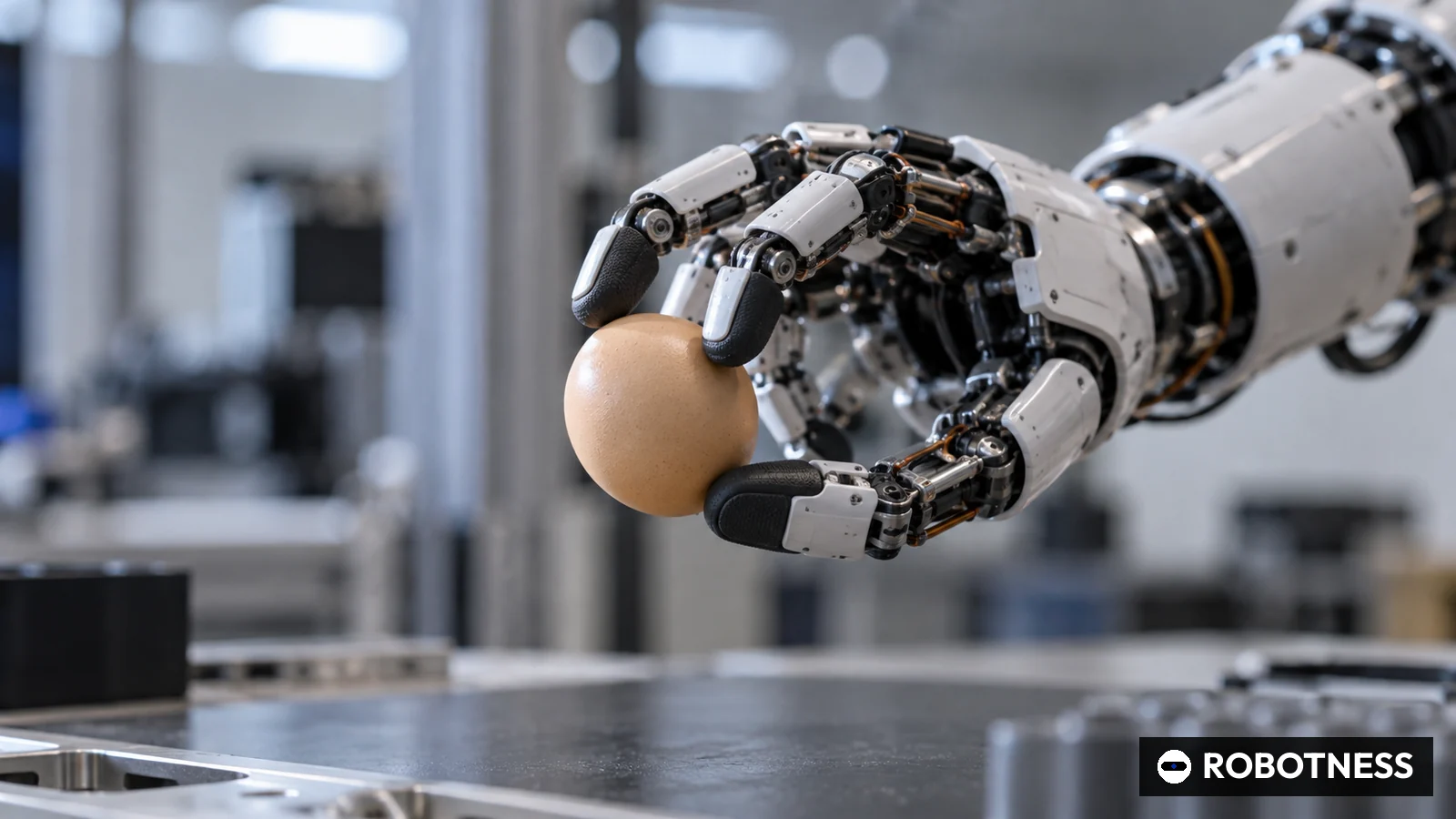
Wonik Robotics, the robot-hand maker controlled by Wonik Holdings, will raise 349.99998 billion won by issuing new convertible preferred shares to a private credit vehicle and to Korea Development Bank, which is investing on behalf of the state's Advanced Strategic Industry Fund. The Financial Services Commission (FSC) said on Aug. 28 that the National Growth Fund's investment committee approved a 150 billion won direct equity stake on Aug. 27, and Wonik Holdings disclosed the terms in a regulatory filing the same day.
Under the filing, Wonik Robotics will issue 13,707,750 voting convertible preferred shares at 25,533 won each through a third-party allotment, adding to 51,900,240 common shares outstanding before the deal. The buyers are Growth Solution No. 1, a special purpose company set up by IMM Credit Solution, and Korea Development Bank as manager of the Advanced Strategic Industry Fund. The FSC said the fund covers 150 billion won and private investors the remaining 200 billion won. Payment is scheduled for Nov. 20, 2026, although the filing says investors may move that date by written notice by Nov. 12.
At the issue price, the deal implies a pre-money equity value of about 1.325 trillion won and a post-money value of about 1.675 trillion won, by ROBOTNESS calculation from the share counts in the filing. The new preferred shares would represent about 20.9% of the enlarged share count. The size of the raise stands out against the company's balance sheet: Wonik Holdings reported Wonik Robotics' total assets at 7.70 billion won, so the new money is roughly 45 times the subsidiary's existing asset base.
The filing breaks down the use of proceeds. Wonik Robotics plans to spend 183.9 billion won between 2026 and 2031 on a factory and an "AX center" building, which the FSC located in Wanju, North Jeolla Province. Another 86.1 billion won is earmarked for R&D and operations, staged at 1.3 billion won in 2026, 15.9 billion won in 2027 and 68.9 billion won from 2028. A further 80 billion won is reserved for buying stakes in other companies in robot-related industries, with no target yet identified.
The investors get downside protection from the parent. Wonik Holdings said it will sign shareholder agreements granting both investors a put option if Wonik Robotics fails to list within six years of closing, extendable once by one year, or if it enters insolvency or restructuring proceedings. Wonik Holdings or the subsidiary can first exercise a call option. If the put is triggered, investors can sell their shares to Wonik Holdings at a price that yields a 4% internal rate of return. Penalty puts carry a 15% IRR, or fair value if higher, for listing-related breaches and a 10% IRR for other breaches. The holding company said it disclosed the agreement because the maximum exercise amount exceeds 10% of its consolidated assets, which stood at 1.97 trillion won.
Wonik Robotics was founded on April 13, 2004, and is led by chief executive Kim Hak-rae, according to the FSC. It released the first version of its Allegro Hand in 2012 and has since moved from research models (V1 to V3) to industrial models (V4 to V6) built for heavier factory loads. The FSC said the company has worked with Meta on a dedicated AI hand since 2024, counts more than 180 research partners and holds 45 registered or pending patents, 12 on robot hands and 33 on autonomous mobile robots and mobile manipulators. The company's products include the Allegro Hand V5, AMRs, AMMRs and industrial humanoids.
The FSC framed the deal as industrial policy. It said actuators and robot hands account for 70% of humanoid hardware cost and called the hand the main hardware bottleneck because it must combine precise grasping, real-time tactile feedback, fine torque control and durability. The regulator said Korea has one of the world's highest robot densities but only about 1% of global humanoid output, and cited a Goldman Sachs forecast that the humanoid market will grow from 1.2 billion dollars in 2024 to more than 175.6 billion dollars by 2035. It described the United States as strong in foundation models and manipulation and China as strong in locomotion and cost, built on its electric-vehicle supply chain.
The investment is the second confirmed deal under the "M.AX Frontier Project," a program run by the industry ministry and the FSC to pair manufacturing AI policy with the National Growth Fund. Wonik Robotics and Doosan Robotics both attended a July 1 joint meeting at which the two agencies said the fund would supply about 16 trillion won this year to six sectors including AI, robots and future cars. With the seven deals approved in August, cumulative approvals reached 17.9 trillion won across 31 cases, against a 30 trillion won target for the year, the FSC said.
The financing places Wonik among the better capitalized hand specialists worldwide, although it remains small next to the largest humanoid rounds. Figure AI raised a 1 billion dollar Series C at a 39 billion dollar post-money valuation in September 2025, Skild AI raised 1.4 billion dollars at a 14 billion dollar valuation in January 2026, and Apptronik closed a 520 million dollar Series A extension in February 2026, according to the companies. At home, the closest listed comparison is Rainbow Robotics, in which Samsung Electronics holds 35.0% according to Samsung's half-year report. Wonik's round is denominated in won and is shown below in local currency rather than converted.
- Wonik Robotics
- KR
- Convertible preferred, third-party allotment
- 349,999.98
- KRW
- 1,675,168.81
- 2026-08-27
- Figure AI
- US
- Series C
- 1,000
- USD
- 39,000
- 2025-09-16
- Skild AI
- US
- Series C
- 1,400
- USD
- 14,000
- 2026-01-14
- Apptronik
- US
- Series A extension
- 520
- USD
- No data
- 2026-02-11
- Sanctuary AI
- CA
- Series A
- 58.5
- USD
- No data
- 2022-03-02
Wonik amount and post-money from the Wonik Holdings DART filing of Aug. 28, 2026: post-money = (51,900,240 existing shares + 13,707,750 new preferred shares) x 25,533 won issue price; implied, not a disclosed valuation. Other rows from company announcements. Figures disclosed, not estimated; no currency conversion applied.
As of Oct 1, 2026
The risks are concentrated in execution and in the listing clock. A factory sized for industrial volumes will need customers beyond research labs, and the filing leaves 80 billion won of acquisitions unspecified. The six-year listing deadline, backed by a parent put at a 4% return and penalty rates of 10% to 15%, effectively turns part of the equity into a contingent liability for Wonik Holdings. The payment date can also still move.
The next markers are the Nov. 12 notice deadline and the Nov. 20 payment date, the start of construction in Wanju, and whether Wonik names an acquisition target for the 80 billion won tranche. The 2027 government budget for humanoid core parts, which the finance ministry said will rise to 62 billion won from 11.6 billion won, is a further test of how much public demand will flow to domestic component makers.
ROBOTNESS analysis
Seoul is using public capital to turn a research-grade hand supplier into a domestic source of the humanoid's most expensive and least commoditized part, and the parent-backed put shows that the risk is being shared with Wonik Holdings rather than priced purely as venture equity.
The evidence is in the structure. The state fund's 150 billion won ticket is paired with 200 billion won from an IMM Credit Solution vehicle, a credit investor rather than a robotics specialist, and both sit on a 4% IRR floor if the listing does not happen. The filing allocates more than half of the money, 183.9 billion won, to buildings and equipment over six years, which is a manufacturing bet, not a research grant.
The strongest counter-argument is that hands are where humanoid designs change fastest. Many developers build their own hands to match their own actuators and control stacks, so an independent supplier risks designing for a moving target. A plant sized for volume could be under-used if large humanoid makers keep hands in-house.
Bull case: Korean conglomerates now building humanoids, including LG with its planned bipedal robot and Hyundai with Atlas, prefer a domestic hand source, and Wonik converts its Allegro installed base and Meta work into volume contracts. The Wanju plant then anchors a local supply chain for reducers, sensors and tactile skins.
Bear case: hand demand stays concentrated in research labs while volume buyers integrate in-house, leaving Wonik with an expensive plant and a listing deadline. The put then pushes cost back onto Wonik Holdings at a 4% return, or more if breach clauses apply.
Signals to watch:
- Nov. 12 and Nov. 20, 2026: investor notice deadline and scheduled payment for the 13,707,750 preferred shares.
- First half of 2027: any named acquisition from the 80 billion won tranche reserved for robot-related companies.
- National Assembly vote on the 2027 budget, due under the constitution by Dec. 2, 2026: whether the 62 billion won core-parts line survives intact.
- Factory and AX center (2026 to 2031)
- No data
- No data
- No data
- 183.9
- R&D and operating funds
- 1.3
- 15.9
- 68.9
- 86.1
- Acquisition of robot-related companies (target undecided)
- No data
- No data
- No data
- 80
From the Wonik Holdings DART filing (subsidiary rights issue) of Aug. 28, 2026. Annual split disclosed only for operating funds.
As of Oct 1, 2026
- 13,707,750 voting convertible preferred shares at 25,533 won
- 4% IRR if no IPO within 6 years (plus one 1-year extension)
- Nov. 20, 2026 (scheduled)
- 349.99998 billion won
- 183.9 billion won, 2026 to 2031, Wanju
- Growth Solution No. 1 (IMM Credit Solution SPC), 200 billion won
- 150 billion won (Advanced Strategic Industry Fund via KDB)
- about 1.675 trillion won (ROBOTNESS calculation)
Why it matters
Wonik Robotics is the only robot company among the National Growth Fund's direct investments listed by the FSC, and the deal targets a component rather than a finished robot. The FSC's own rationale, that actuators and hands make up 70% of humanoid hardware cost, suggests Seoul expects value to accrue in parts that Korean manufacturers can make at scale, while US and Chinese firms compete on full-stack humanoids.
The deal also shows how the fund will work in practice. It co-invests alongside private credit, uses convertible preferred shares, and leans on a listed parent for downside protection. Other component makers seeking state money should expect similar terms, which favour companies with a creditworthy parent over standalone start-ups.
Rival analysis
Globally, the best-funded humanoid developers raise far larger sums but spread them over full robots. Figure AI's 1 billion dollar Series C at 39 billion dollars and Skild AI's 1.4 billion dollar round at 14 billion dollars dwarf Wonik's 350 billion won, yet neither is a dedicated hand supplier. The relevant rivalry for Wonik is with in-house hand programmes at humanoid makers and with other specialist hand suppliers that sell to the same research and pilot-line customers.
At home, Rainbow Robotics, 35.0% owned by Samsung Electronics, is the most direct competitor for state and conglomerate attention, while LG has said its planned bipedal humanoid will use LG Electronics actuators and LG Innotek sensors. That makes LG a potential competitor in components as much as a customer.
Valuation context
At the 25,533 won issue price, Wonik Robotics carries an implied post-money value of about 1.675 trillion won, against subsidiary assets of 7.70 billion won. That gap reflects a bet on future volume, not current operations. The 4% IRR floor on the put means the investors' worst case, absent a breach, is close to a low-yield bond backed by Wonik Holdings.
The penalty clauses matter for valuation. A listing-related breach lets investors sell at a 15% IRR or fair value, whichever is higher, which sets a ceiling on how long Wonik can defer an IPO without heavy cost.
Supply-chain implications
The FSC described the hand as a hardware bottleneck because it combines grasping, tactile feedback, torque control and durability. A Wanju plant producing hands and testing core parts in-house would pull demand for small motors, reducers, encoders and tactile sensors into North Jeolla. The FSC noted that 42.5% of the fund's approvals from January to August went to regions outside the capital area.
The 2027 budget line for sensors, actuators and humanoid batteries, set at 62 billion won, overlaps directly with Wonik's bill of materials. If both programmes run on time, Wonik is positioned as an anchor buyer for domestic sensor and actuator suppliers funded by the same policy.
Signals to watch
Near term, watch the Nov. 12 notice deadline and Nov. 20 payment date in the filing; a delay would signal renegotiation. Watch also for the signing of the second shareholder agreement with KDB, which the filing says will occur before payment.
Over 2027, watch for a named acquisition under the 80 billion won tranche, construction permits for the Wanju factory and AX center, and any supply agreement with a Korean humanoid programme such as LG's planned robot or Hyundai's Atlas deployment.
Analyst view
Thesis: the deal is a policy-backed bet that Korea can own the hand layer of the humanoid stack. Confidence: medium. The structure, the stated use of proceeds and the FSC's rationale are fully disclosed, which supports the thesis. Confidence is not high because no volume customer is named, the 80 billion won acquisition budget has no target and humanoid makers have strong incentives to keep hands in-house.
We would move to high confidence on a disclosed supply contract with a volume humanoid maker or on evidence that Wonik's industrial V4 to V6 hands are shipping in production lines rather than labs.
Questions you should be asking
Which customers will absorb the output of a factory funded with 183.9 billion won, and at what unit volumes does the plant break even. What is the price and duration of the work with Meta that the FSC cited.
How will Wonik Holdings account for the put option, which it says will be fair-valued annually, and how large could the non-operating swings be. Which robot-related companies are candidates for the 80 billion won acquisition budget.