Columbia spinout Tangent Robotics raises $4.5 million to give factory robots a sense of touch
Tangent Robotics, a New York company spun out of Columbia Engineering, said on 30 September 2026 it raised a $4.5 million pre-seed round co-led by Fly Ventures and Toyota Ventures. It is building robot hands with light-based touch sensors and learning methods for fine assembly tasks such as connector mating and gear meshing.
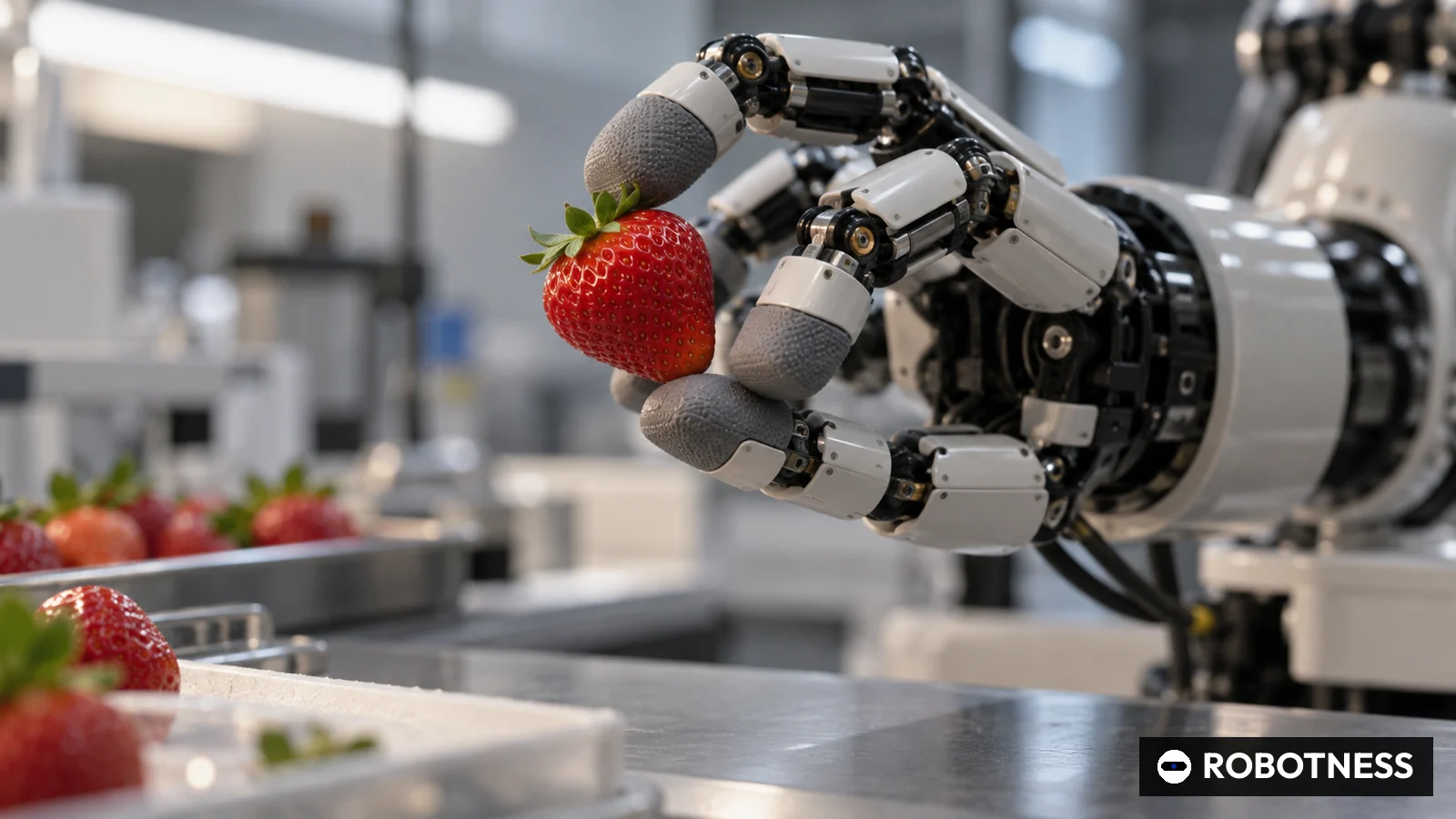
Tangent Robotics, a New York startup spun out of Columbia University's engineering school, said on 30 September 2026 that it had raised $4.5 million in a pre-seed round. Fly Ventures and Toyota Ventures co-led the round, with Logos Fund and Sparked Ventures also investing, according to the company's announcement.
The round
Tangent did not disclose a valuation. It said the money will go towards skilled robotic manipulation that combines hand hardware, touch sensing and motor learning, aimed at demanding manufacturing environments. The tasks it names are assembly, threading, connector mating, gasket seating, snap fitting, gear meshing and sequencing of unstructured parts, as well as installation and maintenance work.
The technology
The company's core is a light-based touch sensor for robot fingers. The company describes them as precise sensors built into the fingers themselves, so that contact is felt where the part is handled. Tangent says it pairs these sensors with robot hands that track human fingertip motion closely, plus data collection and machine-learning methods meant to make fine motor skills autonomous.
Co-founder Matei Ciocarlie argued in the announcement that copying the human hand is a mistake comparable to building flying machines with flapping wings. David Sokolic, a partner at Toyota Ventures, said the startup engineers compliance mainly into the sensor stack rather than relying only on mechanics, which he described as a reversal of the usual approach to manipulation.
Background
The company comes out of Columbia Engineering's Robotic Manipulation and Mobility Lab. Its co-founders are Pedro Piacenza; Ciocarlie, a Columbia robotics professor who earlier co-led the manipulation team at Willow Garage; and Ioannis Kymissis, an expert in unconventional electronics. The group previously built the DISCO touch-sensing finger, hands for NASA's Assistive Free Flyer robots on the International Space Station, and a robot hand that can manipulate objects in darkness, which Time named one of its Best Inventions of 2023.
Competitive context
Dexterous hands have become one of the most funded components in robotics as humanoid makers try to move beyond grasping. In Korea, the National Growth Fund put 150 billion won into robot-hand maker Wonik Robotics as part of a 350 billion won raise in August 2026, and Sanctuary AI took a strategic investment from Zeon in May 2026 tied to materials for dexterous robotics. Tangent is far smaller and aims at a narrower problem: the last few millimetres of contact in assembly, where position control alone fails and touch decides success.
ROBOTNESS analysis
Tangent's round is a bet that the bottleneck in robot assembly is sensing at the fingertip rather than hand anatomy or model size, and Toyota's co-lead suggests at least one carmaker sees fine assembly as the next task worth automating.
The evidence is in what the team has already built and in who invested. Light-based touch sensing has been published and demonstrated by the founders for years, and the target tasks are ones where today's factory robots still hand work back to people. Toyota Ventures co-leading a pre-seed round gives the company a plausible path to a pilot inside a manufacturer that cares about exactly these operations.
- SiMa.ai
- US
- Edge AI chips for physical AI
- Series C
- 150
- 2026-09-28
- Inbolt
- FR
- AI 3D vision for industrial robots
- Unnamed
- 12.5
- 2026-09-30
- Destro AI
- US
- Warehouse multi-robot orchestration
- Seed
- 8
- 2026-09-29
- Tangent Robotics
- US
- Tactile robot hands
- Pre-seed
- 4.5
- 2026-09-30
- Qibitech
- JP
- Vendor-agnostic robot control software
- Series B
- No data
- 2026-09-30
Amounts as disclosed on each company's primary announcement; Qibitech disclosed about JPY 600 million and is not converted. Tangent share of disclosed USD total = 4.5 / 175 = 2.6%. Figures disclosed, not estimated.
As of Oct 1, 2026
The strongest counter-argument is that end-to-end robot foundation models trained on large datasets may learn fine manipulation from vision and joint torque alone, making dedicated tactile hardware a niche. Pre-seed hardware companies also face long paths from lab prototypes to sensors that survive millions of factory cycles at an acceptable cost.
- Tangent Robotics
- US
- Pre-seed
- 4.5
- USD
- 2026-09-30
- Wonik Robotics
- KR
- Raise incl. National Growth Fund 150bn won
- 350,000
- KRW
- 2026-08-28
- Sanctuary AI
- CA
- Strategic (Zeon)
- No data
- No data
- 2026-05-26
- Sanctuary AI
- CA
- Series A
- 58.5
- USD
- 2022-03-02
Amounts in millions of the currency disclosed, from rounds verified by ROBOTNESS; Wonik Robotics 350,000 million won = 350 billion won. Different stages, not directly comparable. Figures disclosed, not estimated.
As of Oct 1, 2026
In the bull case Tangent runs a factory pilot within a year, publishes cycle times and success rates on connector or gear tasks, and becomes a supplier of hands or sensors to humanoid and arm makers. In the bear case sensor durability and cost lag, and general-purpose models close the performance gap before Tangent reaches production.
Three signals would confirm or break the thesis.
- By 30 June 2027, an announced factory pilot, ideally with a Toyota group company.
- By 31 December 2027, published success rates or cycle times on named assembly tasks.
- Within 18 months, a seed or Series A round, or a supply agreement with a humanoid or arm maker.
- Pre-seed
- $4.5 million
- Columbia Engineering, Robotic Manipulation and Mobility Lab
- 30 September 2026
- Pedro Piacenza, Matei Ciocarlie, Ioannis Kymissis
- Threading, connector mating, gasket seating, snap fitting, gear meshing
- Fly Ventures, Toyota Ventures (co-leads)
- Light-based touch sensors for robot fingers, hands and motor learning
- Logos Fund, Sparked Ventures
Why it matters
Most factory work that robots still cannot do is not heavy lifting but the last few millimetres: pushing a connector until it clicks, seating a gasket, meshing gears. These tasks depend on feeling contact, which position-controlled arms lack. Tangent is a small but focused attempt to supply that missing sense as a component.
Toyota Ventures co-leading the round matters more than its size. It gives a pre-seed hardware company a credible route to pilots in automotive assembly, where these operations are common and labour is scarce.
Rival analysis
Tangent's competition comes from two directions. Hand makers, including Wonik Robotics in Korea and the in-house hand programmes of humanoid companies, sell or build full hands and increasingly add tactile sensing. Model companies argue that large robot foundation models can learn fine manipulation from vision and proprioception without dedicated touch hardware.
Tangent's position is that sensing should be built into the fingertip and that compliance belongs in the sensor rather than the mechanism, as Toyota Ventures' David Sokolic put it. If that proves right, Tangent could sell sensors or fingertips to hand makers rather than compete with them, which we think is the more likely business model.
Valuation context
No valuation was disclosed. The $4.5 million equals 2.6% of the $175 million in disclosed USD robotics funding the desk verified between 28 September and 1 October 2026. In the hand and tactile category, the round is orders of magnitude below Wonik Robotics' 350 billion won raise in August 2026, which reflects stage rather than a judgement on technology.
Pre-seed rounds for academic spinouts are usually priced on team and intellectual property. The next round will likely depend on whether a factory pilot produces measurable success rates. That is our expectation, not a company statement.
Signals to watch
A factory pilot announcement by mid-2027, especially with a Toyota group company. Published success rates or cycle times on named assembly tasks by the end of 2027. A follow-on round or a supply agreement with a humanoid or arm maker within 18 months.
Analyst view
Thesis: Tangent is betting that fingertip sensing, not hand anatomy or model scale, is the bottleneck in robotic assembly. Confidence: low. The team's research record is strong and the investor mix is well chosen, but the company has disclosed no customers, pilots or performance data, and pre-seed hardware faces long durability and cost hurdles.
We would raise confidence on a named factory pilot with published metrics and lower it if general-purpose robot models demonstrate reliable connector and gear assembly without tactile hardware.
Questions you should be asking
Is Tangent selling complete hands, fingertip sensor modules or software? What durability have the light-based sensors shown in cycle tests? Which robot arms and humanoids are the hands designed to mount on? Is a pilot with a Toyota group company planned? How is ownership of the Columbia intellectual property structured?