Andreessen Horowitz leads $7.5 million pre-seed for Aleph Surgical, which wants robots to operate without a surgeon at the controls
Aleph Surgical, which is building autonomous surgical robots on embodied foundation models, said on 30 September 2026 that it raised $7.5 million in a pre-seed round led by Andreessen Horowitz. The company says its first system is already learning surgical tasks from demonstrations, but it has published no success rates.
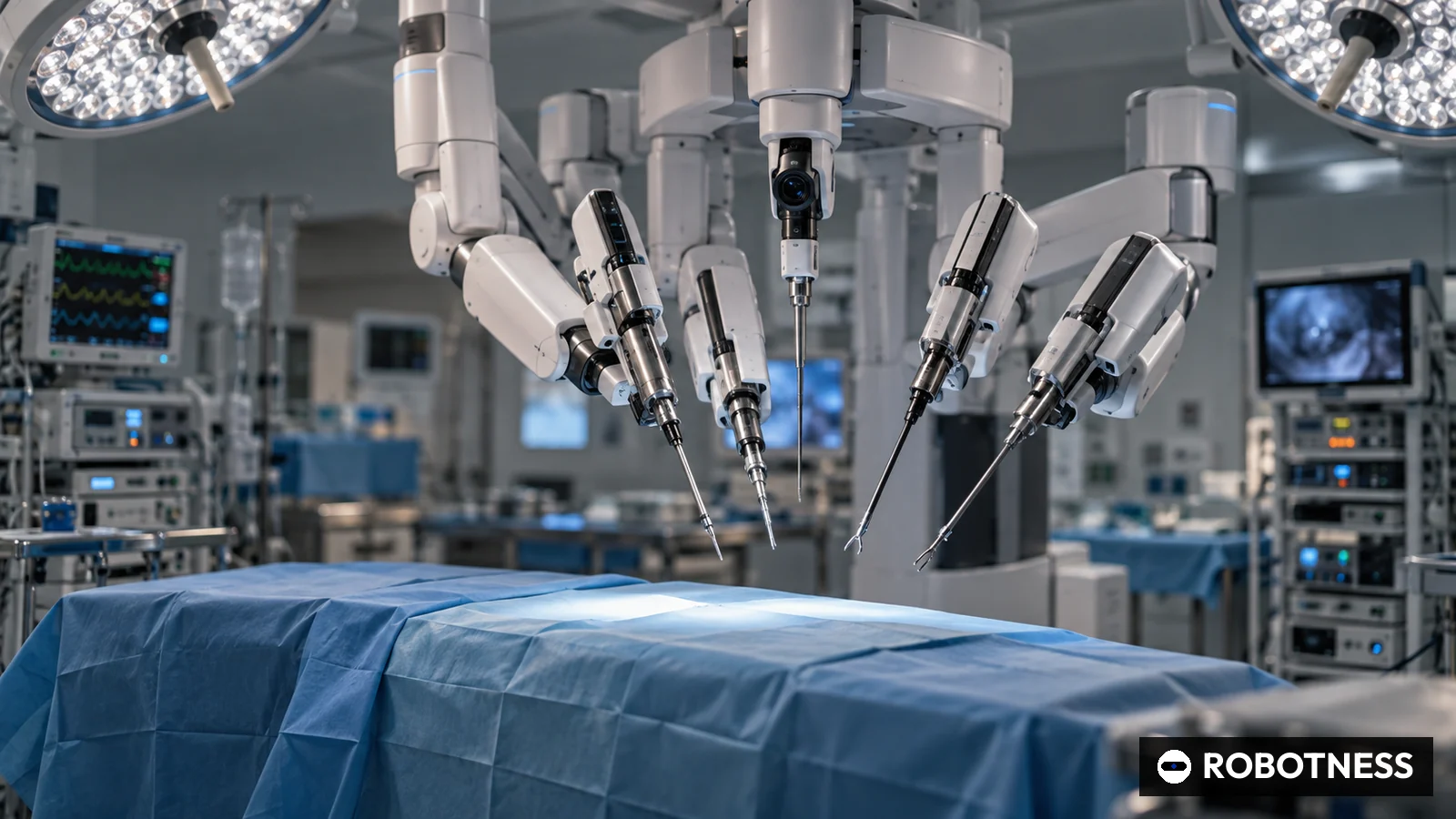
Aleph Surgical, a startup building robots meant to carry out surgical tasks with no surgeon at the controls, said on 30 September 2026 that it had raised $7.5 million in a pre-seed round led by Andreessen Horowitz. BoxGroup, Reveille VC, Constellation, FDVC, Valkyrie Ventures, Discipulus Ventures and Maniac Ventures also took part, according to the company's announcement. It disclosed no valuation, no breakdown of how the money will be spent and no founder names or headquarters location.
A first system that learns from demonstrations
The company says its first version is already learning to perform surgical tasks fully autonomously from demonstrations, and that it is hiring engineers, surgeons and operators. Its case rests on scarcity: training a surgeon takes more than a decade and millions of dollars, and access to good surgical care is highly unequal, Aleph argues. In a research preview published in March 2026 it described a purpose-built robot called Mark 0, embodied foundation models pretrained at internet scale across many modalities, tasks and robot bodies, and a hierarchy that splits a surgical goal into subtasks while running thinking, sensing and acting at different speeds. It chose vascular anastomosis, the joining of blood vessels, as its benchmark task. The preview gave no success rates and did not say whether tests used phantoms, animal tissue or living animals.
ROBOTNESS analysis
Aleph is applying the general-purpose robot-model playbook to the robot market with the highest bar for autonomy, and a pre-seed round buys research time rather than a product.
The demand side is real. The International Federation of Robotics said on the same day that 8,400 surgical robots were sold worldwide in 2025, up 57%, making surgery the main driver of medical robot growth. Aleph's round is the third largest of the four early-stage robotics rounds the desk verified this week, as the second table shows.
- 2026-09-30
- Pre-seed
- 7.5
- Andreessen Horowitz
Only round disclosed by the company. Valuation not disclosed. Figures disclosed, not estimated.
As of Oct 1, 2026
The strongest counter-argument is that capital is not the binding constraint in surgical autonomy. Clinical evidence and regulatory clearance are, and Aleph has so far shown neither data nor a named clinical partner. The bull case is a published anastomosis result on tissue with numbers that hold up, followed by a larger round within 12 to 18 months. The bear case is that autonomy shrinks to assistive features inside surgeon-controlled systems, where incumbents already sell thousands of units a year. Signals to watch: by 30 June 2027, a preprint or paper with success rates; named founders and clinical advisers; and a seed or Series A round with a disclosed valuation.
- Inbolt
- AI 3D vision for industrial robots
- Unnamed
- 12.5
- 2026-09-30
- Destro AI
- Warehouse multi-robot orchestration
- Seed
- 8
- 2026-09-29
- Aleph Surgical
- Autonomous surgical robots
- Pre-seed
- 7.5
- 2026-09-30
- Tangent Robotics
- Tactile robot hands
- Pre-seed
- 4.5
- 2026-09-30
Amounts as disclosed on each company's primary announcement. Aleph share = 7.5 / 32.5 = 23%. Figures disclosed, not estimated.
As of Oct 1, 2026
- Pre-seed
- $7.5 million
- Autonomous surgical robots; first system learning tasks from demonstrations (company)
- 30 September 2026
- Not disclosed
- Andreessen Horowitz
- Vascular anastomosis (March 2026 research preview)
- BoxGroup, Reveille VC, Constellation, FDVC, Valkyrie Ventures, Discipulus Ventures, Maniac Ventures
Why it matters
Aleph is one of the first startups to apply the embodied foundation model approach, pretraining across tasks and robot bodies, directly to surgery and to aim for full autonomy rather than surgeon assistance. Andreessen Horowitz leading a pre-seed round signals that generalist investors now see surgery as a target for robot models, not only for device companies. Surgical robot sales of 8,400 units in 2025, up 57% according to the IFR, show a market already buying robots; Aleph is betting that the next step is removing the operator.
Rival analysis
Established surgical robot makers sell surgeon-controlled systems, and their installed base and clinical data are the barrier Aleph must cross. Aleph's differentiator, if its claims hold, is the use of large pretrained models and a purpose-built robot rather than adding autonomy to existing arms.
Valuation context
No valuation was disclosed. The $7.5 million round is 23% of the $32.5 million in four early-stage robotics rounds the desk verified between 29 September and 1 October 2026. Without a valuation, revenue or clinical data, no step-up or multiple can be computed.
Supply-chain implications
Aleph builds its own Mark 0 robot, so it will need precision actuators, instruments and sterilisable components, plus GPU compute for pretraining. Medical-grade manufacturing and quality systems are a large fixed cost that a pre-seed budget does not cover, which points to partnerships or a much larger round before any clinical work.
Signals to watch
First, a preprint or paper with anastomosis success rates on tissue by 30 June 2027. Second, disclosure of founders, clinical advisers and a headquarters, which the announcement omits. Third, a seed or Series A round with a disclosed valuation, and any first contact with regulators on an autonomous indication.
Analyst view
Thesis: Aleph is a research bet on surgical autonomy, priced as such. Confidence: low. The investor list is strong, but there are no published metrics, no named team and no clinical partner. We would raise confidence on peer-reviewed or preprint results with numbers on biological tissue.
Questions you should be asking
Who are the founders and where is the company based? What success rate has v1 reached on anastomosis, and on what tissue? How many demonstrations does a task require? What regulatory path does Aleph plan for a fully autonomous procedure? Will Mark 0 be built in-house or with a contract manufacturer?