Intuitive passes $10 billion in revenue as da Vinci 5 takes half of its robot shipments, but guides procedure growth lower
Intuitive reported on January 22, 2026 that 2025 revenue rose about 21% to $10.06 billion as surgeons performed 3.153 million da Vinci procedures, and da Vinci 5 made up 870 of the 1,721 systems it placed. The company guided 2026 da Vinci procedure growth to 13% to 15%, down from about 18%, and put the tariff cost to its gross margin at about 1.2% of revenue.
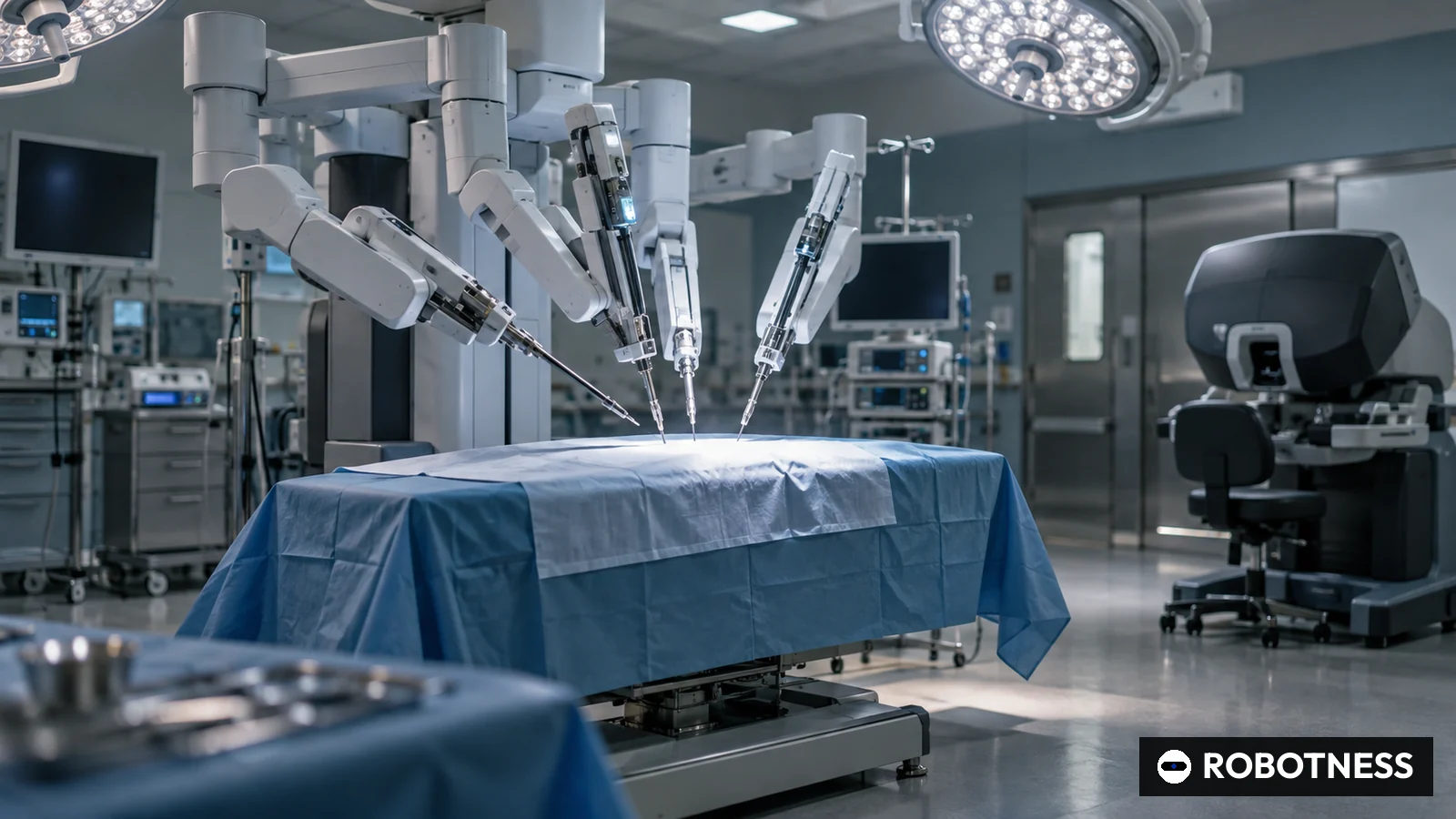
Surgeons performed 3.153 million operations with Intuitive's da Vinci robots in 2025, and for the first time more than half of the da Vinci systems the company shipped in a year were its newest model. Intuitive said on January 22, 2026 that full-year revenue rose about 21% to $10.06 billion, the first time the Sunnyvale, California company has crossed $10 billion, and that da Vinci 5 accounted for 870 of the 1,721 da Vinci systems it placed.
The same release carried a brake. Intuitive told investors it expects da Vinci procedures to grow 13% to 15% in 2026, against about 18% in 2025, and guided its non-GAAP gross margin to between 67% and 68% of revenue, including an estimated tariff cost of 1.2% of revenue. For the world's largest surgical robot maker the question is whether an upgrade cycle and a shift to pay-per-use leasing can keep earnings compounding as procedure growth slows and the first serious rivals reach American operating rooms. The numbers point to an answer, though not an unqualified one.
A $10 billion year carried by instruments, not robots
Fourth-quarter revenue rose 19% to $2.87 billion from $2.41 billion, the company said. Instruments and accessories, the disposable and reusable tools consumed in each operation, grew 17% to $1.66 billion, which Intuitive attributed to roughly 17% growth in da Vinci procedures and 44% growth in procedures on Ion, its robotic lung biopsy system. Systems revenue reached $786 million against $655 million, and services $422.0 million against $347.4 million. For the full year, the preliminary release dated January 14 put instruments and accessories at about $6.02 billion, up 19%, and systems at about $2.47 billion. Roughly six of every ten dollars Intuitive earns therefore come from the procedure, not the machine.
Profit kept pace. Fourth-quarter GAAP net income was $795 million, or $2.21 per diluted share, and non-GAAP net income $914 million, or $2.53. Full-year GAAP net income reached $2.86 billion, or $7.87 per share, and non-GAAP net income $3.24 billion, or $8.93. Intuitive ended the year with $9.03 billion in cash, cash equivalents and investments. Margins, however, slipped. By our calculation from the release's tables, fourth-quarter non-GAAP gross margin was 67.8%, down from 69.5% a year earlier, and GAAP gross margin 66.4% against 68.0%.
Placements show where the growth came from. Intuitive placed 532 da Vinci systems in the fourth quarter, up from 493, and 250 of them went out under operating leases, 150 of those on usage-based terms where the hospital pays as it operates. Over 2025 it placed 1,721 da Vinci systems, up from 1,526. A Form 8-K filed on January 14 breaks the year down as 987 systems in the United States and 734 abroad, of which 342 went to Europe, 269 to Asia and 123 to other markets. The installed base reached 11,106 da Vinci systems on December 31, up 12%. Ion added 195 systems over the year, but only 42 in the fourth quarter against 69 a year earlier, taking its installed base to 995.
Why da Vinci 5 matters more than the procedure count
da Vinci 5 is Intuitive's fifth-generation multiport platform. The company says it carries 10,000 times the computing power of earlier da Vinci systems and records more than 1,000 data points per second during surgery, which feeds the analytics products it sells to hospitals. Its share of placements rose from 23.7% in 2024 (362 of 1,526) to 50.6% in 2025 (870 of 1,721), and to 57.0% in the fourth quarter (303 of 532). In practice that means hospitals are now replacing older consoles as often as they are adding new capacity, which keeps systems revenue rising even as procedure growth cools.
The platform also gained new indications. On January 26, 2026, four days after the results, Intuitive said the US Food and Drug Administration had cleared da Vinci 5 for nine cardiac procedures, including mitral valve repair and replacement, tricuspid valve repair, internal mammary artery mobilization for bypass surgery, and closure of atrial septal defects, patent foramen ovale and the left atrial appendage. The clearance covers instruments without force feedback, and a limited number of US sites will start programmes through 2026. Intuitive counts more than 140,000 robotic-assisted cardiac procedures performed with its systems across 51 countries. Chief Executive Dave Rosa said opening the chest brings significant pain, a high risk of complications and long recovery times.
Rivals are arriving, led by Medtronic and a Shanghai challenger
The competitive picture changed within weeks of the results. Medtronic, which received FDA clearance for its Hugo system in urology in December 2025, said its first US commercial Hugo operation, a prostatectomy, took place at Cleveland Clinic on February 17, 2026, and that Hugo is available in more than 35 countries. It plans to extend Hugo to gynecology and general surgery. In China, MicroPort MedBot reported 2025 revenue of RMB551.1 million, up 114%, with about 73% earned outside China, a gross margin of 48.4% and more than 100 new orders for its Toumai robot in 2025. Smaller challengers include Medicaroid's hinotori in Japan, backed by Kawasaki Heavy Industries and Sysmex, and meere company's Revo-i in Korea.
- Intuitive
- da Vinci, Ion
- 10,064.7
- USD
- 20.5
- No data
- MicroPort MedBot
- Toumai
- 551.1
- RMB
- 114
- 60
- Medtronic
- Hugo
- No data
- No data
- No data
- 35
- meere company
- Revo-i
- No data
- No data
- No data
- 10
Intuitive FY2025 per its Q4 2025 release; growth = 10,064.7 / 8,352.1 minus 1. MicroPort MedBot FY2025 per its 2025 annual results; markets = more than 60 overseas approvals for Toumai. Medtronic does not disclose Hugo revenue; Hugo available in more than 35 countries (Medtronic, Feb 17, 2026). meere company reported Revo-i approvals in 10 countries (company news, Sep 1, 2026). Market counts are floors. Figures disclosed, not estimated.
As of Oct 1, 2026
The scale gap remains wide. Dividing 3.153 million da Vinci procedures by the 11,106 systems installed at year-end gives about 284 operations per robot per year, a utilisation figure no rival discloses. Usage-based leases, which made up 28.2% of fourth-quarter placements (150 of 532), let Intuitive meet hospitals that balk at capital budgets on the same terms a challenger would offer, while keeping the instrument stream that funds its research.
The risks sit in the supply chain and the growth rate. Intuitive makes most instruments and accessories in Mexico and endoscopes in Germany, imports certain materials from China, and warned in its release that the ultimate effect of tariffs could be material. Leasing defers revenue that a sale would book upfront. And a slowdown to 13% to 15% procedure growth leaves less room to absorb margin pressure.
The next tests are Intuitive's first-quarter 2026 report, the pace at which US hospitals start da Vinci 5 cardiac programmes through 2026, and whether Medtronic wins FDA clearance to take Hugo beyond urology.
- da Vinci systems placed
- 1526
- 1,721
- 12.8
- da Vinci 5 systems placed
- 362
- 870
- 140.3
- da Vinci 5 share of placements (%)
- 23.7
- 50.6
- No data
- Total revenue (USD m)
- 8352.1
- 10,064.7
- 20.5
- Q4 non-GAAP gross margin (%)
- 69.5
- 67.8
- No data
- da Vinci procedures (m)
- No data
- 3.15
- 18
- da Vinci procedures per year-end installed system
- No data
- 284
- No data
- Instruments and accessories revenue per da Vinci procedure (USD)
- No data
- 1,909
- No data
Share = da Vinci 5 placements / da Vinci placements. Q4 non-GAAP gross margin = non-GAAP gross profit / revenue (1,942.1 / 2,866.2; 1,678.4 / 2,413.5). Procedures per system = 3,153,000 / 11,106 year-end installed base (understates average utilisation). Revenue per procedure = about $6.02 billion instruments and accessories / 3.153 million; includes Ion instruments, so an upper bound. Procedure growth about 18% as reported. Figures disclosed, derived metrics computed by ROBOTNESS.
As of Oct 1, 2026
ROBOTNESS analysis
Intuitive's growth engine is shifting from adding robots to replacing and leasing them, which makes da Vinci 5 its main defence against Hugo and Toumai but ties its margins more tightly to tariffs and to hospital utilisation.
The evidence is in the mix. da Vinci 5 more than doubled its share of placements to 50.6%, nearly half of fourth-quarter systems went out on operating leases, and instruments and accessories brought in about $6.02 billion, close to 60% of revenue. Our calculation of about $1,909 in instruments and accessories revenue per da Vinci procedure (an upper bound, since the line also includes Ion) shows why every installed robot matters more than its sale price.
The strongest counter-argument is that the slowdown is structural. If da Vinci procedure growth falls to the low end of 13% while non-GAAP gross margin settles near 67%, the upgrade cycle buys time rather than growth, and challengers priced for capital-constrained hospitals erode the replacement market first.
Bull case. Cardiac and other new indications add procedures that open surgery still dominates, usage-based leases widen access in mid-sized hospitals, and tariff costs fade as Intuitive shifts manufacturing. Procedure growth lands at the top of guidance and margins recover toward 69%.
Bear case. Hugo wins broader US indications in 2026, MicroPort MedBot's export growth turns into price pressure in Europe and Asia, and tariffs deepen. Procedure growth undershoots and leasing slows reported systems revenue.
Signals to watch:
- Intuitive's first-quarter 2026 report, for procedure growth against the 13% to 15% guide and the share of usage-based placements
- The number of US hospitals running da Vinci 5 cardiac programmes by the end of 2026
- FDA decisions on extending Medtronic's Hugo to gynecology and general surgery during 2026
- $10.06 billion, up about 21% (2024: $8.35 billion)
- January 22, 2026 (preliminary figures January 14)
- da Vinci procedures up 13% to 15%; non-GAAP gross margin 67% to 68% incl. ~1.2% tariff cost
- 11,106 da Vinci systems at Dec 31, 2025, up 12%; Ion 995
- GAAP $2.86 billion ($7.87/share); non-GAAP $3.24 billion ($8.93/share)
- $2.87 billion, up 19%
- FDA cleared da Vinci 5 for nine cardiac procedures on January 26, 2026
- 250 of 532 placements, 150 usage-based
- 3.153 million, up about 18%
- 1,721 (2024: 1,526); da Vinci 5: 870 (2024: 362)
Why it matters
Intuitive is the reference point for the whole surgical robotics category. Its installed base of 11,106 da Vinci systems and 3.153 million procedures a year define what hospitals expect from a surgical robot in uptime, training and instrument supply, and every challenger is priced and positioned against it. A year in which revenue crossed $10 billion while guided procedure growth fell to 13% to 15% marks the point where the company's growth starts to depend more on replacing its own systems and selling new indications than on converting open and laparoscopic surgery.
The 2025 numbers also show a change in how robots are sold. With 250 of 532 fourth-quarter placements on operating leases and 150 on usage-based terms, Intuitive is turning the console into a service hospitals pay for per case. That model matters beyond surgery: it is the same robot-as-a-service logic warehouse and industrial robot makers are trying to sell, here running at a scale of thousands of units.
Rival analysis
Medtronic's Hugo is the most direct threat in the United States because Medtronic is already an established supplier to the same hospitals. Its December 2025 urology clearance and February 17, 2026 first US case at Cleveland Clinic put it years behind da Vinci on indications in the US, but its presence in more than 35 countries gives it reference sites abroad. The indication gap is the near-term barrier; Medtronic has said it plans gynecology and general surgery next.
MicroPort MedBot is the fastest grower on disclosed numbers, with 2025 revenue up 114% to RMB551.1 million and about 73% earned overseas at a 48.4% gross margin. Its revenue is still a small fraction of Intuitive's, but its export pattern shows Chinese surgical robots competing first in markets where price and regulatory reach matter more than the depth of clinical evidence. Japan's hinotori from Medicaroid and Korea's Revo-i from meere company are national challengers that so far lack disclosed scale comparable to either.
Valuation context
We do not compare market capitalisation here, only disclosed operating data. On those, Intuitive earned non-GAAP net income of $3.24 billion on $10.06 billion revenue in 2025, a non-GAAP net margin of about 32% (3.24 / 10.06). Instruments and accessories of about $6.02 billion were close to 60% of revenue (6.02 / 10.06), which is why the market treats the company more like a consumables business with a robot attached than like a capital equipment maker.
Against that, MicroPort MedBot's 2025 net loss of RMB254.1 million on RMB551.1 million revenue shows where challengers sit on the cost curve. The gap in profitability, not only in installed base, is what allows Intuitive to fund leasing programmes that challengers would struggle to finance.
Supply-chain implications
Intuitive's release names its main exposures. Instruments and accessories are produced mainly in Mexico, endoscopes in Germany, and certain materials are imported from China, so US tariffs affect both its consumables and its imaging hardware. The company put the 2026 tariff cost at about 1.2% of revenue, plus or minus 10 basis points, inside its non-GAAP gross margin guidance of 67% to 68%.
The component base of a surgical robot overlaps with industrial robotics in precision motors, cable-driven wrists, encoders and optics, but surgical instruments are regulated products with validated suppliers, which makes switching sites slow. That is why tariff exposure in instruments is harder to fix quickly than in system hardware.
Signals to watch
The first-quarter 2026 report will show whether procedure growth holds near the top of the 13% to 15% range and whether usage-based leases keep rising as a share of placements. The number of US sites starting da Vinci 5 cardiac programmes through 2026 will show whether the January 26 clearance turns into volume.
On the competitive side, the FDA's handling of Medtronic's applications to extend Hugo beyond urology, and MicroPort MedBot's 2026 interim results for overseas Toumai orders, are the two most direct reads on whether challengers are gaining share.
Analyst view
Thesis: Intuitive's next phase is a replacement and leasing cycle led by da Vinci 5, which protects its position but makes margins more sensitive to tariffs and utilisation. Confidence: medium. The placement mix, lease counts and margin trend all come from the company's own filings and support the thesis; what we cannot see is how fast utilisation per system grows in 2026, because Intuitive does not disclose procedures per system and our figure of about 284 is a year-end approximation.
What would change our view: two consecutive quarters of procedure growth below 13% combined with falling da Vinci 5 placements would suggest the upgrade cycle is front-loaded. Conversely, gross margin recovering toward 69% while usage leases expand would show the model scales without sacrificing profitability.
Questions you should be asking
What share of 2025 da Vinci 5 placements were trade-ins of older systems rather than new capacity?
How does procedure utilisation on usage-based leases compare with purchased systems?
How quickly can instrument production be shifted to reduce the 1.2% tariff cost, and what does that cost in capital spending?
Which cardiac procedures does Intuitive expect to drive volume first under the January 26 clearance?