Boston Dynamics opens Atlas training center at Hyundai's Georgia plant as Hyundai targets 25,000 humanoids
Boston Dynamics opened the Robotics Metaplant Application Center at Hyundai Motor Group Metaplant America, where Atlas is training on parts sequencing ahead of assembly work by 2030. The company said Hyundai plans to deploy 25,000 Atlas units and build a US facility able to make 30,000 robots a year, while Hyundai targets Atlas on its Georgia line from 2028.
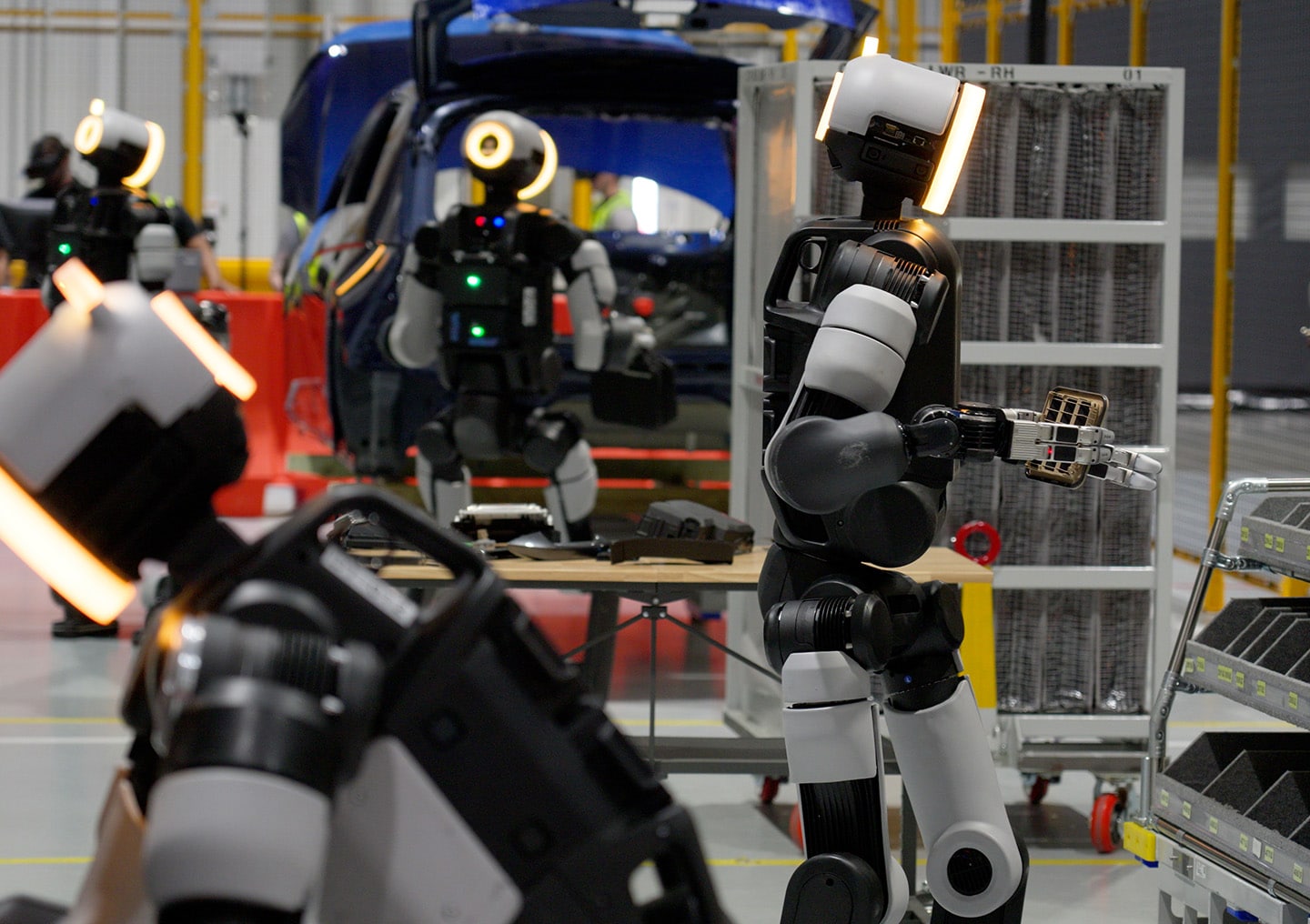
Boston Dynamics has opened a center inside Hyundai Motor Group's Georgia car plant where its Atlas humanoid robots are trained on real factory work, the company said on Sept. 21. The Robotics Metaplant Application Center (RMAC) sits at Hyundai Motor Group Metaplant America (HMGMA) outside Savannah and is the testbed for bringing Atlas into automotive production, according to Boston Dynamics.
Atlas is currently being trained on logistics and sequencing tasks, preparing automotive parts and placing them in the correct order for assembly, Boston Dynamics said. By 2030 the company expects applications to extend to component assembly, along with repetitive motions, strenuous work and lifting heavy loads. In 2027 RMAC will move to a new building at HMGMA that will make it approximately ten times its current size.
The announcement attaches numbers to Hyundai's plan. Boston Dynamics said Hyundai intends to deploy 25,000 Atlas units at Hyundai Motor and Kia plants worldwide over the next few years, and that a new US production facility will be able to build 30,000 robots a year. "Together with Hyundai Motor Group, we are pioneering physical AI at enterprise scale," said Zack Jackowski, Boston Dynamics' chief product and technology officer.
Hyundai Motor laid out the same trajectory to investors a month earlier. At its CEO Investor Day in Seoul on Aug. 26, the company said RMAC had opened in the United States in June and would expand tenfold by the end of the year, and that it aims to deploy Atlas at HMGMA from 2028. "We're building Spot and Stretch robots and soon, we'll be mass producing Atlas humanoid robots," Hyundai said in its release on the event. The two timelines differ on when the tenfold expansion lands; Boston Dynamics' later statement places it in 2027 with a move to a new building.
Hyundai also framed robots as a group-wide business. The company said it aims to become a physical AI company, with robotics commercialization alongside Boston Dynamics heading toward full deployment by 2028, and that development, production, distribution, sales and finance for robots would all sit inside the group. It said existing dealer networks will distribute robots and that Hyundai Capital is exploring robot financing.
Boston Dynamics is part of Hyundai Motor Group and sells the Spot quadruped and the Stretch warehouse robot. The RMAC expansion in 2027 will also be used to explore use cases with Spot and Stretch customers in manufacturing, aerospace, semiconductors, logistics, food and beverage, and life sciences, the company said.
The plan sets a high bar against rivals that depend on outside capital. Figure AI raised a 1 billion dollar Series C at a 39 billion dollar post-money valuation in September 2025. Apptronik closed a 520 million dollar Series A extension in February 2026, and Agility Robotics raised a 150 million dollar Series B in 2022. Those companies must fund production and find customers; Hyundai is both owner and first customer of Atlas, with the plants already in place.
In Korea, the plan puts Hyundai ahead of other conglomerates on disclosed scale. LG said in August it will unveil a bipedal humanoid built with NVIDIA in the first quarter of 2027 and test its wheeled CLOiD robot on a washing-machine line in Tennessee this year. Samsung Electronics holds 35.0% of Rainbow Robotics, according to its half-year report. Neither group has disclosed a deployment target comparable to 25,000 units. Seoul, for its part, is raising the 2027 budget for humanoid sensors, actuators and batteries to 62 billion won, which could create domestic suppliers for a robot factory of Hyundai's size.
- Planned Atlas deployment at Hyundai and Kia plants
- 25,000
- units
- next few years
- Boston Dynamics
- Capacity of new US robot production facility
- 30,000
- robots per year
- not disclosed
- Boston Dynamics
- RMAC expansion factor
- 10
- times current size
- 2027 (BD); end of 2026 (Hyundai)
- Boston Dynamics; Hyundai Motor
- Atlas deployment at HMGMA
- 2,028
- start year
- from 2028
- Hyundai Motor
- Atlas component assembly
- 2,030
- target year
- by 2030
- Boston Dynamics
Figures as disclosed by Boston Dynamics (Sept. 21, 2026) and Hyundai Motor (Aug. 26, 2026). The two companies give different timing for the tenfold RMAC expansion.
As of Oct 1, 2026
What the center does is generate data in the place where the robot will work. A humanoid that sequences parts must recognize varied components, grasp them reliably and place them in order at line speed. Training on the actual line exposes the robot to lighting, clutter and timing conditions that labs cannot reproduce, and Hyundai has said RMAC collects real-world data and runs tests before deployment.
The open questions are scale and timing. Neither Boston Dynamics nor Hyundai has given a date for the 30,000-unit production facility or a schedule for the 25,000-unit deployment beyond "the next few years." Moving from sequencing to component assembly by 2030 requires a step change in dexterity, and the gap between the June opening and full deployment in 2028 leaves little room for slippage.
The next markers are the move to the new RMAC building in 2027, any site announcement for the US robot factory, and the first Atlas deployment on a production line at HMGMA, which Hyundai targets from 2028.
ROBOTNESS analysis
Hyundai is treating Atlas as an owned product line with a captive customer, and RMAC is the mechanism that turns its plants into the robot's training ground.
The evidence is vertical control. Hyundai owns Boston Dynamics, owns the plants where Atlas will work, says it will build a factory for 30,000 robots a year and plans to distribute and finance robots through its own dealer and capital arms. No outside-funded humanoid developer controls all of those steps.
The strongest counter-argument is that ownership does not solve the hard part. Sequencing parts is a narrow task; component assembly requires a level of dexterity that Boston Dynamics itself places no earlier than 2030. Hyundai's own timelines already diverge on when RMAC expands, which suggests plans are still moving.
Bull case: Atlas proves reliable on sequencing at HMGMA by 2028, Hyundai rolls it to Kia and Hyundai plants globally and sells the package to outside manufacturers through Spot and Stretch channels. The 30,000-unit factory then gives Hyundai a cost position no start-up can match.
Bear case: dexterity lags, deployment stays limited to logistics tasks that cheaper mobile robots can do, and the production facility is delayed. Atlas becomes a costly showcase while specialist robots handle the real work.
Signals to watch:
- 2027: RMAC's move to a new building at HMGMA, about ten times the current size.
- Any site and start date for the US facility able to build 30,000 robots a year.
- 2028: first Atlas deployment on the HMGMA production line, per Hyundai's target.
- Boston Dynamics
- US
- Hyundai Motor Group subsidiary
- No data
- No data
- No data
- Figure AI
- US
- Series C
- 1000
- 39,000
- 2025-09-16
- Apptronik
- US
- Series A extension
- 520
- No data
- 2026-02-11
- Agility Robotics
- US
- Series B
- 150
- No data
- 2022-04-22
- 1X Technologies
- US
- Series B
- 100
- No data
- 2024-01-13
From company announcements. Boston Dynamics has no disclosed external round in this period. Figures disclosed, not estimated.
As of Oct 1, 2026
- Robotics Metaplant Application Center (RMAC), HMGMA, near Savannah, Georgia
- Sept. 21, 2026 (Boston Dynamics)
- About 10 times current size, new building in 2027
- Parts logistics and sequencing for assembly
- By 2030
- From 2028 (Hyundai Motor)
- 25,000 units at Hyundai and Kia plants
- 30,000 robots per year
Why it matters
RMAC converts Hyundai's ownership of Boston Dynamics into a data advantage. Training Atlas on the line where it will work produces task data that labs and simulation cannot fully replace, and Hyundai's plants offer that environment at no acquisition cost.
The disclosed figures, 25,000 units and 30,000 robots a year of capacity, are tied to a named customer, Hyundai's own plants. They make Hyundai the reference case for whether humanoids can pay their way in car plants.
Rival analysis
Figure AI, Apptronik and Agility Robotics fund development through outside capital and must win customers plant by plant. Figure's 1 billion dollar Series C at 39 billion dollars gives it more cash than most, but no captive factory network on Hyundai's scale.
In Korea, LG plans to unveil a bipedal humanoid in the first quarter of 2027 with NVIDIA and test its wheeled CLOiD on a Tennessee washing-machine line, and Samsung Electronics holds 35.0% of Rainbow Robotics. Neither has disclosed deployment numbers comparable to Hyundai's 25,000 units.
Valuation context
Boston Dynamics has no disclosed external valuation in the period. Its value to Hyundai shows up in avoided labor cost and in a robot product line Hyundai can sell through dealers and finance through Hyundai Capital.
For Hyundai shareholders, the 2030 target of an operating margin above 9% does not separate robotics, so the economics of Atlas remain opaque until segment data appear.
Supply-chain implications
A factory for 30,000 robots a year will need actuators, reducers, batteries, sensors and compute at volumes that do not yet exist for humanoids. Hyundai's group includes parts makers, but key components may come from outside.
Korea's 2027 budget raises spending on sensors, actuators and humanoid batteries to 62 billion won, and the National Growth Fund backed robot-hand maker Wonik Robotics. Those suppliers will compete to qualify for Hyundai's US production.
Signals to watch
Watch for the site, investment and start date of the US robot factory, the 2027 move into the larger RMAC building and any outside customer announced through Spot and Stretch channels.
A disclosure of Atlas units deployed at HMGMA in 2028 will be the first hard test of the 25,000-unit plan.
Analyst view
Thesis: Hyundai has the most complete humanoid business model among automakers, combining owner, developer, producer, first customer and distributor. Confidence: medium. The numbers come from Boston Dynamics and Hyundai disclosures. Confidence is not high because timelines already differ between the two, the factory has no date, and assembly-level dexterity is unproven.
A dated factory announcement and evidence of Atlas on a live production line would raise confidence.
Questions you should be asking
When and where will the 30,000-robot factory be built, and what share of components will be sourced in the United States. How many Atlas units are training at RMAC today.
Why do Hyundai and Boston Dynamics give different dates for the tenfold expansion, and does the 2028 HMGMA deployment depend on it.