Skild AI says it passed $100 million in annual recurring revenue as its S1 model learns tasks from one video
Skild AI said on September 10 that it crossed $100 million in annual recurring revenue ten months after its first commercial deployment, with more than 60 paying customers. The figure follows the August 18 launch of S1, a robot foundation model that the company says can pick up a new task from a single video demonstration without retraining.
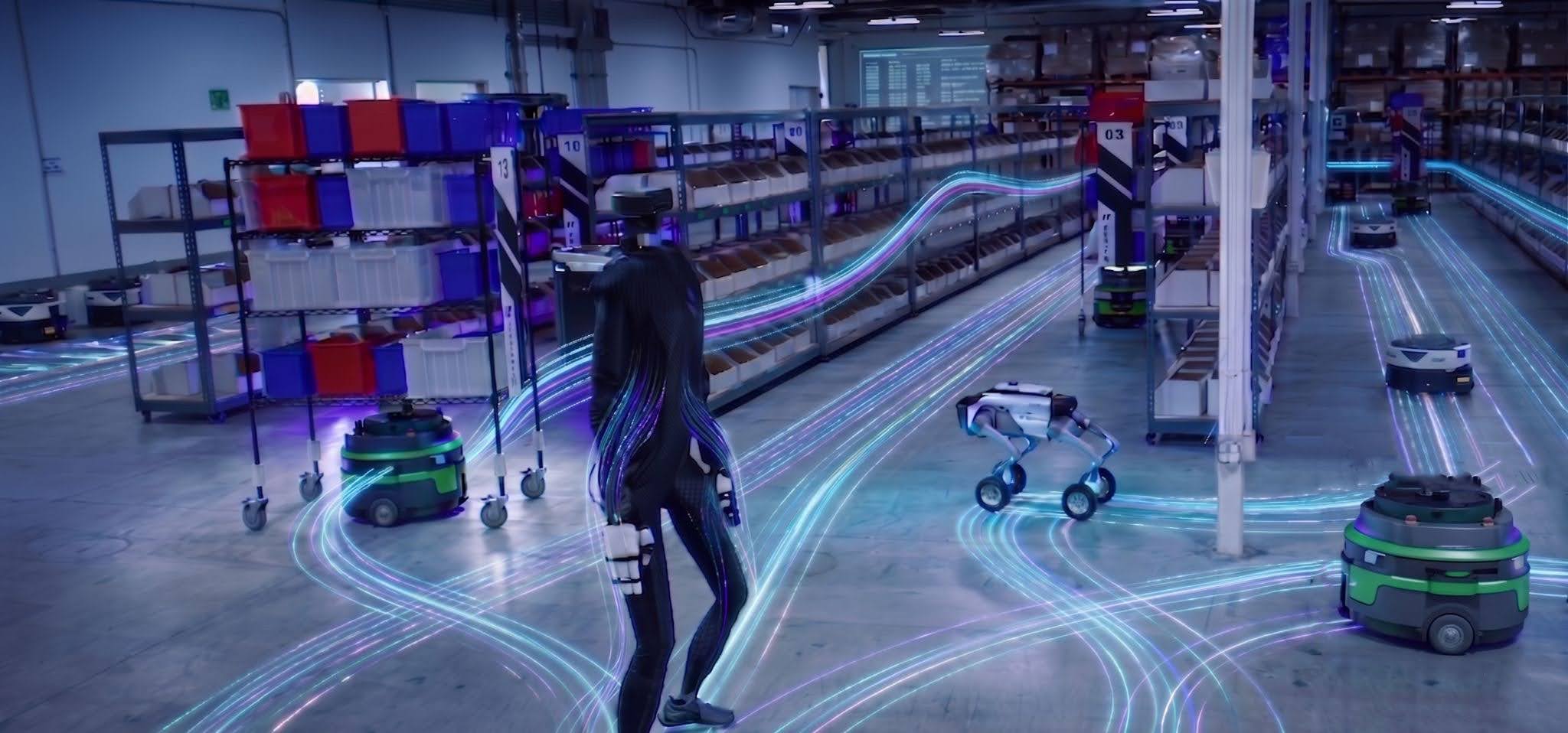
Skild AI has put a nine-figure revenue run rate on the record, a disclosure none of its best-funded humanoid and robot-brain peers has matched in their own announcements. The company said on September 10, 2026 that it crossed $100 million in annual recurring revenue ten months after its first commercial deployment, and that $50 million has already been recognised as revenue over that period.
Skild said it now has more than 60 paying customers, using its robots to move goods, make deliveries, inspect sites, provide security and prepare food, and to work inside warehouses, factories and data centres. Mobility accounts for 10% of revenue, including autonomous mobile robot (AMR) solutions that make up 4%. The remaining roughly 90% comes mainly from manipulation tasks. The company did not disclose the number of robots in service, gross margin or profitability.
- Annual recurring revenue (USD m)
- 100
- Revenue recognised since first deployment (USD m)
- 50
- Months since first commercial deployment
- 10
- Paying customers (at least)
- 60
- Mobility share of revenue (%)
- 10
- of which AMR solutions (%)
- 4
- Manipulation share of revenue, approx. (%)
- 90
As stated by Skild AI; run rate, not audited revenue. No estimates.
As of Oct 1, 2026
Three named deployments anchor the claim. With NVIDIA and Foxconn, Skild said it is deploying its software, the Skild Brain, on dual-arm manipulators for high-precision assembly of NVIDIA Blackwell systems. At Sumitomo Wiring Systems it is working towards deploying S1 in wire-harness manufacturing. With Mitsui & Co., whose supply chains serve 1.4 million meals a day across Japan according to Skild, it is piloting general-purpose robots in commercial kitchens.
The revenue update followed the launch of S1 on August 18. Skild describes S1 as an in-context learning model: instead of being retrained for each job, it watches one video of the task and then performs it. The company said the model handles previously unseen tasks lasting up to ten minutes, citing pancake flipping, pour-over coffee, plant repotting and kit assembly. In one example, eleven minutes passed between recording a plant-potting demonstration and the robot doing the job autonomously.
Skild's own benchmark compares S1 with a conventional language-prompted vision-language-action (VLA) policy trained on the same data, at dataset sizes from 1,000 to 100,000 hours. On unseen tasks, the in-context model reached a 66% average cumulative per-step success rate, while the language-prompted model reached 9%. Skild said one demonstration in context is worth roughly 380 post-training examples, and that for tasks longer than four minutes, collecting 380 demonstrations takes 50 to 100 hours of teleoperation. A post-trained model eventually overtakes S1, reaching 86% with 2,000 demonstrations, by the company's account. On tasks seen in training, S1's accuracy rose to 96% as pre-training scaled.
The training data mixes teleoperation, data from Universal Manipulation Interface (UMI) handheld grippers, egocentric human video and simulation. Skild said it spends three dollars on quality control for every dollar spent on collecting data. In a September 10 blog post, NVIDIA said the S1 pipeline uses its Cosmos world models and Cosmos Curator for data, Isaac Sim and Isaac Lab with the Newton physics engine for simulation, and TensorRT for inference.
Skild was founded in 2023 and has raised heavily. Its $300 million Series A in July 2024 valued it at $1.5 billion. In January 2026 it announced a $1.4 billion Series C led by SoftBank at a valuation of more than $14 billion, with NVentures, Macquarie Capital, Bezos Expeditions, LG, Schneider Electric, Salesforce Ventures and Mirae Asset among the backers. At that time it said it had made about $30 million in a few months of 2025. In April 2026 it bought the robotics business of Zebra Technologies, formerly Fetch Robotics, and its Symmetry Fulfillment orchestration platform.
The figures give Skild an unusual position among peers. Figure AI raised $1 billion at a $39 billion post-money valuation in September 2025, and Apptronik closed a $520 million Series A extension in February 2026, but neither has published a recurring revenue number. Physical Intelligence, which raised a Series B in November 2025, publishes research rather than revenue. Google DeepMind's Gemini Robotics 2, released on July 30, is still limited to partners for its action models.
- Skild AI
- 2023
- Series C
- 1400
- 14
- 2026-01-14
- Figure AI
- No data
- Series C
- 1000
- 39
- 2025-09-16
- Apptronik
- 2016
- Series A extension
- 520
- No data
- 2026-02-11
- Agility Robotics
- 2015
- Series B
- 150
- No data
- 2022-04-22
- 1X Technologies
- 2014
- Series B
- 100
- No data
- 2024-01-13
- Physical Intelligence
- No data
- Series B
- No data
- No data
- 2025-11-20
Latest disclosed round per company announcement; amounts and post-money as disclosed, null where not disclosed. Skild AI valuation step-up = Series C post-money ($14.0bn) / Series A post-money ($1.5bn, July 2024) = 9.3x.
As of Oct 1, 2026
The appeal of in-context learning is economic. Every fine-tuning cycle for a new task costs data collection, compute and engineering time. If a customer can record one video and get a working policy in minutes, the cost of adding a task falls towards the cost of filming it. Skild's own numbers also show the limit: post-training on 2,000 demonstrations still beats S1 on success rate, so high-volume tasks may still justify conventional fine-tuning.
Several questions remain open. ARR is a forward-looking run rate, not audited revenue, and Skild has not said how much comes from software licences versus hardware and services, including the Zebra robotics business it acquired in April. The 66% figure is a per-step average from the company's internal evaluation, not an independent benchmark. Skild has not named the robot hardware used in the S1 tests.
ROBOTNESS analysis
Skild is turning the robot foundation model race into a revenue race, and its in-context learning pitch is designed to make each new customer cheaper to onboard than the last.
The evidence is the mix of numbers it chose to publish: ARR, recognised revenue, customer count and revenue share by task type, alongside an S1 benchmark framed around demonstrations saved. Named industrial partners in Japan and Taiwan's Foxconn supply chain show the model is being sold into factories, not only labs.
The strongest counter-argument is that a meaningful part of the run rate may come from acquired and conventional businesses rather than from the foundation model. Skild bought Zebra's robotics arm in April, and AMR solutions alone are 4% of revenue. Without a split between model licensing and integration work, the figure says more about sales execution than about the model.
Bull case: S1 makes task onboarding nearly free, so Skild's customer count compounds and it becomes the default software layer for third-party arms and humanoids, much as it already runs on NVIDIA and Foxconn lines. A valuation above $14 billion then looks supported by revenue multiples rather than research promise.
Bear case: integration and service work grow with every customer, margins stay thin, and open models from NVIDIA and others erode the premium for a proprietary brain. Post-trained competitors keep the edge on high-volume tasks where 86% beats 66%.
Signals to watch:
- Whether Skild discloses a model-licence share of revenue or gross margin in its next update, which would separate software from services.
- Production status of the Sumitomo Wiring Systems wire-harness deployment and the Mitsui & Co. kitchen pilot by early 2027.
- Any new funding round priced above the January 2026 valuation of more than $14 billion.
- September 10, 2026 (ARR); August 18, 2026 (S1)
- Mobility 10% (AMR 4%), manipulation about 90%
- More than $14 billion (Series C, January 2026)
- NVIDIA and Foxconn, Sumitomo Wiring Systems, Mitsui & Co.
- One video worth about 380 post-training examples
- 60+
- $50 million in 10 months
- 66% vs 9% for language-prompted VLA (per-step average)
- $100 million
Why it matters
Robot foundation model companies have raised billions on the promise that one general model can run many robots. Skild's September 10 disclosure is the first hard commercial yardstick on its own account: $100 million in ARR, $50 million recognised and more than 60 paying customers within ten months of first deployment.
The S1 launch explains how Skild intends to keep that curve going. If a new task needs one video rather than hundreds of teleoperated demonstrations, the marginal cost of serving a new customer drops sharply, which is the condition for software-like growth in a hardware-heavy industry.
Rival analysis
Figure AI, valued at $39 billion in September 2025, and Apptronik, which closed a $520 million Series A extension in February 2026, build their own humanoids and have not published recurring revenue. Skild instead sells a brain that runs on other makers' hardware, including dual-arm systems on the NVIDIA and Foxconn line, and since April the former Fetch Robotics AMR fleet.
Google DeepMind's Gemini Robotics 2 keeps its action models with partners and sells a reasoning layer by API. NVIDIA gives away GR00T weights and sells compute. Physical Intelligence publishes research and has open-sourced π0. Skild is the only one of these to tie its model claims directly to a revenue figure, which makes it the reference point for investors pricing the others.
Valuation context
Skild's post-money valuation rose from $1.5 billion at the July 2024 Series A to more than $14 billion at the January 2026 Series C, a step-up of about 9.3 times. On the $100 million ARR reported in September, the January valuation equals about 140 times run-rate revenue (14,000 / 100), a multiple that assumes rapid growth continues.
At the Series C, Skild cited about $30 million made in a few months of 2025. Moving to a $100 million run rate by September 2026 is consistent with the growth the January investors underwrote, but it does not yet show margins. A new round above $14 billion would signal that investors accept the ARR figure as the main valuation driver.
Supply-chain implications
The disclosed deployments map onto specific supply chains: NVIDIA Blackwell server assembly with Foxconn, automotive wire harnesses at Sumitomo Wiring Systems, and commercial kitchens supplied by Mitsui & Co. All three are labour-intensive processes with high product variety, where reprogramming conventional automation is costly.
On the technology side, NVIDIA says S1 is built with Cosmos world models, Cosmos Curator, Isaac Sim, Isaac Lab with the Newton physics engine and TensorRT. Skild's data mix of teleoperation, UMI handheld grippers, egocentric video and simulation also creates demand for low-cost data-capture hardware, an area where suppliers of wearable cameras and handheld grippers stand to benefit.
Signals to watch
First, a breakdown of revenue between model licences, hardware and services, which would show how much of the $100 million is software. Second, a production go-live at Sumitomo Wiring Systems, where Skild says it is working towards deploying S1.
Third, results from the Mitsui & Co. kitchen pilot, which would test S1 on deformable food items and frequent menu changes. Fourth, Skild's September 23 work on physical self-play, in which it says S1 learned soccer after 140 years of simulated play, may signal a next model generation trained more on simulation than on teleoperation.
Analyst view
Thesis: Skild has the most credible commercial traction among robot foundation model developers, and S1 is designed to keep onboarding costs falling as it scales. Confidence: medium. The revenue, customer and partner figures are on Skild's own pages and the NVIDIA blog corroborates the deployment with Foxconn.
Confidence is not high because ARR is unaudited and blends acquired AMR business with model-driven manipulation, and the S1 benchmark is internal and uses a per-step metric. We would raise confidence if Skild disclosed gross margin or a third party replicated S1 results.
Questions you should be asking
How much of the $100 million ARR comes from the former Zebra robotics business, and how much from Skild Brain licences? What is the gross margin on manipulation deployments?
On which robot arms and hands were S1's 66% and 96% figures measured, and how do they hold up on customer lines rather than in the lab? Will S1 be available to outside developers beyond the early-access sign-up, and at what price?