Kawasaki opens a physical AI centre in San Jose with NVIDIA, Microsoft, Analog Devices and Fujitsu, starting with hospital robots
Kawasaki Heavy Industries opened the Kawasaki Physical AI Center San Jose on May 21 to develop AI-driven robot systems with NVIDIA, Analog Devices, Microsoft and Fujitsu, with healthcare and elderly care as the first focus. President Yasuhiko Hashimoto said the goal is a hospital one-stop solution covering patients from arrival to post-operative care. The move comes as Kawasaki plans to lift robot sales 24% this year, led by car body and semiconductor equipment lines.
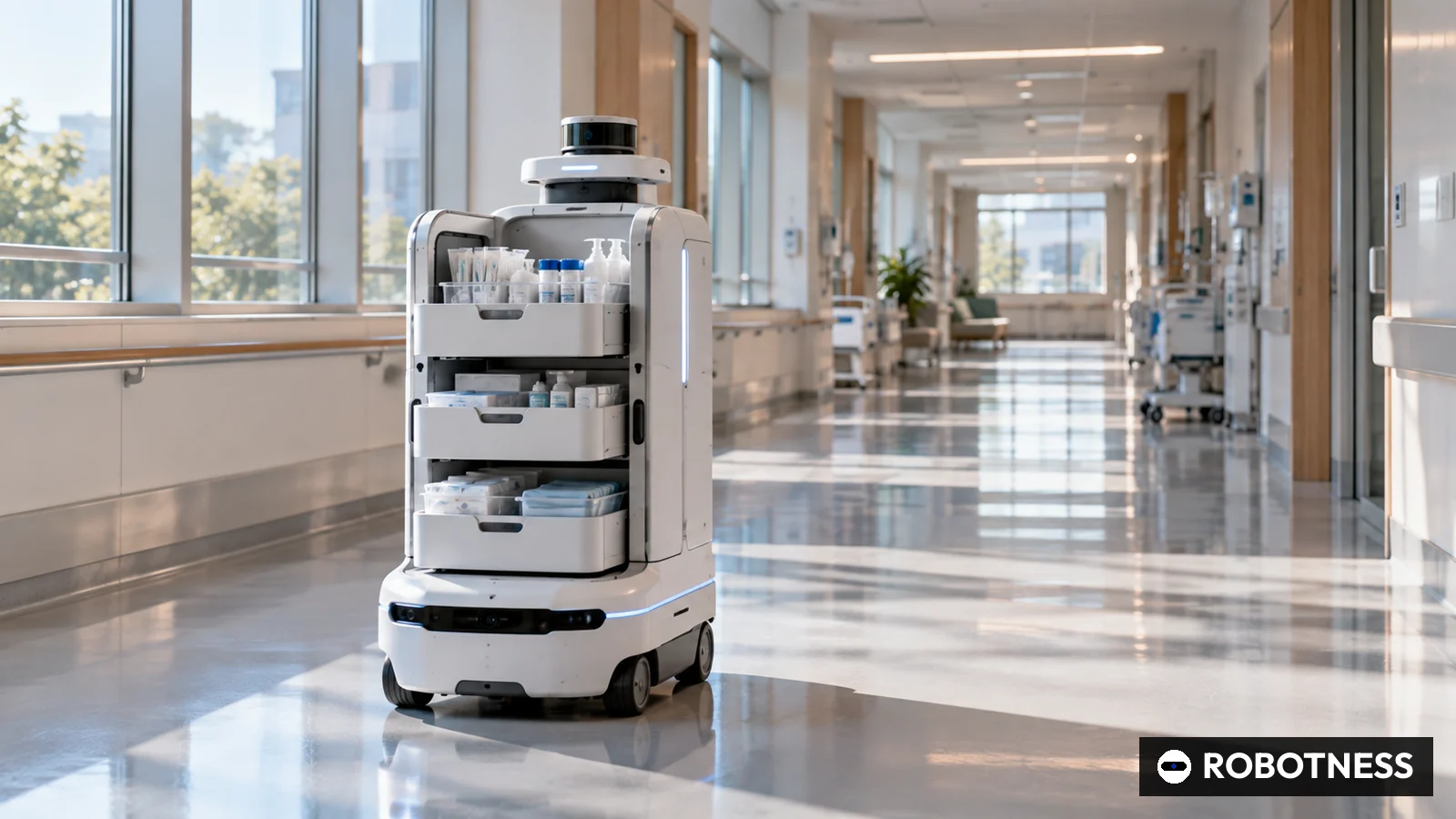
Kawasaki Heavy Industries Ltd. has opened a development centre for physical AI in Silicon Valley and lined up four large technology partners, choosing hospitals rather than factories as its first market. The Kawasaki Physical AI Center San Jose held its opening ceremony on May 21, the company said in a release dated May 22. The centre is set up as a base of Kawasaki Heavy Industries (USA), Inc. and sits inside the San Jose building of Kawasaki Robotics Inc.
Kawasaki named NVIDIA, Analog Devices, Microsoft and Fujitsu as partners and gave each a theme. With NVIDIA it will create new solutions combining AI and robotics, starting with medicine. With Analog Devices it aims to build robots that can handle a wide range of tasks by combining AI, audio and manipulation technology. Microsoft's cloud and AI platforms are meant to speed deployment in the real world, and Fujitsu will link business systems, robot systems and AI to offer new value in healthcare. The release did not disclose investment amounts, staffing or financial terms.
At the ceremony, attended by representatives of AI companies and Japanese government officials who helped set up the centre, President Yasuhiko Hashimoto said the centre would first concentrate on medical and nursing care, fields facing ageing populations and labour shortages worldwide. He said Kawasaki would combine physical AI and robotics to establish a hospital one-stop solution supporting patients from arrival through examination, treatment, surgery and post-operative care, while applying the same technology to semiconductors, automotive and new mobility. According to the company's summary of his remarks, the aim is physical AI that supports human judgment and action safely and efficiently, not one that replaces people.
NVIDIA chief executive Jensen Huang sent a video message for the opening, as did Jacques Marescaux, whom Kawasaki described as a world authority on robotic surgery, according to the release.
The centre will build on products already in Kawasaki's portfolio: the autonomous service robot Nyokkey, the indoor delivery robot FORRO, the hinotori surgical robot (a Medicaroid trademark), and CORLEO, a robotic multi-legged vehicle. FORRO is already moving into hospitals. In April alone, Kawasaki announced that the robot had started operating at four Japanese hospitals, including Tokyo Women's Medical University Yachiyo Medical Center and Kobe City Nishi-Kobe Medical Center.
Kawasaki argues that its advantage lies in real-world data. The company said physical AI, which perceives and acts autonomously in physical space through machines, needs data about the real world, and that its aerospace, shipbuilding, energy, plant and motorcycle businesses have accumulated such data and know-how for decades. It chose Silicon Valley, it said, because it already sells and services robots for semiconductor manufacturing equipment there, where it holds the world's top share. The San Jose centre will work with development sites in Japan and with Kawasaki Innovation Centre Europe SAS, an R&D centre in Strasbourg that began operating in March 2026.
The robot business it is building on is modest within the group but growing. In results released on May 12, Kawasaki reported robot orders of ¥105.3 billion for the year to March 2026, up ¥3.6 billion, and robot sales of ¥92.9 billion, down ¥1.6 billion. For the current year it forecasts robot orders of ¥120.0 billion and sales of ¥115.0 billion, a rise of 24%. Robot sales to semiconductor equipment makers are expected to grow from ¥37.9 billion to ¥46.0 billion, the company's presentation showed. The precision machinery and robot segment as a whole is forecast to grow sales from ¥259.1 billion to ¥310.0 billion and business profit from ¥14.3 billion to ¥21.0 billion.
The group is also spending more on new ventures. Head-office investment in new businesses, booked in the corporate adjustment line, is set to rise from ¥12.2 billion to ¥20.0 billion this year, and group R&D spending from ¥56.8 billion to ¥65.5 billion. Kawasaki said it will invest with priority in physical AI, including medical applications, and in semiconductors.
In industrial robots Kawasaki is the smallest of Japan's three big makers. FANUC's robot segment sold ¥378.6 billion in the year to March 2026 and Yaskawa Electric's ¥247.0 billion in the year to February. FANUC announced collaborations with Google and NVIDIA the week before Kawasaki's opening.
- Kawasaki Heavy Industries
- Mar 2026
- 92.9
- 105.3
- 115
- 23.8
- FANUC
- Mar 2026
- 378.6
- 381.8
- No data
- No data
- Yaskawa Electric
- Feb 2026
- 247
- No data
- No data
- No data
Company disclosures. FANUC robot orders = sum of the four quarterly robot order figures in its FY2025 presentation (90.6 + 91.8 + 98.8 + 100.6). Planned change = plan / latest revenue minus 1. Null where not disclosed.
As of Oct 1, 2026
The healthcare focus brings its own hurdles. Hospital deployments require regulatory approval for medical devices such as hinotori, long procurement cycles and integration with hospital IT, and the release gave no timeline for the one-stop solution or for products developed at the centre. The partnerships are described as collaboration themes rather than contracts, and none has a disclosed value.
ROBOTNESS analysis
Kawasaki is using physical AI to reposition its robot business toward healthcare and services where FANUC and Yaskawa are weak, but its near-term robot growth still depends on automotive and semiconductor equipment.
The evidence is in the numbers. Of the ¥24.5 billion planned rise in robot sales by application this year, car body assembly and painting accounts for ¥9.2 billion and semiconductors for ¥8.1 billion, while the healthcare products named in the release, FORRO, Nyokkey and hinotori, are not broken out in the robot forecast. The ¥7.8 billion increase in new business investment is the clearest financial sign of the centre's priority.
The strongest counter-argument is that Kawasaki has more hospital-ready products than its Japanese rivals, from a surgical robot to a delivery robot running in four hospitals since April. Partners such as NVIDIA and Fujitsu can supply the AI and IT layers it lacks, so the centre could convert an existing portfolio rather than start from scratch.
Bull case: The partners help Kawasaki package FORRO, Nyokkey and hinotori into a hospital system that sells in the United States and Japan, and social robots become a visible revenue line by fiscal 2027. Automotive and semiconductor robots deliver the forecast 24% sales rise.
Bear case: Hospital sales cycles and regulation slow adoption, the partnerships remain demonstrations, and robot growth relies on a cyclical chip equipment market.
- August 7, 2026: first-quarter results, to check robot orders against the ¥120.0 billion annual forecast.
- Fiscal 2026: rise in new business investment to ¥20.0 billion, a measure of commitment to the centre.
- Any first customer announcement for the hospital one-stop solution in the United States.
- Base of Kawasaki Heavy Industries (USA), Inc. inside Kawasaki Robotics Inc. building
- NVIDIA, Analog Devices, Microsoft, Fujitsu
- Nyokkey, FORRO, hinotori, CORLEO
- Healthcare and elderly care, hospital one-stop solution
- May 21, 2026, San Jose, California
- ¥92.9bn; forecast ¥115.0bn for FY2026
- ¥105.3bn
- ¥12.2bn, rising to ¥20.0bn
- ¥37.9bn, forecast ¥46.0bn
Why it matters
Most Japanese robot makers have framed physical AI around factories. Kawasaki is the first of the big three to anchor its physical AI effort in healthcare and to do it in Silicon Valley with four large partners. That makes it a test of whether incumbents can move into service robotics, where start-ups have led.
The centre also reflects Japan's industrial policy. Japanese government officials helped set it up, and the release frames it as part of Japan-US cooperation in AI and semiconductors.
Rival analysis
FANUC's May partnerships with Google and NVIDIA target factory robots, and Yaskawa's plans centre on MOTOMAN NEXT and actuators. Kawasaki's choice of hospitals avoids head-on competition with both.
In healthcare robotics Kawasaki meets different rivals, from surgical robot makers to US hospital logistics start-ups. Its hinotori surgical robot gives it a product few industrial robot makers have.
Valuation context
Robots are a small part of Kawasaki's ¥2.31 trillion revenue, so the centre will not move group earnings soon. The segment's 5.5% margin is far below FANUC's 21.4% group margin, which leaves room for improvement if higher-value systems succeed.
The group forecasts record business profit of ¥170.0 billion this year, mostly from aerospace and energy, which gives it room to fund new robot ventures.
Supply-chain implications
NVIDIA brings AI computing, Analog Devices sensing and audio, Microsoft cloud, and Fujitsu hospital IT. Kawasaki contributes robot hardware, manufacturing and operating data.
The centre sits next to Kawasaki's semiconductor robot sales and service base, which keeps it close to chip equipment customers whose orders drive the robot business today.
Signals to watch
First-quarter results on August 7 will show whether robot orders are on track for ¥120.0 billion. Watch for product announcements that combine FORRO, Nyokkey or hinotori with partner AI.
US hospital pilots and any role for the Strasbourg centre in European hinotori expansion are further markers.
Analyst view
Thesis: Kawasaki is using the San Jose centre to shift its robot story toward healthcare, but automotive and semiconductor robots will drive results for at least the next year. Confidence: medium. The partners are strong and the products exist, but no timelines or contract values were given.
Confidence would rise if a US hospital deployment is announced within a year, and fall if new business investment is cut.
Questions you should be asking
How many people will work at the centre, and how much is Kawasaki investing?
Will the partnerships lead to joint products or remain research collaborations, and who will own the resulting software?