EU moves AI-driven machinery out of the AI Act's main track and gives robot makers until August 2028
The EU's Digital Omnibus on AI, Regulation (EU) 2026/1744, was published on July 24, 2026 and took effect on July 27. It delays high-risk AI obligations to December 2, 2027 for stand-alone systems and August 2, 2028 for AI built into products, and shifts machinery, including industrial robots, into a lighter AI Act regime whose substance will instead be written into the Machinery Regulation by delegated act.
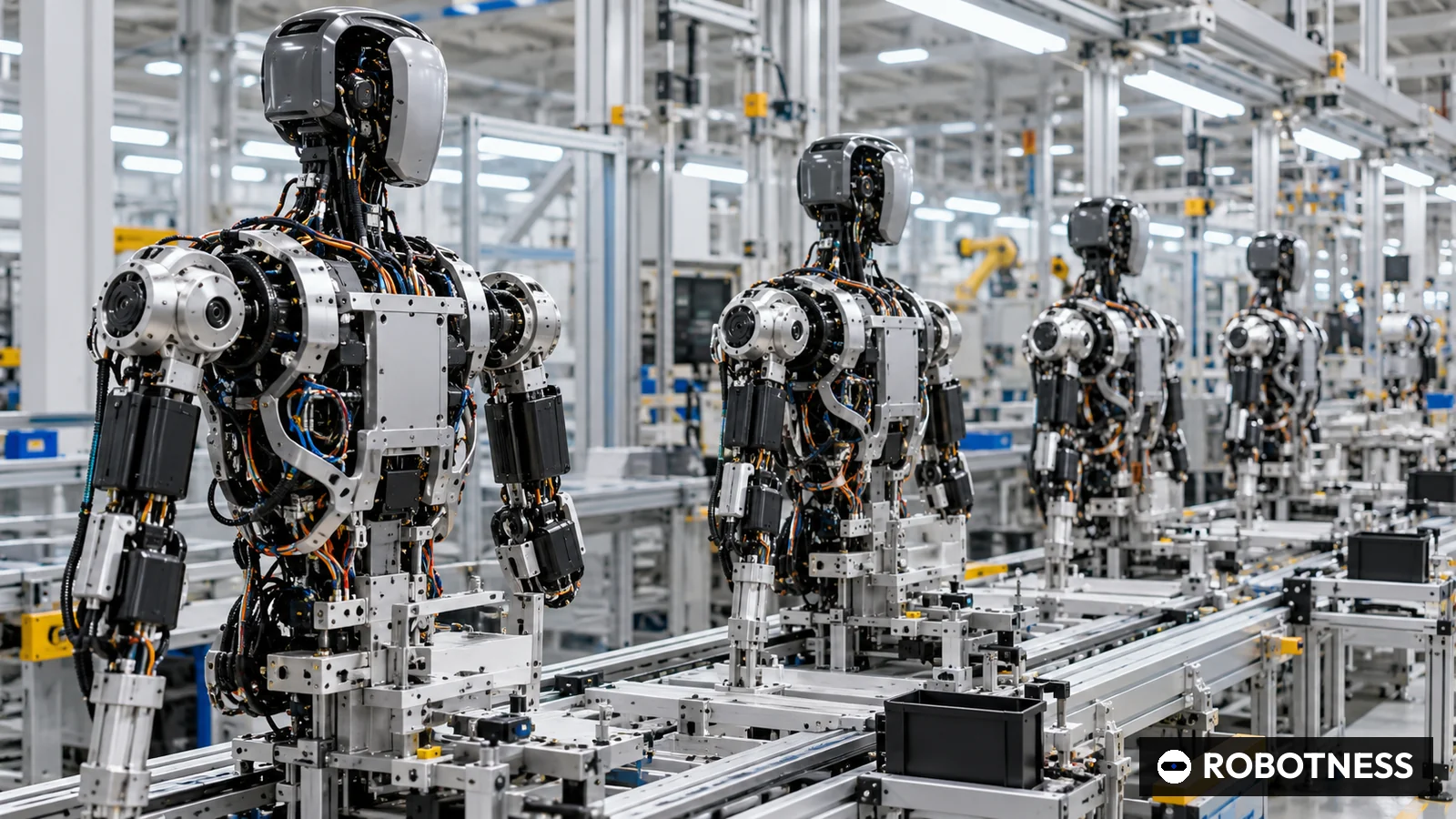
The European Union has rewritten how its artificial intelligence law applies to robots and other machinery. Regulation (EU) 2026/1744, known as the Digital Omnibus on AI, was adopted by the European Parliament and the Council on July 8, 2026, published in the Official Journal on July 24 and entered into force on July 27. It amends the AI Act, Regulation (EU) 2024/1689, together with the EU aviation safety regulation and the Machinery Regulation, Regulation (EU) 2023/1230.
For robot makers, two changes matter most. The first is time. Under the AI Act as adopted in 2024, obligations for high-risk AI systems listed in Annex III were due to apply from August 2, 2026, and those for AI used as a safety component of products covered by Annex I, which includes machinery, from August 2, 2027. The omnibus moves these dates to December 2, 2027 and August 2, 2028, a delay of 16 months and 12 months respectively.
Machinery gets its own track
The second change is structural. The omnibus moves the Machinery Regulation from Section A to Section B of Annex I to the AI Act. For products under Section B, the amended text says only Article 6(1), Article 60a and Articles 102 to 112 of the AI Act apply. In practice, an industrial robot whose AI performs a safety function will no longer be assessed directly against the AI Act's chapter on high-risk systems. Instead, the Commission must adopt delegated acts, by August 2, 2028, that add the relevant AI Act requirements to the essential health and safety requirements in Annex III of the Machinery Regulation.
The requirements to be carried over are named: the high-risk requirements in Chapter III, Section 2 of the AI Act, which cover risk management, data governance, technical documentation, record-keeping, transparency, human oversight, and accuracy, robustness and cybersecurity, together with Article 17 on quality management, Article 19 on automatically generated logs, Article 72 on post-market monitoring and Article 73 on reporting serious incidents. The recitals say the move is meant to keep a level of protection consistent with the AI Act while avoiding two parallel regimes for the same product.
What already applies from January 2027
The Machinery Regulation itself replaces the 2006 Machinery Directive and applies from January 20, 2027, according to the Commission. It already contains rules aimed at learning systems. Machinery and safety components with fully or partially self-evolving behaviour using machine learning to ensure safety functions are listed in Part A of its Annex I, which means a notified body must be involved in their conformity assessment. The regulation's recitals explain this by pointing to data dependency, opacity, autonomy and connectivity, and stress that conventionally programmed safety software is not covered by that requirement.
The combined effect is a sequence. From January 2027, robot makers selling in the EU face the new Machinery Regulation, including third-party assessment for machine-learning safety functions. By August 2028, the Commission is due to add AI-specific requirements on data, logging and monitoring to that same regulation. Manufacturers will then deal with one conformity route, run by machinery notified bodies, rather than two.
Other changes relevant to robotics companies
The omnibus extends simplified obligations designed for small and medium-sized enterprises to small mid-cap companies, using the definition in Commission Recommendation (EU) 2025/1099. It allows SMEs and small mid-caps to provide technical documentation in simplified form, extends quality-management simplifications to all SMEs including start-ups, and creates an EU-level regulatory sandbox with priority access for them. It replaces the AI literacy duty on companies with an obligation on the Commission and member states to support AI literacy, and adds a ban on so-called nudification applications. The Commission first proposed the package on November 19, 2025, and Parliament and Council reached political agreement on May 7, 2026.
- High-risk AI systems in Annex III
- AI Act Art. 6(2), Art. 113
- 2026-08-02
- 2027-12-02
- 16
- High-risk AI in Annex I products incl. machinery
- AI Act Art. 6(1), Art. 113
- 2027-08-02
- 2028-08-02
- 12
- Machinery Regulation applies
- Regulation (EU) 2023/1230
- 2027-01-20
- 2027-01-20
- 0
- Commission delegated acts on Machinery Regulation Annex III
- Regulation (EU) 2026/1744
- No data
- 2028-08-02
- No data
Dates from Regulation (EU) 2024/1689, Regulation (EU) 2026/1744 and the European Commission. Shift = months between original and new date.
As of Oct 1, 2026
What it means for the industry
Europe's robot industry is concentrated in machinery: articulated arms, cobots, mobile robots and, increasingly, humanoids sold into factories and warehouses. Companies such as NEURA Robotics and ANYbotics, and the large incumbents ABB Robotics, KUKA and Universal Robots, ship systems in which learned perception and control play a growing role. For them, the omnibus removes the prospect of separate AI Act conformity procedures from August 2027 and folds AI duties into the product-safety process they already run.
Risks and open questions
The content of the delegated acts is not yet known, and the deadline of August 2, 2028 coincides with the date from which the obligations apply. If the Commission adopts them late, manufacturers may have little time to adjust. Harmonised standards under the Machinery Regulation that address machine-learning safety functions are still being developed, and the number of notified bodies able to assess such systems is not public.
What to watch
The Machinery Regulation applies from January 20, 2027. The Commission's draft delegated acts amending Annex III of the Machinery Regulation, and the Annex III AI Act deadline of December 2, 2027, are the next milestones.
ROBOTNESS analysis
By moving machinery to Section B, the EU has turned AI compliance for robots into a product-safety question, which favours established machinery makers and their notified bodies over AI-first newcomers.
The evidence lies in where the work now sits. The Machinery Regulation's third-party assessment for machine-learning safety functions starts in January 2027, and AI-specific rules will be added to the same regulation by delegated act. Companies with long experience of CE marking, safety engineering and notified-body audits are best placed to absorb that.
The strongest counter-argument is that the change is a relief for everyone, including start-ups. A single conformity route is cheaper than two, the dates are later, and the SME and small mid-cap simplifications apply to the AI Act duties that remain.
Bull case: the delegated acts arrive in 2027 with workable requirements, notified bodies build capacity, and Europe gets a predictable route to market for learning-based robots that customers trust. That could become a selling point against imports.
Bear case: the delegated acts slip toward the August 2028 deadline, standards lag, and manufacturers face uncertainty about what a compliant learning-based safety function looks like. Deployments of humanoids and mobile manipulators in Europe could then trail the US and China.
- January 20, 2027: Machinery Regulation applies, including notified-body assessment for machine-learning safety functions.
- December 2, 2027: AI Act obligations for Annex III high-risk systems apply.
- August 2, 2028: deadline for the Commission's delegated acts and start of AI Act obligations for Annex I products.
- Regulation (EU) 2026/1744, Digital Omnibus on AI
- July 8, 2026
- July 27, 2026
- Moved from Section A to Section B of AI Act Annex I
- Official Journal, July 24, 2026
- Commission to amend Machinery Regulation Annex III by August 2, 2028
- Simplifications extended to small mid-caps; EU-level sandbox
- August 2, 2028 (previously August 2, 2027)
- December 2, 2027 (previously August 2, 2026)
- January 20, 2027
Why it matters
Robots sold in Europe are legally machinery, so the omnibus decides which rulebook governs the AI inside them. By moving machinery to Section B of Annex I, the EU avoided a dual regime in which a robot maker would have had to satisfy both the AI Act's high-risk chapter and the Machinery Regulation, with different documents, audits and timelines.
The change also shifts power. Machinery notified bodies, standardisation committees under the Machinery Regulation and the Commission's product-safety services will shape what compliant AI in a robot looks like, rather than the AI Office and AI Act standards alone. Companies that engage early in those committees will influence the delegated acts.
Rival analysis
Large European incumbents such as ABB Robotics, KUKA and Universal Robots have decades of CE-marking experience and existing relationships with notified bodies. They benefit most from a single machinery route. Venture-backed newcomers like NEURA Robotics and Humanoid, which put learned control at the centre of their products, face notified-body assessment for machine-learning safety functions from January 2027 and must build that competence quickly.
For US and Chinese exporters, the same rules apply on entering the EU market. Companies whose humanoids rely on end-to-end learned control may find the Part A assessment and future AI requirements a higher barrier than conventional industrial arm suppliers do, which could slow their European launches.
Valuation context
The omnibus has no direct financial terms, but the AI Act's maximum fines of EUR 35 million or 7% of global turnover, and EUR 15 million or 3% for other breaches, show what was at stake under the original structure. Delaying and restructuring obligations lowers near-term compliance costs that start-ups would otherwise have carried before they had revenue.
Investors in European robotics should treat certification capacity as a valuation input. A company that can show a path through Machinery Regulation Part A assessment for its learning-based safety functions carries less regulatory risk than one that has not addressed it.
Supply-chain implications
Safety-rated components such as safety controllers, torque sensors, safety laser scanners and certified drives become more valuable when learned control has to be bounded by conventional safety functions. Suppliers that offer pre-certified safety modules can help robot makers keep machine learning outside the safety function and avoid Part A assessment where that is possible.
Notified bodies themselves are a bottleneck. The number able to assess machine-learning safety functions is not public, and demand will rise from January 2027. Testing laboratories and certification firms may become a constraint on product launches.
Signals to watch
The first signal is how notified bodies and the Commission handle the January 20, 2027 start of the Machinery Regulation for robots with machine-learning safety functions, including any guidance or recommendations for use.
The second is the Commission's draft delegated acts amending Annex III of the Machinery Regulation, and the third is the December 2, 2027 start of Annex III AI Act obligations, which affects robots used in areas such as employment where AI systems manage workers.
Analyst view
Thesis: the omnibus makes EU AI compliance for robots a machinery-safety exercise with a longer runway, which lowers cost and uncertainty in the short term but concentrates risk on the timing and content of the delegated acts.
Confidence: high on the legal facts, which are in the Official Journal and the Commission's announcement. Medium on the market effect, because the delegated acts and harmonised standards that will define day-to-day compliance have not been drafted publicly.
Questions you should be asking
When will the Commission publish draft delegated acts amending Annex III of the Machinery Regulation, and will it consult industry before August 2028?
How many notified bodies will be designated to assess machine-learning safety functions under Part A from January 2027?
How will robots that combine machine-learning perception with conventional safety controllers be classified under the Part A criteria?