Eni offers Italy's Generative Bionics its plants, polymers and supercomputers in a humanoid robot pact
Eni signed a memorandum of understanding with Genoa start-up Generative Bionics on 30 September 2026 to test the GENE.01 humanoid in inspection and remote assistance and to study producing, testing and recycling the robots' batteries at Eni sites. Chemicals arm Versalis and its subsidiary Finproject will work on the robot's feet, and Eni will assess opening its high-performance computing to Physical AI training. No financial terms were disclosed.
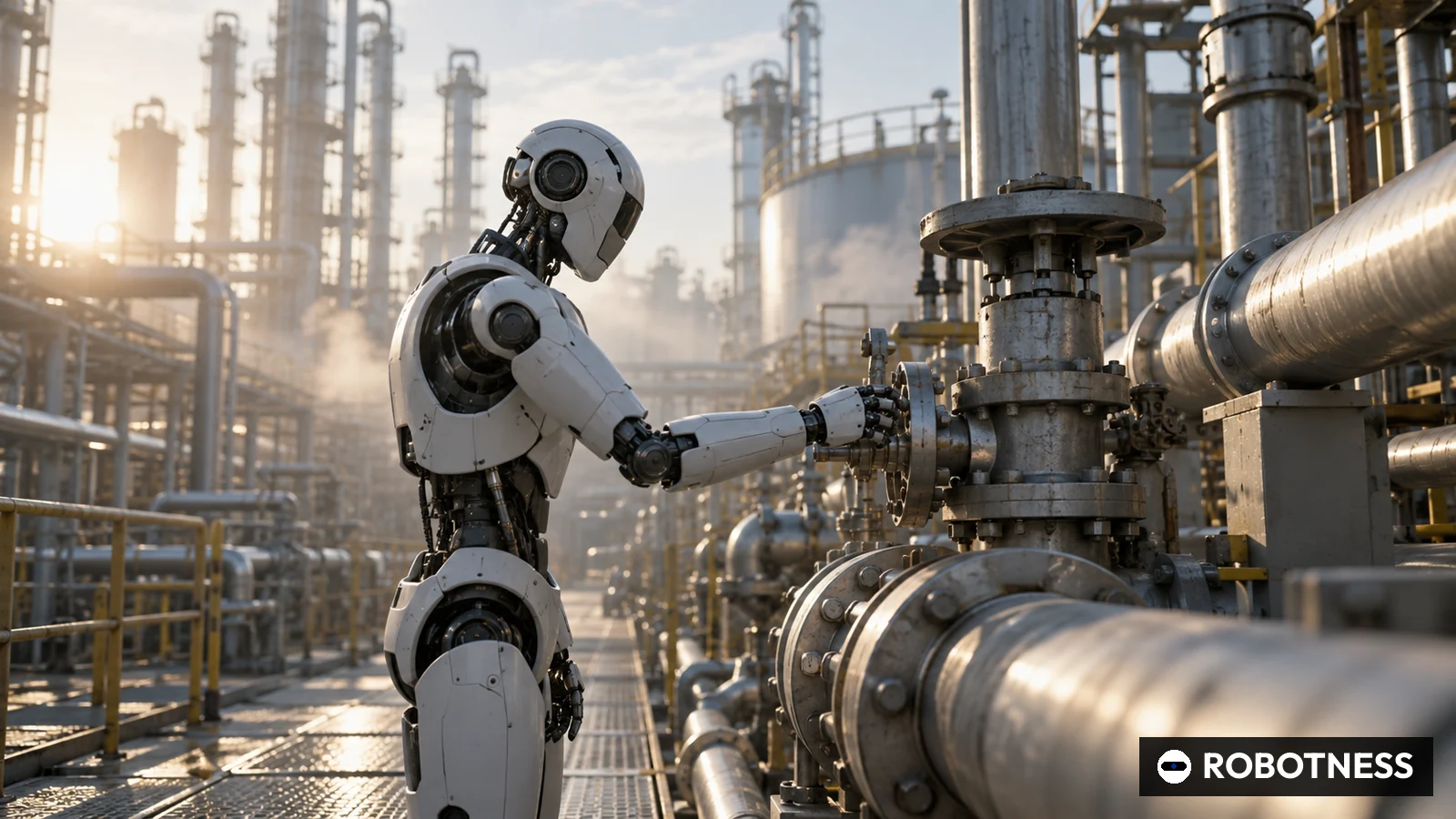
Eni is offering a ten-month-old humanoid robot start-up far more than a test site. Under a memorandum of understanding signed on 30 September 2026, the Italian energy group will assess opening its industrial sites, its polymer chemistry and its high-performance computers to Generative Bionics, the Genoa company said in a statement, alongside trials of the GENE.01 humanoid in Eni's own operations.
The agreement is exploratory and no money changes hands under it, according to the statement. Its interest lies in the list of what Eni puts on the table. A start-up that has not yet published a production schedule could, in principle, find a first customer, a materials supplier, a factory floor and a compute provider inside one group. Whether that happens depends on how many of the five workstreams turn into binding contracts, and the record of the company's earlier partnerships is the best guide to the odds.
Four of the five workstreams make Eni a supplier
The first workstream is operational. Eni will evaluate GENE.01 for inspection, teleoperation, remote assistance and support in complex environments, with the stated aim of improving safety and efficiency in its operations. The second brings in Versalis, Eni's chemicals company, and its subsidiary Finproject, which makes ultra-lightweight products. They will study feet and footwear systems for the robot that are lighter, stronger and easier to scale, with better impact absorption, grip, durability and ease of assembly.
The other three go further into the supply chain. The companies will look for ways to industrialise and sell Generative Bionics' sensor-equipped footwear through Eni's materials and market channels. They will assess Eni industrial sites for production, assembly and testing of advanced robotic systems, including cooperation on recycling and disposal of batteries. And Eni will assess giving the start-up access to its high-performance computing capacity to develop, train and validate Physical AI models. The pact follows Eni's investment in Generative Bionics through its venture arm, Eni Next, in December 2025, the statement said.
A start-up built by collecting industrial partners
Generative Bionics came out of the Istituto Italiano di Tecnologia, where its founders worked on the iCub research humanoid from 2004. It launched on 9 December 2025 with a 70 million euro round led by CDP Venture Capital's artificial intelligence fund, with AMD Ventures, Duferco, Eni Next, RoboIT and Tether also investing, according to the company. Its July 2026 release describes that round as an 81 million dollar seed and puts the staff at about 100, roughly half of them with doctorates. Daniele Pucci is chief executive.
GENE.01 was shown at CES in January and launched in Genoa on 20 July after what the company called a six-month development cycle. Its distinguishing feature is a full-body tactile skin that, the company says, detects touch, temperature, proximity and force. Generative Bionics has not published height, weight, payload or battery figures, which makes like-for-like comparison with rivals impossible for now.
Eni is the fourth large industrial partner in ten months. Fincantieri signed a four-year programme in February to develop a humanoid welding robot, with first on-site tests planned for the end of 2026 at its Sestri Ponente shipyard. Italdesign agreed in April to industrialise GENE.01's exterior from prototype to pre-series. In June, German motion-control maker Synapticon agreed to co-develop integrated actuators, with final assembly, calibration and safety testing in the European Economic Area, mainly in Germany.
- 2026-02-11
- Fincantieri
- IT
- Industrial partnership, four years
- Humanoid welding robot; first tests at Sestri Ponente by end-2026
- 2026-04-20
- Italdesign
- IT
- Memorandum of understanding
- Industrialise GENE.01 exterior from prototype to pre-series
- 2026-06-16
- Synapticon
- DE
- Strategic partnership
- Integrated actuators; assembly and safety testing in the EEA, mainly Germany
- 2026-09-30
- Eni
- IT
- Memorandum of understanding
- Operational tests, materials, footwear, sites and battery recycling, HPC
Source: Generative Bionics press releases. Cadence = 295 days from launch (9 December 2025) to the Eni MoU (30 September 2026) divided by 4 agreements, or one every 74 days.
As of Oct 1, 2026
Rivals have more cash and, in energy, a head start
London-based Humanoid raised 152 million dollars at a 1.35 billion dollar post-money valuation in July with Schaeffler and Bosch among its backers. NEURA Robotics in Germany announced a Series C in June whose headline figure is a ceiling rather than a confirmed amount. In energy inspection the incumbent is Switzerland's ANYbotics, whose four-legged robots drew a strategic investment from Climate Investment in September 2025 aimed at oil and gas inspection. In the United States, Persona AI is building humanoids for shipyards, the same setting as the Fincantieri programme, and reported 65.4 million dollars sold toward a 142 million dollar private offering in a Form D filing in September.
- Generative Bionics
- IT
- Launch round (seed)
- 2025-12-09
- 70
- EUR
- No data
- Humanoid
- GB
- Series A
- 2026-07-21
- 152
- USD
- 1350
- NEURA Robotics
- DE
- Series C
- 2026-06-10
- No data
- USD
- No data
- ANYbotics
- CH
- Additional funding
- 2024-12-12
- 60
- USD
- No data
- Persona AI
- US
- Private offering (Form D, partial)
- 2026-09-14
- 65.4
- USD
- No data
Figures as disclosed by the companies or in filings, not estimated. NEURA's Series C was announced as an up-to amount, which ROBOTNESS records as null. Persona AI's figure is the amount sold toward a 142 million dollar offering. Generative Bionics later described its round as 81 million dollars.
As of Oct 1, 2026
Why feet and skin carry so much weight
The materials clause reads like a footnote, yet feet are where walking robots wear out first. Every step sends the machine's full weight through the sole, and in a refinery the sole meets steel grating, oil films and stairs. Elastomers that absorb shock and keep their grip over thousands of hours are a polymer chemistry problem, which is Versalis's business. Pressure sensing in the footwear tells the balance controller how weight is spread across each foot, which matters on uneven ground. The tactile skin does the same job for contact with people and equipment, the safety case Generative Bionics leads with.
ROBOTNESS analysis
Eni is positioning itself as a supplier to the humanoid industry as much as a customer, and the pact is worth more to Generative Bionics as an industrial base than as a sales lead.
Four of the five workstreams run from Eni to the start-up rather than the other way: materials, footwear commercialisation, manufacturing sites with battery recycling, and computing. Only one is a purchase-side trial. Read with the earlier agreements, the pattern is a domestic supply chain assembled piece by piece, with actuators from Synapticon, design for manufacturing from Italdesign, a first application with Fincantieri and now materials, sites and compute from Eni. By our count that is one industrial agreement every 74 days since launch. The strongest counter-argument is that memorandums are cheap. None of the four agreements discloses money, volumes or a site, and the first physical milestone, Fincantieri's shipyard tests, is still three months away.
Bull case. If Eni names a site and Versalis ships production feet in 2027, Generative Bionics would own a vertically supported European supply chain few rivals can match at its funding level, and Eni would gain an early position in a component market that grows with every humanoid built.
Bear case. If the workstreams stay at assessment stage, the company is left with four logos and a funding gap against Humanoid and NEURA, while legged robots in hazardous energy sites still face long certification work before any Eni deployment.
Signals to watch:
- By 31 December 2026, the first on-site tests at Fincantieri's Sestri Ponente yard, the earliest hard evidence that GENE.01 works outside a lab.
- During 2027, whether any Eni workstream becomes a contract with a named site, a volume or a price, rather than an assessment.
- August 2028, the date by which the EU's AI omnibus gives makers of AI-driven machinery to comply, as ROBOTNESS reported in July, which sets the regulatory clock for any deployment in Eni plants.
- GENE.01 humanoid with full-body tactile skin
- Memorandum of understanding, exploratory
- 30 September 2026, Genoa
- About 100 (July 2026)
- Operational tests; feet and footwear materials; sensor-footwear commercialisation; Eni sites for production, testing and battery recycling; HPC access
- 70 million euros, December 2025, led by CDP Venture Capital
- First on-site tests at Fincantieri's Sestri Ponente yard by end-2026
- Not disclosed
- Versalis and its subsidiary Finproject; Eni Next, an investor since December 2025
Why it matters
Energy companies have so far entered robotics as buyers of inspection machines. Eni's memorandum is different in kind because four of its five workstreams treat the humanoid maker as a customer of Eni's materials, sites and computing. If that model holds, oil and chemicals groups become part of the humanoid bill of materials rather than only an end market.
For Generative Bionics the timing matters. The company has to move GENE.01 from a launched prototype to pre-series hardware while competing for capital with better-funded European rivals. Access to a large group's polymer research, manufacturing land and supercomputers can substitute for some capital spending, provided the assessments become contracts.
Rival analysis
Humanoid in London is the best-funded European pure play, with 152 million dollars raised in July at a 1.35 billion dollar post-money valuation and two German industrial groups, Schaeffler and Bosch, on its cap table. Its industrial backers play a role similar to the one Eni is now exploring, but they are component makers by trade, which gives Humanoid a more direct route to actuators and bearings.
NEURA Robotics has the broadest product range and announced a Series C in June, though its headline amount is a ceiling. Tether invested in both NEURA and Generative Bionics, one of the few overlaps in the European humanoid cap table. ANYbotics is the practical benchmark for energy sites, since its four-legged robots already target oil and gas inspection; a humanoid has to justify its extra complexity against that installed base.
Persona AI is the closest analogue to the Fincantieri programme, with humanoids aimed at shipyard welding and 65.4 million dollars sold toward a 142 million dollar offering according to its Form D. Shipyard welding is becoming a contested first application on both sides of the Atlantic.
Valuation context
Generative Bionics has not disclosed a valuation. Its launch round of 70 million euros, later described as 81 million dollars, sits at roughly half of Humanoid's July round, and Humanoid's post-money valuation of 1.35 billion dollars is the only disclosed European humanoid valuation in the ROBOTNESS database this year.
The memorandum carries no financial terms, so it has no direct valuation effect. Its indirect value lies in reducing future capital needs if Eni sites and computing come at favourable terms. Investors in a next round will price the company on whether Fincantieri tests succeed by the end of 2026 and whether any Eni workstream becomes binding.
Supply-chain implications
The emerging supply chain is almost entirely Italian and German. Actuators, including motors, servo drives, encoders and safety firmware, come through Synapticon, with final assembly and safety testing in the European Economic Area, mainly Germany. Exterior design for manufacturing comes from Italdesign. Feet and footwear materials would come from Versalis and Finproject, and production, testing and battery recycling could sit at Eni sites in Italy.
That footprint reduces exposure to Chinese supply chains. The company has not said where batteries and cells will be sourced, which is why the battery recycling clause is worth following.
Signals to watch
The first signal is the Fincantieri test at Sestri Ponente, scheduled for the end of 2026. A welding humanoid working in a live shipyard would validate the platform for other heavy industries, including Eni's.
The second is any definitive agreement under the Eni memorandum during 2027, especially a named site for assembly or testing, or a Versalis supply contract for production feet. The third is the next financing round, where the lead investor and any disclosed valuation will show how the market prices the partnership strategy against Humanoid's 1.35 billion dollar benchmark.
Analyst view
Thesis: Eni is building an option on the humanoid supply chain, and Generative Bionics is assembling an industrial base through partnerships rather than capital. Confidence: medium. The pattern across four agreements is consistent, and Eni's prior equity stake gives it a reason to follow through. Confidence is not higher because none of the agreements discloses money, volumes or sites, and GENE.01's specifications are still unpublished.
What would change our view: a binding Eni contract with a named site would raise confidence to high. A missed Fincantieri test date, or a next round priced well below European peers, would suggest the partnership model is compensating for weak traction rather than accelerating it.
Questions you should be asking
Which Eni sites are under assessment for production, assembly and testing, and what capacity in units per year could they host?
Will Eni pay for operational trials of GENE.01, or are they at the start-up's cost, and which inspection and teleoperation tasks come first?
Where will GENE.01's battery cells come from, and what role would Eni play in recycling them?
What are GENE.01's height, weight, payload and runtime, and when will the company publish them?