1X opens a 58,000-square-foot NEO factory in Hayward with capacity for 10,000 home humanoids a year and a goal of 100,000 by 2027
1X Technologies said on April 30, 2026 that its Hayward, California plant can build up to 10,000 NEO home humanoids a year and that it plans to scale toward more than 100,000 units annually by the end of 2027. The company makes its own motors, batteries, hands and structures in-house, said a year of production was booked within five days of opening preorders, and reaffirmed that first deliveries start in 2026.
1X Technologies has put a number on its plan to sell humanoid robots to households. The company said on April 30, 2026 that its factory in Hayward, California, a 58,000-square-foot site, has capacity to produce up to 10,000 NEO robots a year. It aims to scale production toward more than 100,000 units a year by the end of 2027, a tenfold increase.
The plant is vertically integrated, according to 1X. The company builds its own Revo2 motors, battery packs made from custom cells with an in-house battery management system, 22-degree-of-freedom tendon-driven hands, structural parts, transmissions, soft goods and sensors. 1X said it has manufactured 17,000 motors since production began and that the plant launched with more than 200 employees. It describes the site as the first vertically integrated, high-volume humanoid factory in the United States.
Demand, at least in the form of orders, is ahead of supply. 1X opened preorders for NEO on October 28, 2025 and said it booked its entire production capacity for the following year, 10,000 robots, in five days. Chief executive Bernt Børnich said the company had promised the first NEOs would ship in 2026 and was keeping that promise. A second facility in San Carlos is due to come online later in 2026.
The factory also runs a new-product line. 1X said its latest NEO went from computer-aided design to a walking robot in one month, which shortens the loop between engineering changes and hardware that can be tested.
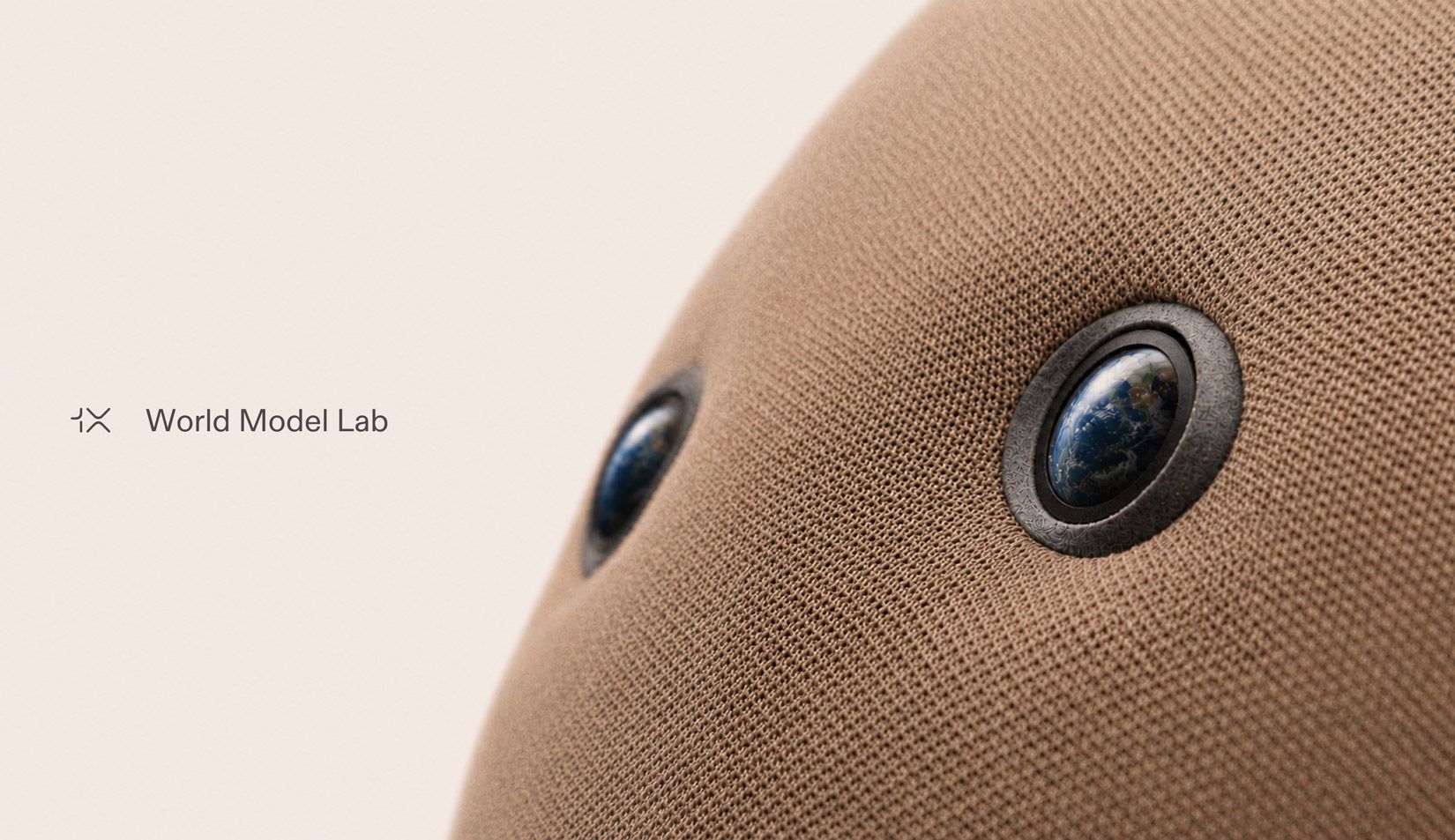
Five weeks later 1X added a research arm aimed at the software side of the same problem. On June 4 it launched the 1X World Model Lab, led by Sam Sinha, a founding research scientist at Luma AI who worked on scaling multimodal video generation models. The lab will pretrain world models on web-scale video, first-person footage, simulation, teleoperated robot data and data collected by NEO units in use, with the aim of fully autonomous humanoids.
1X was founded in 2014 in Norway and now builds in California. Its last priced round on record was a $100 million Series B in January 2024, after a $23.5 million Series A2 in March 2023 led by the OpenAI Startup Fund. That capital base is small next to Figure AI, which raised $1 billion at a $39 billion post-money valuation in September 2025, or Apptronik, whose Series A has passed $935 million.
The Hayward capacity matches what Agility Robotics says its RoboFab in Oregon is designed to build, up to 10,000 units a year, but the markets differ. Agility sells Digit to logistics and manufacturing operators. 1X is the only US humanoid maker of scale that has opened consumer preorders for a home robot. Tesla, by contrast, said on April 22 that it will build an Optimus line in Fremont designed for 1 million robots a year, though without naming customers or a price.
The risks are those of any consumer hardware launch, magnified. A home robot must operate safely around children and pets, in cluttered rooms that change daily, and its owners will expect it to work without a technician on site. 1X has not disclosed how much of NEO's work will be autonomous at launch versus remotely assisted, nor its delivery schedule beyond starting in 2026.
ROBOTNESS analysis
1X has built the first US factory sized for a consumer humanoid before proving the product in homes, which makes its delivery record in 2026 the test of the whole home-robot thesis.
The evidence for the bet is concrete. 1X has a 58,000-square-foot plant, in-house motors, batteries and hands, 17,000 motors already built and a year of capacity booked. The June World Model Lab shows it is investing in autonomy, the part of the product most likely to decide whether owners keep using NEO.
The strongest counter-argument is that preorders are not revenue and 1X's disclosed funding is a fraction of its rivals'. Building 100,000 units a year by 2027 will need far more capital than the $100 million Series B on record, and consumer returns or safety incidents could stall the ramp.
Bull case. Deliveries start on schedule in 2026, early owners report daily use, and the San Carlos site lifts output. 1X becomes the reference brand for home humanoids and raises a large round on the back of shipment data.
Bear case. Delivery slips or early units depend heavily on remote operators, reviews turn negative, and cancellations erode the 10,000-unit order book. Better-funded rivals enter the home with cheaper hardware.
Signals to watch.
- The first confirmed NEO customer deliveries and their count, which 1X has promised in 2026.
- The opening of the San Carlos facility later in 2026 and any updated capacity figure.
- A new funding round or disclosed valuation for 1X before the end of 2026.
- 1X Technologies
- NEO
- Homes
- 10,000
- 100,000,000
- 2024-01-13
- Agility Robotics
- Digit
- Logistics, manufacturing
- 10,000
- 150,000,000
- 2022-04-22
- Tesla
- Optimus
- Not disclosed
- 1,000,000
- No data
- No data
- Figure AI
- Figure 03
- Manufacturing, logistics, homes
- No data
- 1,000,000,000
- 2025-09-16
- Apptronik
- Apollo
- Manufacturing, logistics
- No data
- 520,000,000
- 2026-02-11
Capacities as stated by the companies (1X April 30, 2026; Agility June 24, 2026; Tesla Fremont line April 22, 2026). Tesla is public and does not raise venture rounds. 1X scale-up target = 100,000 / 10,000 = 10x. Agility later agreed a SPAC deal with more than $620 million expected proceeds. No estimates.
As of Oct 1, 2026
- More than 100,000 a year by end of 2027
- Hayward, California, 58,000 sq ft
- 1X World Model Lab launched June 4, 2026, led by Sam Sinha
- April 30, 2026
- Opened October 28, 2025; a year of capacity (10,000) booked in five days
- San Carlos, later in 2026
- 17,000 since production start
- More than 200
- Up to 10,000 NEO a year
- Revo2 motors, batteries with in-house BMS, 22-DoF tendon hands, structures, transmissions, sensors
Why it matters
1X is the first US humanoid company to build a factory for a consumer product before delivering it. Every other well-funded rival started with factories and warehouses, where tasks are structured and buyers measure return on investment. 1X's Hayward plant commits the company to the hardest market first, and its 10,000-unit capacity means mistakes will be made at volume.
It also shows that vertical integration is becoming the default in Western humanoids. 1X, Figure and Tesla all make their own actuators, and 1X adds batteries and hands. That reduces dependence on Asian suppliers but raises the capital needed to scale.
Rival analysis
Figure has talked about homes and showed a bedroom-tidying demonstration in May, but its disclosed customers are BMW and Catalyst Brands. Tesla has said little about Optimus customers. Agility and Apptronik focus on industrial work. That leaves 1X as the only US company with consumer preorders on record.
The gap is capital. 1X's last disclosed round was $100 million in January 2024, while Figure raised $1 billion and Apptronik more than $935 million. If home demand proves real, better-funded rivals can follow quickly, and 1X will need new money to defend its lead.
Valuation context
1X has not disclosed a valuation in any primary source we could confirm. Its known funding includes a $23.5 million Series A2 in March 2023 led by the OpenAI Startup Fund and a $100 million Series B in January 2024. That is about one-tenth of Figure's single September 2025 round (formula 100 / 1,000).
The 10,000 booked units are a potential revenue base, but without a confirmed price or deposit size we cannot convert them into a dollar figure. A new round would likely be priced on delivery data rather than orders.
Supply-chain implications
1X makes Revo2 motors, battery packs with its own battery management system, 22-degree-of-freedom tendon hands, structures, transmissions, soft goods and sensors. Building 17,000 motors before the factory announcement suggests motor production is already beyond pilot scale.
Vertical integration helps with design speed, shown by the one-month CAD-to-walking cycle, but it means 1X carries the cost of tooling for each component. Battery cells and electronic components are still likely to come from outside suppliers, which 1X did not name.
Signals to watch
The first confirmed customer deliveries, and how many, will show whether the 10,000-unit order book is real demand. Watch also for disclosure of how much NEO's work is autonomous versus teleoperated at launch.
The San Carlos opening later in 2026 and any new capacity figure are the next manufacturing markers, and a funding round would show how investors price the home-robot bet.
Analyst view
Thesis. 1X has the manufacturing base for a home humanoid ahead of any rival, and 2026 deliveries will decide whether that head start has value.
Confidence is low to medium. The factory, capacity and in-house components are confirmed by 1X, but delivery counts, pricing, autonomy levels and funding beyond 2024 are not disclosed, and consumer hardware launches often slip.
Questions you should be asking
How many NEO units will reach customers in 2026, and on what schedule?
What share of NEO's tasks at launch will be done autonomously, and how much will rely on remote operators?
How will 1X fund the step from 10,000 to more than 100,000 units a year?