SiMa.ai raises $150M at a $1.45B valuation to build edge chips for humanoids and drones
Fidelity and Amplify co-led the Series C, lifting SiMa.ai's total funding to $500M. The company plans a 1,000-TOPS chip for the first half of 2028 and names humanoid robots as a core market.
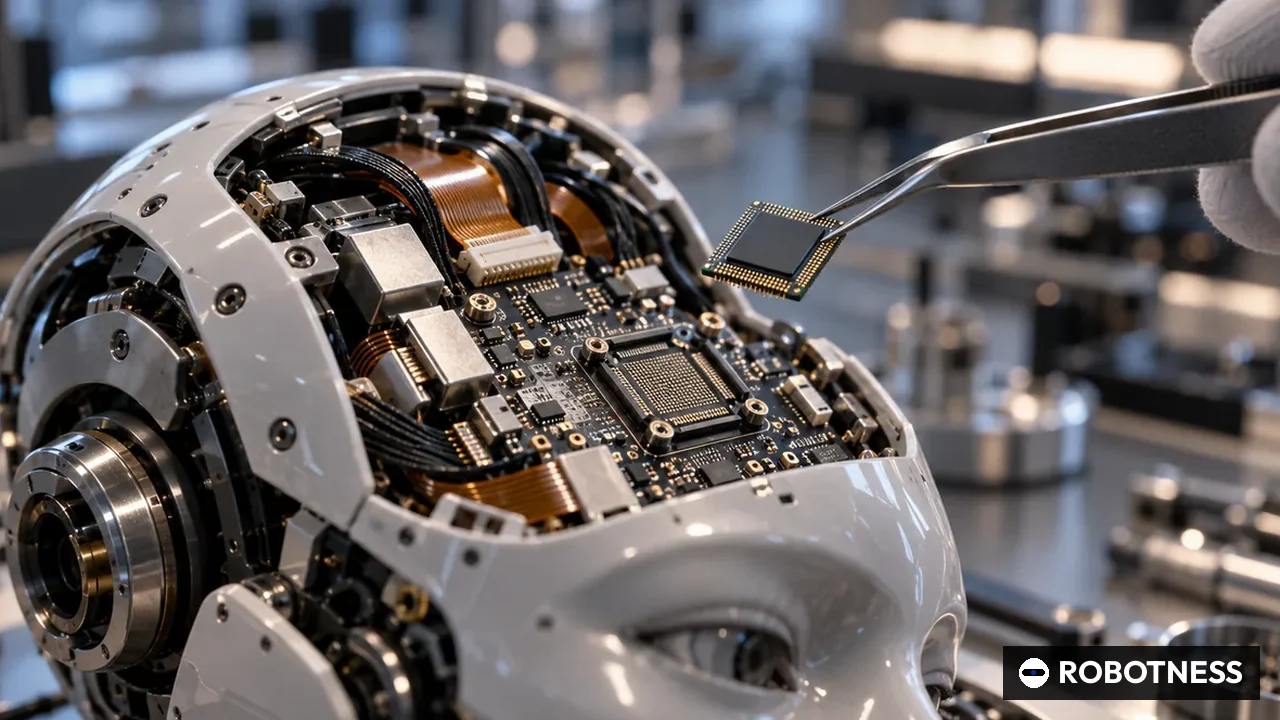
SiMa.ai, which designs machine-learning chips for devices at the edge, closed a $150 million Series C that values the company at $1.45 billion, it said on September 28. Fidelity Management & Research Company and Amplify co-led the round. Existing backers including Dell Technologies Capital, Maverick Capital and Point72 joined, and AllianceBernstein, Baron Capital, J.P. Morgan and the State of Michigan came in as new investors. Total funding now stands at $500 million.
The company says it will spend the money on its Palette software for AI agents and on next-generation hardware. That silicon is planned for the first half of 2028 at 1,000 dense TOPS and will be offered as licensable IP, chiplets and complete chips. SiMa.ai lists humanoid robots, drones, driver assistance and in-car AI as target markets, and says revenue roughly quadrupled from 2024 to 2025.
Humanoid makers need a lot of on-board compute to run vision-language-action models without a round trip to the cloud, and today most reach for NVIDIA's Jetson modules. A well-funded alternative that sells IP and chiplets as well as finished chips gives robot companies a path to custom silicon without starting from scratch. The 2028 timeline, though, means today's humanoid programs will ship before the new chip is available.
- Series C
- $150M
- SiMa.ai
- Fidelity Management & Research Company, Amplify
- September 28, 2026
- 1,000 dense TOPS, planned H1 2028
- $1.45B (company-stated)
- $500M
Why it matters
Edge AI chip money is now being raised on the humanoid story. SiMa.ai explicitly puts humanoids next to automotive as a core market, a sign investors see robot compute as a distinct segment rather than a side market for automotive chips.
Rival analysis
NVIDIA's Jetson line (Thor, T4000) is the default on-board computer for humanoid developers. SiMa.ai's angle is selling IP and chiplets as well as chips, which suits robot makers that want custom silicon.
Valuation context
$1.45B on $500M total raised, per the company. The company reports revenue growth of about 4x from 2024 to 2025 but gives no absolute revenue figure.
Supply-chain implications
IP and chiplet licensing lets humanoid makers or their module suppliers integrate SiMa.ai compute into their own boards, potentially shortening the path to in-house controllers.
Signals to watch
Named humanoid customers; benchmark results for VLA models on current SiMa.ai parts; tape-out news for the 2028 chip.
Analyst view
A credible financing for an alternative, but the humanoid claim needs customer names before it changes buying decisions.
Questions you should be asking
Which humanoid companies are evaluating SiMa.ai today? How does current-generation performance compare with Jetson Thor on real robot workloads?